

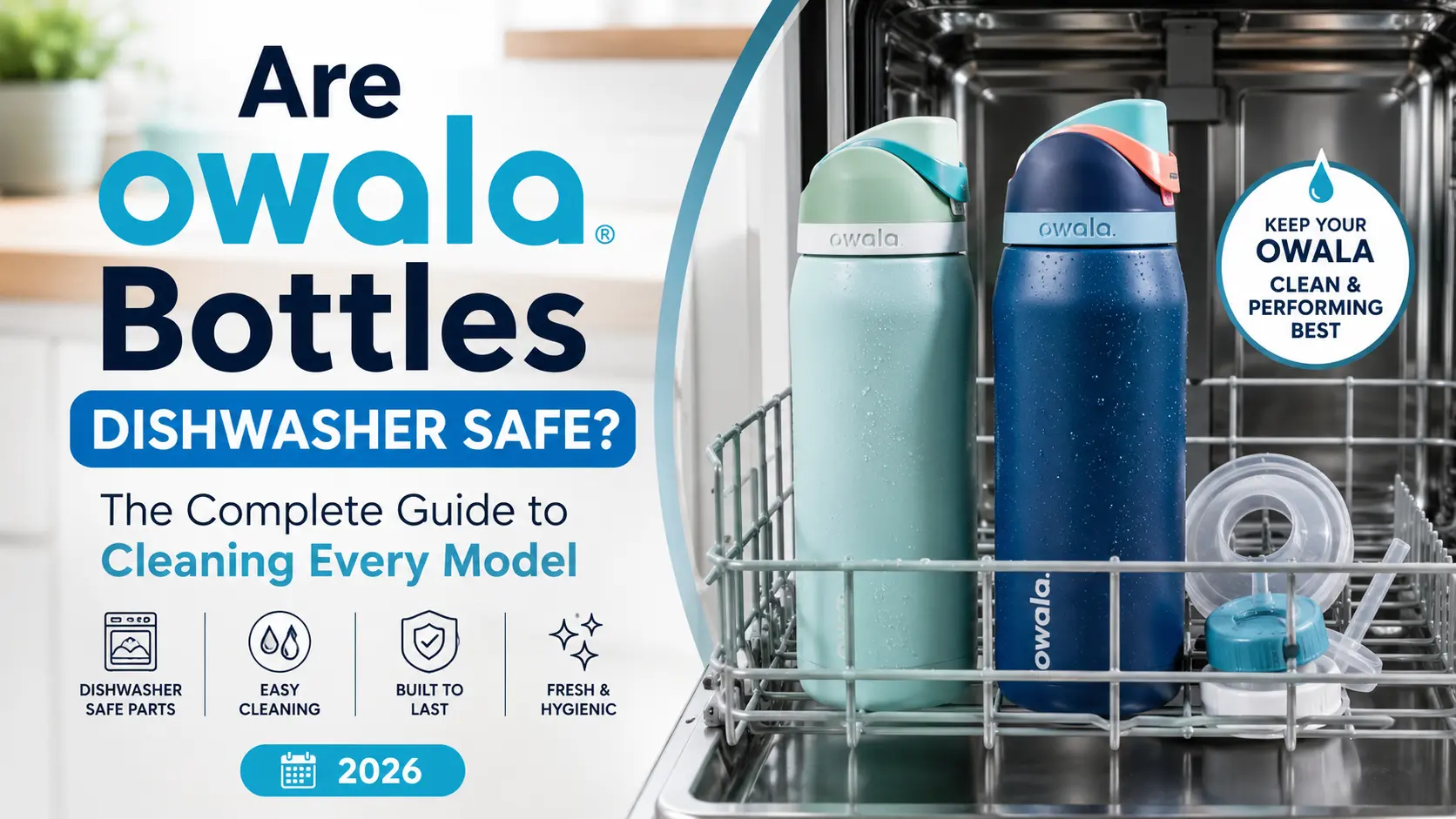
Yes, but don’t toss every part of your Owala into the dishwasher and hope for the best.
I’ve been there, standing over the open dishwasher with my FreeSip in hand, wondering whether one hot cycle will wreck a $30-plus bottle. Online advice doesn’t help. One person says everything is dishwasher safe. Another warns that the finish will fade, the insulation will fail, and your ice water will be lukewarm by lunch.
Then there’s the lid.
A quick rinse may make it look clean, but gunk loves to hide under the gasket and around the FreeSip spout, unlike wide mouth bottles, which are easier to scrub clean. Ignore it long enough, and that faint funk can turn into a full-blown mold problem.
The good news? Cleaning an Owala safely isn’t complicated once you know which rules apply to your model. I’ve sorted through Owala’s official recommendations, the fine print, and the cleaning methods that actually work. This guide explains exactly what can go in the dishwasher, what should be hand-wash only, and how to deep-clean every hidden crevice without damaging your bottle.
And if hand-washing is your personal enemy, I’ll show you which Owala is the easiest to own.
Key Takeaways
- Standard lids go on the top rack; straws go in the silverware basket.
- Hand-wash stainless cups. Tritan cups are top-rack safe.
- Remove and clean the gasket to prevent hidden mold and funk.
- Avoid bleach and abrasives. Dry every part before reassembling.
- Always check your model-specific care instructions.
Material Breakdown: Stainless Steel vs. Tritan Plastic
Why Material Matters for Dishwasher Safety
Your Owala’s material decides the dishwasher rules.
Most Owala bottles use one of two cup materials: vacuum-insulated stainless steel or Eastman Tritan plastic. The lids may look nearly identical, but the cups need very different treatment.
Here’s the quick version:
Owala material | Dishwasher verdict |
Stainless-steel cup | Hand-wash recommended |
Tritan plastic cup | Top-rack dishwasher safe |
Standard lid | Top-rack dishwasher safe |
Straw | Dishwasher silverware bin |
Owala says its stainless-steel cups are technically dishwasher safe. I still wouldn’t pop one in with every load. The company recommends hand-washing the cup with warm, soapy water to preserve its finish. Repeated heat, detergent, and water pressure can dull or fade that expensive color coating even if the bottle survives the cycle.
Tritan is the low-maintenance option. According to Owala’s official, every part of its Eastman Tritan plastic bottles can go on the dishwasher’s top rack.
Not sure which one you own? Tap the cup. Stainless steel feels solid, stays cold, and has an opaque exterior. Tritan is lightweight plastic and is often clear or translucent. If weight is your top priority, our ultralight water bottles guide highlights the lightest options available.
Both bottle types are designed and tested for use as drinkware. Owala also identifies its products as BPA-, lead-, and phthalate-free, while its FAQ specifically confirms that the plastics it uses are BPA- and phthalate-free. Those safety claims matter, but they don’t make the two materials equally resistant to dishwasher wear.
My rule is simple: Tritan goes on the top rack. Stainless steel stays by the sink.
One caveat: always check the care guide for your exact model. Specialized designs such as the FreeSip Twist have extra removable parts and their own cleaning instructions.
Stainless Steel: The Hand-Wash Standard
Hand-wash the stainless-steel cup. That’s the safest long-term choice.
Owala’s stainless bottles use a vacuum-insulated wall system to keep cold water cold. If you’re comparing brands, our Thermoflask water bottle guide covers a similar option. The low-pressure space between the metal walls slows heat transfer, while the sealed construction maintains that vacuum.
A normal dishwasher cycle probably won’t destroy the insulation in one shot. In fact, Owala calls its stainless cups technically dishwasher safe. But its own cleaning guide warns that high temperatures and harsh detergents can cause damage, especially to the exterior finish.
Repeated cycles mean repeated stress.
If the sealed structure ever fails, the insulating vacuum is lost, and your ice starts melting much faster. The more immediate risk, though, is cosmetic: fading, peeling, or a once-beautiful finish turning dull.
Dishwasher vs. Hand-Washing Stainless Cups
Method | Pros | Cons |
Dishwasher | Fast, convenient, and useful for approved removable parts | Repeated heat and harsh detergent may dull the finish; loose components can shift; model-specific lid mechanisms may need gentler care |
Hand-washing | Best protection for the finish; lets you inspect every surface; avoids unnecessary heat and detergent exposure | Takes a few extra minutes; a lazy scrub can miss gunk if you don’t remove the straw and gasket |
For standard FreeSip bottles, Owala says the lid can go on the top rack and the straw can go in the silverware bin. However, some model-specific cleaning guides recommend hand-washing the lid or removing extra mechanisms first. Check your exact model before you pop everything in.
The cup is the easy decision.
Hand-wash it.
Owala says its bottles are tested and have always used lead-free solder in their construction. That’s reassuring. It means the bottle was designed with long-term safety in mind, not that it’s indestructible. Proper care still matters, and Owala’s warranty excludes damage caused by misuse or improper care.
Treat the stainless cup gently, and it should keep doing the job you paid for: cold water, an intact finish, and peace of mind.
Tritan Plastic: The Dishwasher-Friendly Choice
Yes, Tritan Owalas can go on the top rack.
Eastman Tritan is a tough, lightweight copolyester designed to handle repeated washing without cracking, clouding, or warping under normal dishwasher conditions. Eastman, the company that makes Tritan, says the material remains clear and durable through years of dishwasher cycles.
Owala keeps its instructions just as simple: if the cup is made from Tritan, every part is top-rack dishwasher safe.
Put the cup and lid on the top rack, where the heat is gentler. Remove the straw so water can reach inside it, then place it in the silverware bin. Take out the gasket and secure it in a covered utensil basket or small-parts cage so it doesn’t disappear during the cycle.
That’s about as close as Owala gets to a “pop it in the dishwasher and forget about it” bottle.
Best Owala for Dishwasher-Reliant Owners
Choose a model with a Tritan cup.
The Tritan FreeSip, Flip, and Kids’ Flip models are the easiest options for anyone who refuses to hand-wash a bottle every night. Their Tritan components are covered by Owala’s top-rack guidance, so you can disassemble them, load the parts securely, and let the dishwasher handle the gunk.
Just don’t assume every bottle with “Kids” in the name is plastic. The Kids’ FreeSip and Kids’ Tumbler are also sold in stainless-steel versions, and those cups should be hand-washed. Check the material on the product page or packaging before buying.
If it says Eastman Tritan, you’re good to go.
What Owala Officially Says
These aren’t rules invented by bottle collectors on social media. They come directly from the manufacturer.
According to Owala’s official FAQ, the standard cleaning breakdown is:
- Lids: Place on the dishwasher’s top rack.
- Straws: Remove and place in the silverware bin.
- Stainless-steel cups: Hand-wash with warm, soapy water to protect the finish.
- Tritan plastic cups: Place on the dishwasher’s top rack.
- Gaskets: Remove and wash separately so gunk cannot stay trapped underneath.
Owala’s FreeSip cleaning guide also recommends keeping stainless bases out of the dishwasher because high temperatures and harsh detergents may cause damage. Approved removable pieces can go in the dishwasher once they have been separated and secured.
One caveat: model-specific instructions always win. Designs such as the FreeSip Twist have extra mechanisms and slightly different care steps.
When in doubt, remember the rule that covers most Owalas: Tritan on the top rack. Stainless by the sink.
Part-by-Part Dishwasher Guide
Lids: Top Rack Only
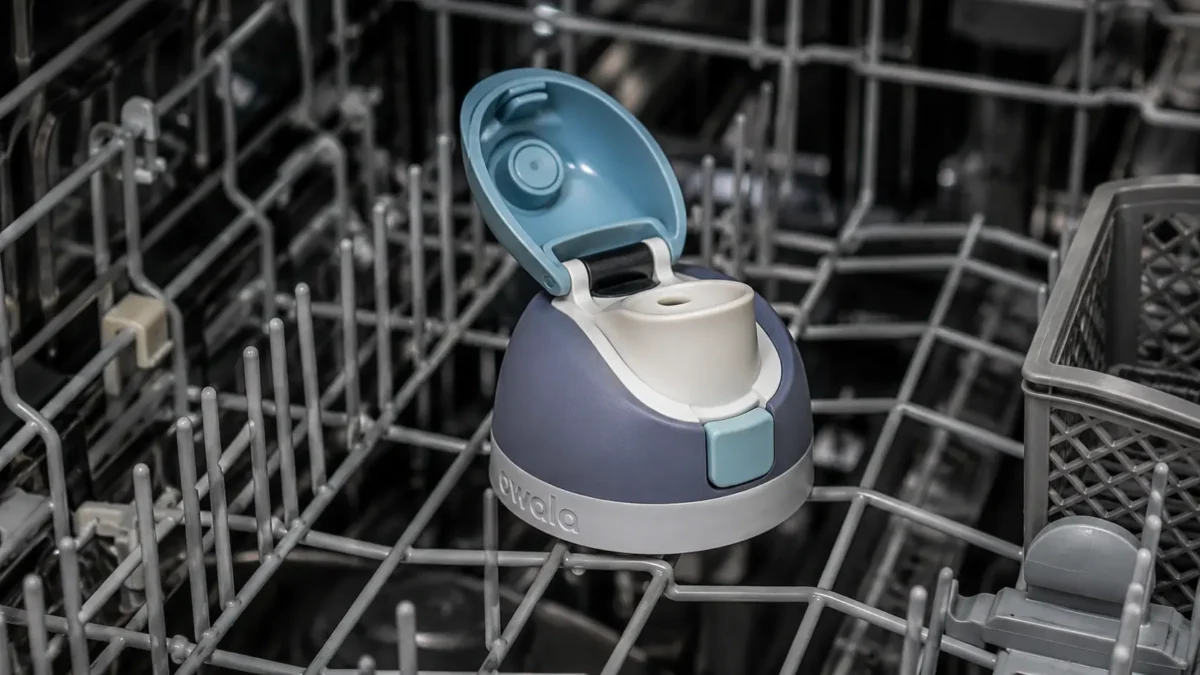
Yes, standard Owala lids are top-rack dishwasher-safe.
Keep them away from the heating element. The lower rack gets more intense heat, which can warp plastic, stress small mechanisms, and shorten the life of the gasket.
Here’s the right way to do it:
- Remove the lid from the bottle. Never wash the bottle fully assembled. Water and detergent need to reach every surface.
- Open the flip mechanism. Leave the FreeSip cover or flip cap open so the drinking spout is exposed to the spray.
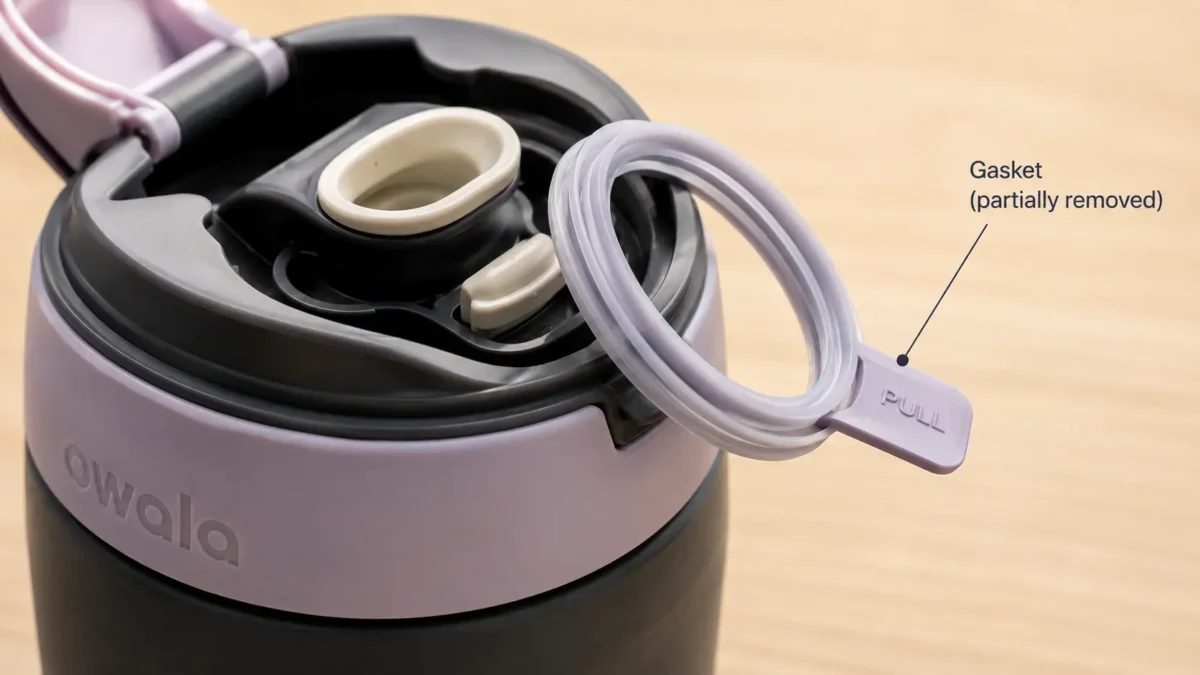
- Pop out the spout gasket. Find the silicone piece beneath the lid and pull its small tab. Wash it separately in a covered utensil basket or dishwasher-safe small-parts cage. This is where hidden gunk loves to settle.
- Secure the lid on the top rack. Set it upright or slightly angled, with the open spout facing the water. Make sure it cannot slip through the rack or flip over during the cycle.
- Choose a normal or gentle cycle. Skip sanitizing temperatures and heated drying when possible. Owala does not specifically require you to disable heated drying, but air-drying is the gentler option.
- Let everything dry completely. Do not reinstall the gasket or close the lid while moisture is trapped inside. That’s how the funk comes back.
One exception: check the care guide for your exact model. Some specialized lids, including designs with extra removable mechanisms, require further disassembly or recommend hand-washing.
Top rack. Flip open. Gasket out.
Those three steps do most of the work.
Straws: Silverware Bin or Bust
Remove the straw before every dishwasher cycle.
If you leave it attached, water may not reach the connection point or flow cleanly through the tube. That gives residue and funk an easy place to hide.
Here’s the right setup:
- Detach the straw from the lid. Pull it straight off the underside of the spout without twisting or bending it.
- Place it in the silverware basket. An upright compartment is ideal. Position the straw with both ends exposed so water can pass through it.
- Keep it secure. Make sure the straw cannot slip through the basket and land near the heating element.
- Use the top rack as a backup. If your dishwasher lacks a suitable silverware slot, lay the straw flat on the top rack. Tuck it beneath a rack tine or place it in a small-parts cage so it cannot bounce around.
- Inspect it after washing. Hold the straw up to the light and check the inside. If you see residue, rinse it or run a thin straw brush through the full length.
- Dry it completely. Stand the straw upright and let any trapped water drain before reconnecting it to the lid.
My expert tip? Keep a thin straw brush by the sink anyway. Dishwasher jets are great for routine cleaning, but sticky drink residue sometimes needs actual contact. One quick pass beats discovering mystery gunk during your next sip.
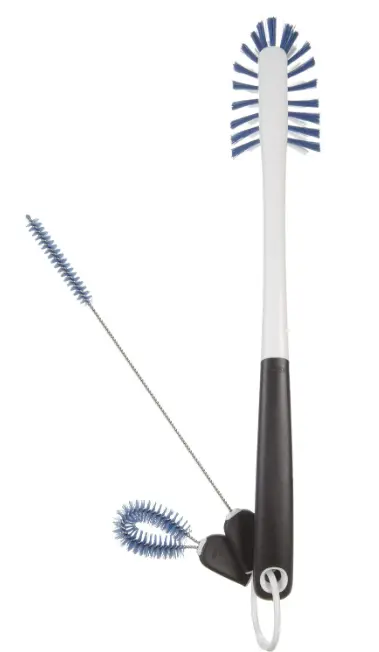
OXO Good Grips Water Bottle Cleaning Set
The OXO Good Grips Water Bottle Cleaning Set includes a long bottle brush, straw brush, and detail cleaner to tackle every part of your bottle. Durable nylon bristles remove buildup with ease, while the compact snap-together design keeps all three tools organized and ready for everyday cleaning.
Cups: The Stainless-Steel Hand-Wash Rule
Hand-wash stainless-steel Owala cups. Save the dishwasher for Tritan.
Owala calls its stainless cups technically dishwasher safe, but the company still recommends hand-washing to protect the exterior finish. That’s enough for me. A few minutes at the sink is cheaper than watching your favorite color fade.
Here’s the safest method:
- Add warm water and mild dish soap. You only need a small drop. Skip bleach, harsh chemicals, and abrasive cleaners.
- Scrub with a soft bottle brush or sponge. Reach all the way to the bottom, then work around the interior walls and threaded rim. That bottom curve is an easy place to miss.
- Clean the exterior gently. Use the soft side of the sponge. Steel wool and rough scouring pads can leave permanent scratches.
- Rinse thoroughly. Keep rinsing until the water runs clear and no soap bubbles remain.
- Dry the cup. Wipe the exterior with a clean microfiber cloth to prevent water spots. Leave the cup open and upside down on a drying rack so the interior can drain completely.
What About the Warranty?
Owala’s warranty covers manufacturing defects in materials and workmanship. It says accidental damage, improper care, misuse, and normal wear are not covered.
That does not mean one dishwasher cycle automatically voids your warranty. Owala describes stainless cups as technically dishwasher-safe. However, finish damage caused by repeated washing may be treated as normal wear or care-related damage rather than a manufacturing defect. Owala reviews claims individually, so contact its support team if you are unsure.
Tritan Is the Easy Exception
If your cup is made from Eastman Tritan plastic, pop it on the top rack. Owala says every Tritan part is top-rack dishwasher safe.
Stainless gets the bottle brush. Tritan gets the dishwasher.
Simple.
The Gasket: The Hidden Mold Magnet
Pop the gasket out every time you deep-clean the lid.
That little silicone seal sits against the drinking spout and traps moisture, saliva, and residue underneath. The visible side may look spotless while gunk builds up inside the groove.
Here’s how to clean it properly:
- Turn the lid over. Look for the silicone spout gasket on the underside of the lid.
- Find the small pull tab. It should stick out just enough to grab with clean fingers.
- Pull gently. Use the tab to ease the gasket out of its recess. Don’t yank, stretch, or pry it with a knife. Damaging the silicone can create leaks later.
- Wash the gasket separately. Scrub it with warm soapy water and a soft brush, or secure it in the dishwasher’s covered utensil basket. Never leave it loose on a rack, it’s small enough to disappear.
- Clean the empty groove. Use a small brush or damp cloth to remove any gunk hiding where the gasket normally sits.
- Dry both pieces completely. Let the gasket and lid air-dry before reassembly. Trapping moisture underneath defeats the whole cleaning job.
- Press the gasket back into place. Seat it evenly inside the groove and leave the pull tab accessible for next time. Check that nothing is twisted or raised.
This is the part lazy cleaning misses.
If your lid smells funky five minutes after washing, check under the gasket first.
Owala Model Dishwasher Safety Comparison Table
Model and current sizes | Cup material | Lid cleaning | Cup cleaning | Straw cleaning | Official recommendation | Notes |
FreeSip, 24, 32, and 40 ounces | Stainless steel | Top rack | Hand-wash | Silverware bin | Hand-wash the cup; dishwasher-clean the lid and detached straw. | Owala calls the cup technically dishwasher safe but recommends hand-washing to preserve its finish. Dishwasher use does not automatically void the warranty. |
FreeSip Twist, 18 and 24 ounces | Stainless steel | Hand-wash recommended | Hand-wash | Top rack | Hand-wash the base and lid. Place the straw on the top rack and the spout, key mechanism, and gaskets in the utensil basket. | This model has special instructions. Fully disassemble it before cleaning. |
FreeSip Sway, 18, 30, 40, and 64 ounces | Stainless steel | Top rack | Hand-wash | Silverware bin | Hand-wash the cup; dishwasher-clean the lid and detached straw. | Remove the straw and spout gasket before washing. The larger cups are easier to clean with a long bottle brush. |
FreeSip Tumbler, 30 and 40 ounces | Stainless steel | Top rack | Hand-wash | Silverware bin | Hand-wash the cup; dishwasher-clean the lid and detached straw. | Clean beneath the gasket and around the push-button mechanism. Avoid abrasive scrubbers on the exterior. |
Kids’ FreeSip, 16 ounces | Stainless steel | Top rack | Hand-wash | Top rack or secured utensil basket | Hand-wash the cup. Remove and secure the smaller lid parts before using the dishwasher. | The current U.S. model is stainless steel, not Tritan. Use a small-parts cage for the gasket if your utensil basket has large openings. |
Owala Tumbler, 24 and 40 ounces | Stainless steel | Top rack | Hand-wash | Silverware bin | Hand-wash the cup; dishwasher-clean the lid and straw. | The wide opening makes hand-washing easy. Use a soft bottle brush to protect the finish. |
Kids’ Tumbler, 12 and 15 ounces | Stainless steel or BPA-free plastic | Top rack | Hand-wash according to the current product page | Top rack | Remove the straw and rubber insert, then clean them separately. | Owala’s current page does not identify the plastic cup as Tritan, so follow the model-specific hand-wash instruction rather than assuming it is fully dishwasher safe. |
SmoothSip, 12 and 20 ounces | Stainless steel | Top rack | Hand-wash | Not applicable | Hand-wash the cup; place the lid on the top rack. | This splash-resistant model has no straw or locking slider. Clean around the drinking opening after coffee, milk, or sweet drinks. |
SmoothSip Slider, 12 and 20 ounces | Stainless steel with stainless or ceramic interior option | Top rack after disassembly | Hand-wash | Not applicable | Remove the slider, seal, and small plastic pieces. Secure them in the utensil basket and place the lid on the top rack. | Coffee residue collects beneath the slider. Let every piece dry before reassembly. |
SmoothSip Slider with Handle, 12 and 24 ounces | Stainless steel with stainless or ceramic interior option | Top rack after disassembly | Hand-wash | Not applicable | Follow the same disassembly process as the standard SmoothSip Slider. | The handle does not change the cleaning rule: the cup remains hand-wash only. |
Deep Cleaning and Troubleshooting
How to Deep-Clean a Smelly Lid
If the lid still smells after a normal wash, trapped residue is usually hiding beneath the gasket or inside the spout.
Distilled white vinegar is the best first move. It helps loosen mineral buildup and cut stubborn odors without the harshness of bleach.
Here’s the method:
- Disassemble the lid. Remove the straw and spout gasket. Open the flip mechanism so the cleaning solution can reach the drinking spout. Remove any additional pieces specified in your model’s care guide, but never force a part that is not designed to come out.
- Make a vinegar soak. Fill a bowl with equal parts distilled white vinegar and warm water. Use warm, not boiling, water.
- Submerge the removable parts. Place the lid, straw, gasket, and other approved pieces in the solution. Make sure hollow parts fill with liquid instead of floating untouched on the surface.
- Soak for 30 minutes. This gives the vinegar time to loosen mineral deposits and odor-causing residue.
- Scrub gently. Use a soft toothbrush, straw brush, or small bottle brush. Pay extra attention to the spout, gasket groove, straw interior, and flip mechanism.
- Rinse thoroughly. Flush every opening with clean water until the vinegar smell is gone.
- Air-dry completely. Spread the pieces on a clean drying rack. Do not reinstall the gasket or close the lid while anything is damp.
The exact 1:1 ratio and 30-minute soak above are a practical deep-cleaning method, not a manufacturer-mandated formula.
Never mix vinegar with bleach.
If the odor returns immediately, inspect the gasket for dark spots, cracks, or permanent staining. Replace the gasket or lid if mold remains after thorough cleaning. Peace of mind is worth more than saving a worn-out piece of silicone.
Removing Stains From Straws and Gaskets
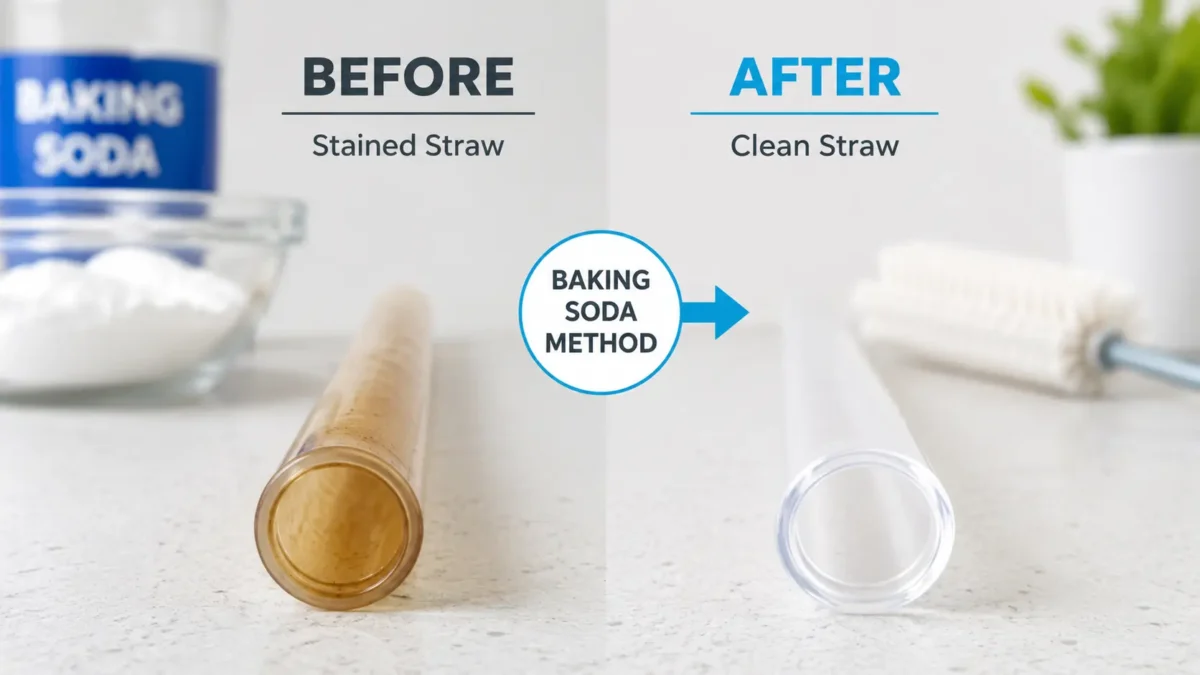
Use baking soda, a soft brush, and light pressure.
Skip bleach, steel wool, scouring powder, and other harsh cleaners. They can damage silicone seals, scratch plastic, and leave residue where you drink.
Here’s the safer method:
- Make a baking soda paste. Mix baking soda with a few drops of water until it forms a soft, spreadable paste.
- Apply it to the stain. Use a soft cloth, toothbrush, or small detailing brush. For silicone gaskets, work the paste gently across both sides without stretching the seal.
- Let it sit for 15 minutes. Keep the part in a bowl or on a clean plate so it does not pick up new grime.
- Scrub lightly. Baking soda is mildly abrasive, so let the paste do the work. Aggressive scrubbing can leave micro-scratches in clear plastic.
- Clean inside the straw. Run a thin brush through its full length, then scrub both openings. The OXO Water Bottle and Straw Cup Cleaning Set includes a narrow brush made for this job.
- Rinse thoroughly. Flush the straw until the water runs clear. Rinse and flex the gasket gently to remove paste from its edges.
- Air-dry completely. Stand the straw upright and place the gasket flat on a clean drying rack.
One stubborn stain does not always mean the part is dirty. But if a gasket stays dark, smells musty, feels sticky, or develops cracks after cleaning, replace it. A worn seal isn’t worth saving.
Banishing Mold and Mildew Safely
Visible mold means the lid needs a full teardown.
Check the gasket groove, underside of the flip cap, drinking spout, and inside the straw. Dark spots often start where moisture sits unnoticed.
Here’s the safe approach:
- Stop using the bottle. Remove the lid, straw, gasket, and every other part your model is designed to release.
- Inspect each piece. Look for black, green, pink, or fuzzy spots. Check the gasket for cracks and shine a light through the straw.
- Wash away surface residue. Scrub the affected hard surfaces with warm water and dish soap. Mold must be physically removed, not merely soaked.
- Prepare a vinegar soak. Mix equal parts distilled white vinegar and warm water. Submerge the washable lid parts, gasket, and straw for at least one hour.
- Scrub every crevice. Use a small, soft brush such as the detail brush in the OXO Water Bottle Cleaning Set. Work inside the gasket groove, beneath the cap, and through the full length of the straw.
- Rinse thoroughly. Flush every opening until no loosened debris, soap, or vinegar smell remains.
- Air-dry completely. Leave all parts separated on a clean rack. Reassembling a damp lid invites the mold right back.
The Vinegar Soak Method
Vinegar is excellent at dissolving mineral film and stubborn residue inside a stainless-steel cup.
The acetic acid reacts with alkaline mineral deposits, the chalky stuff hard water leaves behind, and helps loosen odor-causing buildup. Vinegar can reduce some bacteria under the right conditions, but it does not kill every germ and should not be treated as a dependable disinfectant.
Use it as a deep cleaner, not magic sanitation juice.
Here’s how:
- Mix the solution. Fill the stainless cup with equal parts distilled white vinegar and warm water.
- Keep the exterior dry. Fill the cup rather than submerging the entire bottle. There’s no reason to soak the painted finish.
- Let it sit for one to two hours. For heavy mineral buildup or a stubborn smell, leave it overnight. Set the open cup somewhere stable and out of reach of children or pets.
- Empty and scrub. Pour out the solution, add a drop of mild dish soap, and scrub the interior with a soft bottle brush. Pay attention to the bottom curve.
- Rinse thoroughly. Keep rinsing until the vinegar smell is completely gone.
- Air-dry with the lid off. Place the cup upside down on a drying rack and let it drain fully.
Using Bottle Bright Tablets for a Reset
Bottle-cleaning tablets are my favorite lazy deep-cleaning hack.
They’re especially useful when a stainless cup smells stale or has a tea-and-coffee film that a quick scrub won’t touch. The fizz reaches the bottom and interior curves without attacking the exterior finish.
Here’s how to use one:
- Disassemble the bottle. Remove the lid, straw, gasket, and any other detachable pieces.
- Add warm water. Fill the cup with warm water. To clean lid parts, place them in a separate bowl of warm water.
- Drop in one tablet. Bottle Bright recommends one tablet per liter of water. One tablet is enough for most Owala bottles.
- Leave the container open. Do not tighten the lid while the tablet is fizzing. Pressure needs somewhere to escape.
- Soak for 15 to 30 minutes. Let the bubbles loosen stains, residue, and odors. Bottle Bright allows a longer soak for heavy buildup, but follow the package directions for the product you have.
- Rinse thoroughly. Empty the solution and flush the cup and removable parts with clean water. If residue remains, give it a quick pass with a soft bottle brush.
- Air-dry completely. Leave every part separated until no moisture remains.
Bottle Bright lists stainless steel, plastic, silicone, glass, porcelain, TPU, and metal among its compatible materials. That covers the main materials used in standard Owala bottles, including stainless steel and Tritan plastic. Still, that compatibility statement comes from Bottle Bright, not Owala.
Use the directions for the tablet in your hand. Don’t assume every fizzy tablet has the same formula or contact time.
And don’t use a tablet to hide visible mold. Moldy gaskets and straws still need to be removed, scrubbed, inspected, and replaced when they won’t come clean.
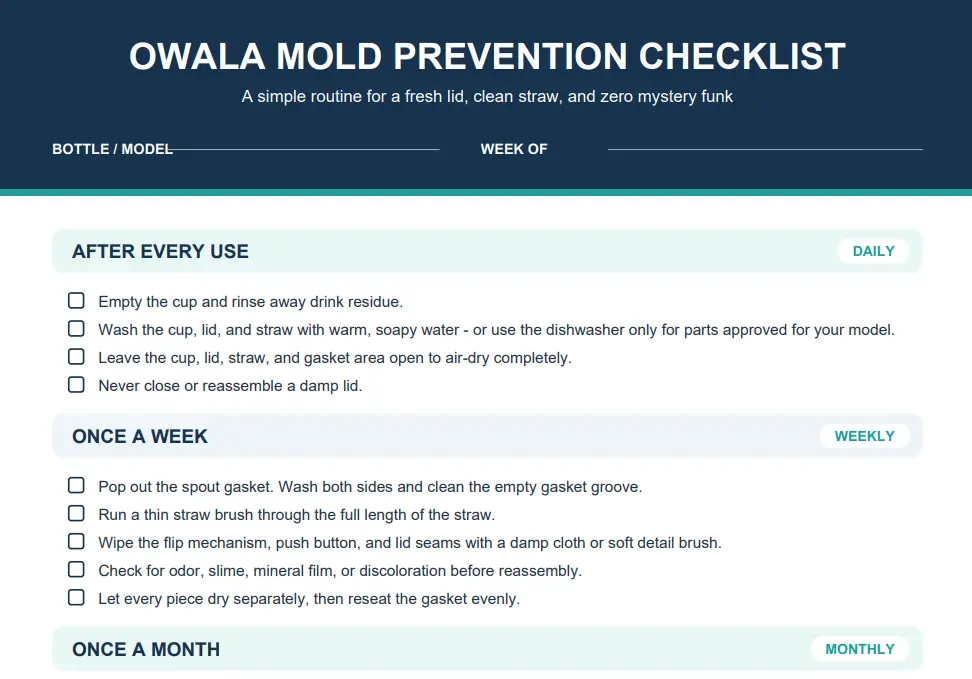
Your Weekly & Monthly Mold Prevention Checklist
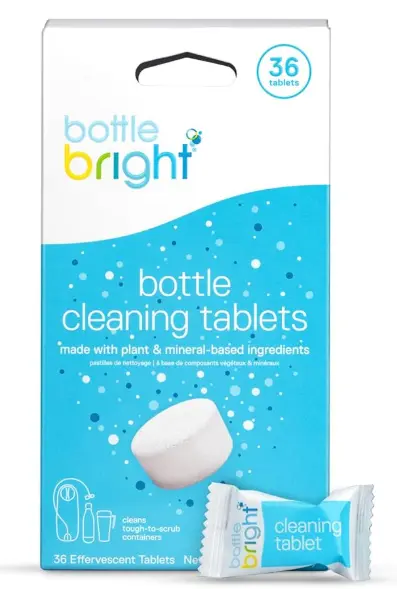
Bottle Bright Cleaning Tablets for Water Bottles and Tumblers
Bottle Bright Cleaning Tablets remove stubborn coffee and tea stains while eliminating lingering odors from reusable bottles, tumblers, thermoses, lids, and straws. Simply drop a tablet into warm water for a deep, scrub-free clean using biodegradable, bleach-free ingredients that are safe for regular use.
Buyer’s Guide: Choosing a Dishwasher-Friendly Owala
The Dishwasher-Reliant Person’s Pick
Buy the 25-ounce Owala FreeSip Tritan.
It’s the easiest Owala to live with if hand-washing is the chore you always “forget.”
That means the cup and lid can go on the top rack. Secure the straw and removable gasket in the utensil basket so they don’t disappear during the cycle.
Done.
The FreeSip Tritan is lightweight, stain-resistant, and currently available through retailers such as Target. If you prefer fruit-infused drinks, an infusion water bottle might suit you better. It’s perfect for busy mornings when you want to load yesterday’s bottle, grab a clean one, and move on with your life.
There is one trade-off. Tritan isn’t vacuum insulated. It won’t keep ice frozen as long as a stainless FreeSip, and the outside may collect condensation.
For me, that’s a fair swap if dishwasher convenience matters more than all-day ice.
One warning: shop by material, not just the FreeSip name. Stainless-steel and Tritan bottles can share similar designs, but their care rules are different. Look for “Eastman Tritan plastic” on the product listing before buying. If it says stainless steel, expect to hand-wash the cup.
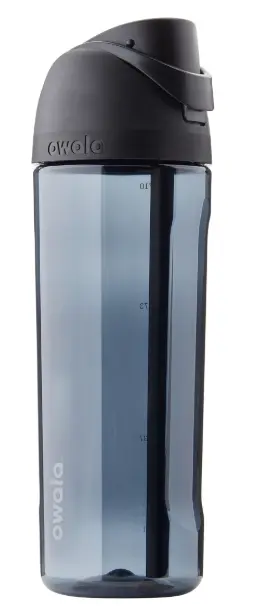
Owala FreeSip 25 oz Tritan Water Bottle with FreeSip Spout
The Owala FreeSip 25 oz combines durable, BPA-free Tritan construction with a patented FreeSip spout that lets you sip through the built-in straw or swig from the wide opening. Its push-button locking lid, cupholder-friendly design, and dishwasher-safe construction make it a practical choice for work, the gym, travel, and everyday hydration.
The Insulation Purist’s Choice
Choose the stainless-steel FreeSip.
Owala offers it in 24-, 32-, and 40-ounce sizes. Its triple-layer vacuum insulation is designed to keep water cold for up to 24 hours. If you want ice waiting for you at the end of the day, this is the one.
The trade-off is a few extra minutes at the sink.
The lid can go on the top rack, and the straw can go in the silverware basket. Hand-wash the stainless cup with warm, soapy water and a soft bottle brush. That minor inconvenience protects the finish and gives the insulation its best chance of lasting.
I’ll happily scrub one cup to avoid lukewarm water.
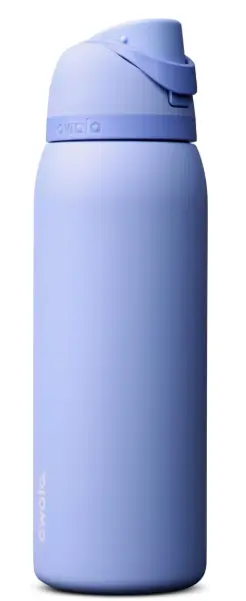
Owala FreeSip 40 oz Insulated Stainless Steel Water Bottle with Straw
The Owala FreeSip 40 oz combines a patented sip-or-swig spout with double-wall insulation to keep drinks cold for up to 24 hours. Its leakproof push-button lid, built-in carry loop, and wide-mouth opening make it easy to hydrate at the gym, on the road, or throughout busy days.
The On-the-Go Coffee Drinker
Choose the SmoothSip Slider.
It’s insulated, cup-holder friendly, and leakproof when the slider is fully closed. The regular version comes in 12- and 20-ounce sizes, making it a solid choice for commutes, school runs, and coffee that needs to survive a crowded bag. If you’re looking at larger options, our 34 oz water bottle comparison can help.
The stainless cup is hand-wash only if you want to protect the finish. The lid, slider, gaskets, and other removable lid pieces are dishwasher-safe.
Do not toss the assembled lid into the dishwasher and assume the job is done.
Coffee oils love hiding beneath that slider. Tea drinkers, on the other hand, might prefer a tea infuser bottle for fresh brews. You should push the slider upward to pop it off, rotate the seal 90 degrees, and remove the surrounding rubber seal. Put the lid on the top rack and secure the small pieces in the utensil basket.
Clean those pieces regularly. Otherwise, yesterday’s latte eventually becomes today’s funky aftertaste.
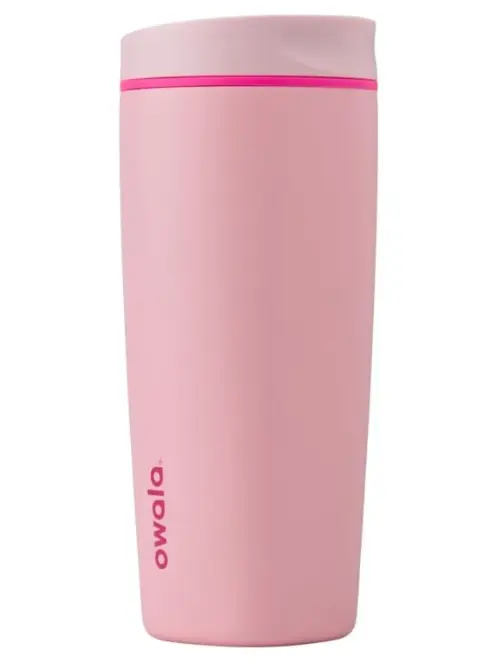
Owala SmoothSip Slider 20 oz Insulated Stainless Steel Coffee Tumbler
The Owala SmoothSip Slider 20 oz combines a completely leakproof lid with a SmoothSip drinking spout for comfortable, spill-free sipping. Double-wall insulation keeps coffee hot for up to 6 hours and iced drinks cold for up to 24 hours, making it the perfect travel mug for commuting, work, and everyday use.
The Kid-Friendly Option
Choose the 16-ounce Kids’ FreeSip.
It has the same sip-or-swig spout as the adult version, but the smaller size is easier for little hands to carry. The locking carry loop helps prevent backpack leaks, and the insulated stainless cup keeps water cold through school, practice, and whatever happens in between.
The cup still needs hand-washing. Fortunately, the messiest parts do not.
Owala says the lid and straw can go on the dishwasher’s top rack. Pop out the rubber gasket and place it securely in the utensil basket.
That is a reasonable parent compromise: two minutes to hand-wash the cup while the lid, straw, and mold-prone gasket let the dishwasher do the dirty work.
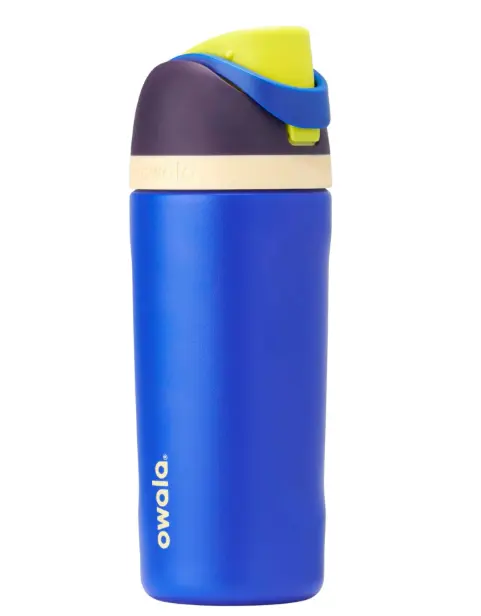
Owala FreeSip Kids 16 oz Insulated Stainless Steel Water Bottle
The Owala FreeSip Kids 16 oz combines a patented sip-or-swig spout with double-wall insulation to keep drinks cold for up to 24 hours. Its leakproof push-button lid, built-in carry loop, and kid-friendly design make it perfect for school, sports, travel, and everyday adventures.
Which Owala Is Right for Your Cleaning Habits?
There’s no universally perfect Owala.
There’s only the one whose cleaning routine you won’t resent three weeks after buying it.
Answer these questions to find your match.
Question 1: Do You Want the Entire Bottle to Go in the Dishwasher?
Yes. Hand-washing is not happening.
Continue to Question 2.
No. I can spare two minutes to hand-wash the cup.
Skip to Question 3.
Question 2: Is a Built-In Straw Important?
Yes. Give me the straw.
Your best match is the 25-ounce FreeSip Tritan. The cup, lid, and other Tritan components are top-rack dishwasher-safe. Remove the straw and gasket so water can reach every surface, then secure those smaller pieces in the utensil basket.
This is the easiest Owala for dishwasher-reliant adults.
I need a child-sized bottle.
The current 16-ounce Kids’ FreeSip uses a stainless-steel cup, so it is not a true toss-everything-in option. The lid and straw can go on the top rack, but the cup should be hand-washed.
If you find an older plastic kids model, check the listing carefully. It must explicitly say Eastman Tritan plastic and top-rack dishwasher safe. A colorful plastic-looking lid does not mean the cup is Tritan.
No. I don’t want a straw.
There is no clear straw-free, fully top-rack-safe option in Owala’s current U.S. lineup. The SmoothSip Slider is the closest match, but its stainless cup still needs hand-washing.
If zero hand-washing is non-negotiable, the FreeSip Tritan remains the practical choice, even if you remove the straw and drink through the wider opening.
Question 3: What Will You Drink Most Often?
Ice water, all day.
Choose the stainless-steel FreeSip.
Its triple-layer vacuum insulation beats Tritan for temperature retention. The lid goes on the top rack, the straw goes in the silverware basket, and the cup gets a quick hand-wash.
A couple of minutes at the sink buys you colder water and slower-melting ice. If you’re tracking your daily intake, our gallon-to-bottle conversions guide can help.
Coffee or tea on the go.
Choose the SmoothSip Slider.
It is insulated, cup-holder friendly, and leakproof when locked. Hand-wash the cup and place the disassembled lid components in the dishwasher. Clean beneath the slider regularly unless you enjoy yesterday’s coffee haunting today’s brew.
A bottle for a child.
Choose the 16-ounce Kids’ FreeSip.
It is smaller, insulated, leakproof when closed, and designed for ages three and up. Hand-wash the stainless cup. Put the lid and straw on the top rack, with the removable gasket secured in the utensil basket.
Your Quick Match
- Maximum dishwasher convenience: 25-ounce FreeSip Tritan
- Best cold retention: Stainless-steel FreeSip
- Best for coffee: SmoothSip Slider
- Best for children: 16-ounce Kids’ FreeSip
Frequently Asked Questions
Can I Put My Stainless-Steel Owala in the Dishwasher?
Will the Dishwasher Ruin the Vacuum Insulation?
What Happens to My Warranty if I Dishwasher the Cup?
How Do I Clean the Straw?
Can I Use Bleach?
How Often Should I Deep-Clean My Owala?
Are Tritan Plastic Owala Dishes Dishwasher Safe?
Can I Leave the Gasket Attached in the Dishwasher?
How Do I Remove a Metallic Taste?
Do I Need Special Cleaning Tools?
Conclusion: The Golden Rules of Owala Dishwasher Safety
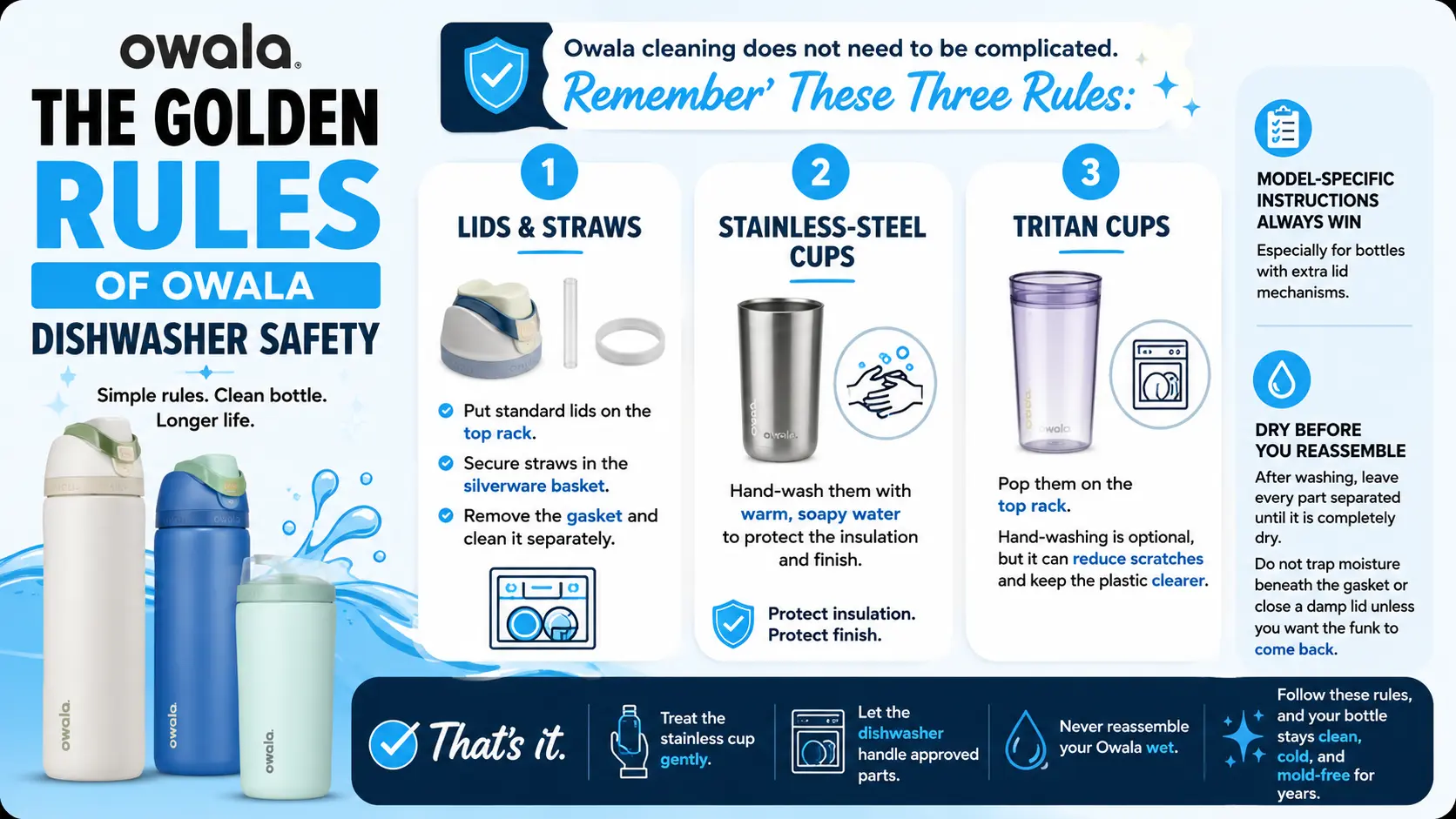
Owala cleaning does not need to be complicated.
Remember these three rules:
- Lids and straws: Put standard lids on the top rack and secure straws in the silverware basket. Remove the gasket and clean it separately.
- Stainless-steel cups: Hand-wash them with warm, soapy water to protect the insulation and finish.
- Tritan cups: Pop them on the top rack. Hand-washing is optional, but it can reduce scratches and keep the plastic clearer.
Model-specific instructions always win, especially for bottles with extra lid mechanisms.
After washing, leave every part separated until it is completely dry. Do not trap moisture beneath the gasket or close a damp lid unless you want the funk to come back.
That’s it.
Treat the stainless cup gently, let the dishwasher handle approved parts, and never reassemble your Owala wet. Follow those rules, and your bottle should stay clean, cold, and mold-free for years.
Quick-Reference Owala Care Card
Do
- Remove the gasket and clean its groove separately.
- Put approved lids on the top rack and secure straws in the silverware basket.
- Use diluted distilled white vinegar for stubborn odors and mineral buildup.
- Check the flip mechanism, button, and lid seams for trapped gunk.
- Let every part air-dry completely.
Don’t
- Use bleach, metal brushes, or abrasive scrubbers.
- Put stainless-steel cups in the dishwasher; hand-wash them instead.
- Place approved Tritan parts anywhere except the top rack.
- Mix vinegar with bleach, disinfectants, or cleaning tablets.
- Reassemble the bottle while any part is damp.
When in doubt, check the instructions for your exact model.
With the right care, your Owala will stay fresh, safe, and beautiful for years, and now you know exactly how to make that happen.