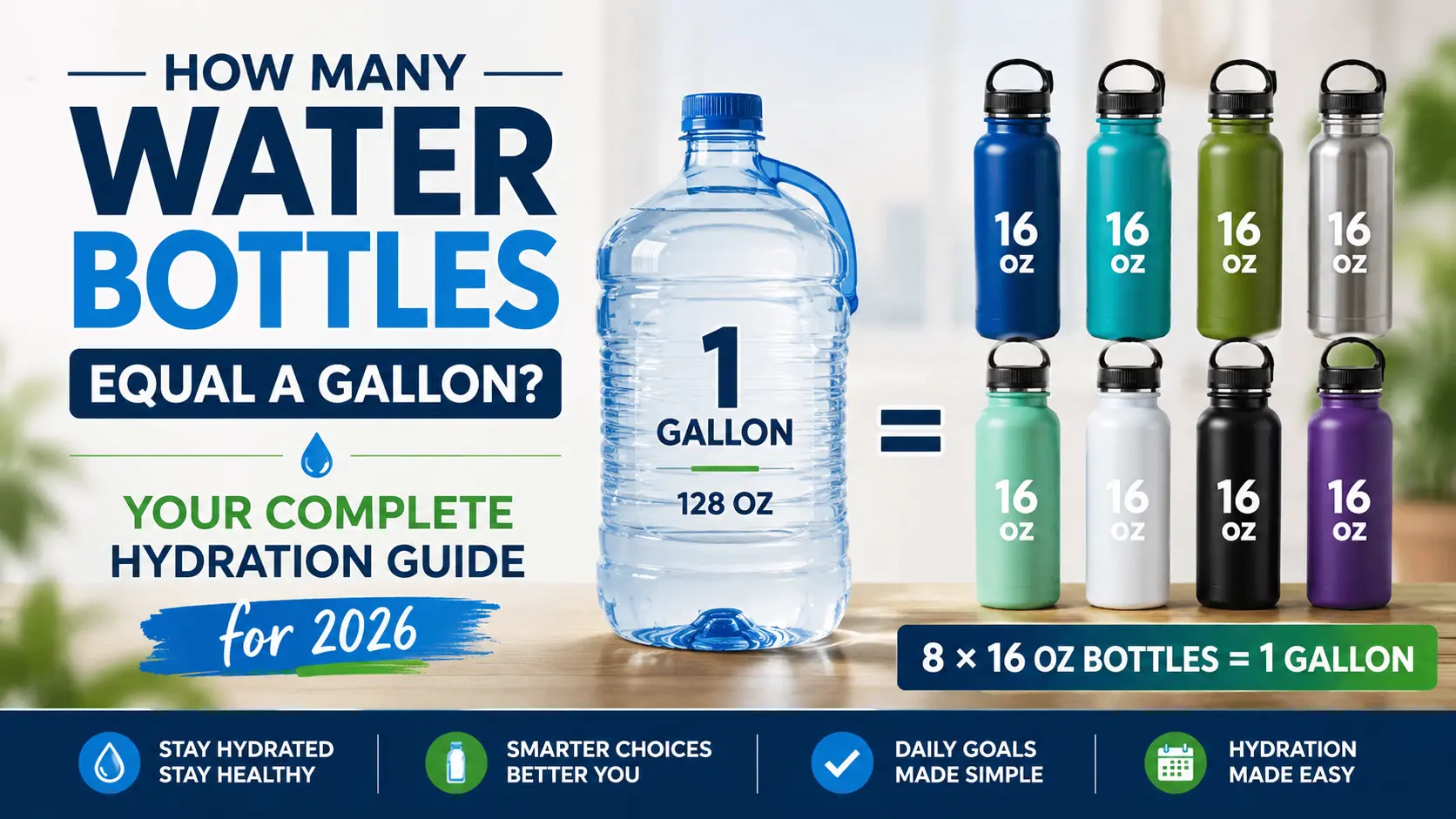
You’ve probably heard that drinking a gallon of water a day can support better energy, clearer skin, and sharper focus. But the moment you look at your reusable bottle, the goal becomes surprisingly confusing.
How many times do you actually need to refill it?
The answer depends entirely on the bottle in your hand. A 16.9-ounce bottle takes about eight refills to reach a gallon. A 24-ounce bottle needs a little over five. A 32-ounce bottle needs exactly four.
That is where most people get stuck.
Every reusable bottle seems to come in a different size, and constantly calculating ounces can make a simple water goal feel like homework. You may stop tracking altogether, underestimate how much you have sipped, or spend the day wondering whether you are even close to your target.
Meanwhile, single-use plastic bottles keep piling up, and a routine that should feel healthy and sustainable starts to feel inconvenient.
The good news is that you do not need complicated formulas or an oversized jug.
I used to carry a bulky 64-ounce half-gallon bottle everywhere. After tracking my routine for a week, I realized that a lightweight 24-ounce bottle with a straw lid actually helped me drink more. It was easier to hold, easier to refill, and easier to sip from while working.
The best bottle is not always the biggest one. It is the one you will consistently use.
Key Takeaways
- One US gallon equals 128 fluid ounces.
- Divide your daily water goal by your bottle size to calculate bottlefuls.
- A gallon is not necessary for everyone; needs vary by activity, climate, diet, and health.
- Choose a bottle that fits your routine: smaller for portability, larger for fewer refills.
- Straw lids, visible reminders, apps, and habit stacking make tracking easier.
- A reusable bottle can reduce plastic waste and save money over time.
In this guide, you will learn exactly how many bottles make a gallon for every common bottle size, from 8 ounces to 64 ounces. You will also get a simple method for estimating a daily water goal that fits your body, activity level, climate, and routine, because one gallon is not the right target for everyone.
You will also find practical bottle recommendations, real-life tracking examples, expert-backed habit tips, and a printable refill cheat sheet you can keep on your phone or refrigerator.
And there is another benefit. Switching from single-use plastic bottles to one reliable reusable bottle can reduce waste and save a surprising amount of money over time.
By the end, you will know exactly how many refills your bottle needs and how to turn your water goal into a routine that feels natural rather than forced.
Ready to simplify the math?
Let’s start with the basic conversion.
The Simple Math: How Many Ounces Are in a Gallon?
Start with one number:
1 US gallon = 128 US fluid ounces.
That is the foundation for every bottle calculation in this guide. The National Institute of Standards and Technology lists a US gallon as exactly 128 US fluid ounces. For comparison, a British imperial gallon contains 160 British fluid ounces, but this guide uses the US measurement.
Once you remember 128, the rest is simple.
The Gallon-to-Bottle Formula
Divide 128 by the capacity of your bottle:
128 ÷ bottle size in ounces = number of bottlefuls per gallon
For example, say you use a 32-ounce reusable bottle:
128 ÷ 32 = 4
You need to drink four full 32-ounce bottles to reach one gallon.
One small detail matters here: bottlefuls and refills are not always the same thing. If you begin the day with a full bottle, four bottlefuls means the initial fill plus three refills.
Here are a few more examples:
- 16-ounce bottle: 128 ÷ 16 = 8 bottlefuls
- 24-ounce bottle: 128 ÷ 24 = 5.33 bottlefuls
- 32-ounce bottle: 128 ÷ 32 = 4 bottlefuls
- 40-ounce bottle: 128 ÷ 40 = 3.2 bottlefuls
- 64-ounce bottle: 128 ÷ 64 = 2 bottlefuls
When the result includes a decimal, you do not need to guess. The decimal simply tells you how much of the final bottle to drink.
With a 24-ounce bottle, for instance, five full bottles give you 120 ounces. You would need only another 8 ounces, not an entire sixth bottle, to reach 128 ounces.
What About a 16.9-Ounce Water Bottle?
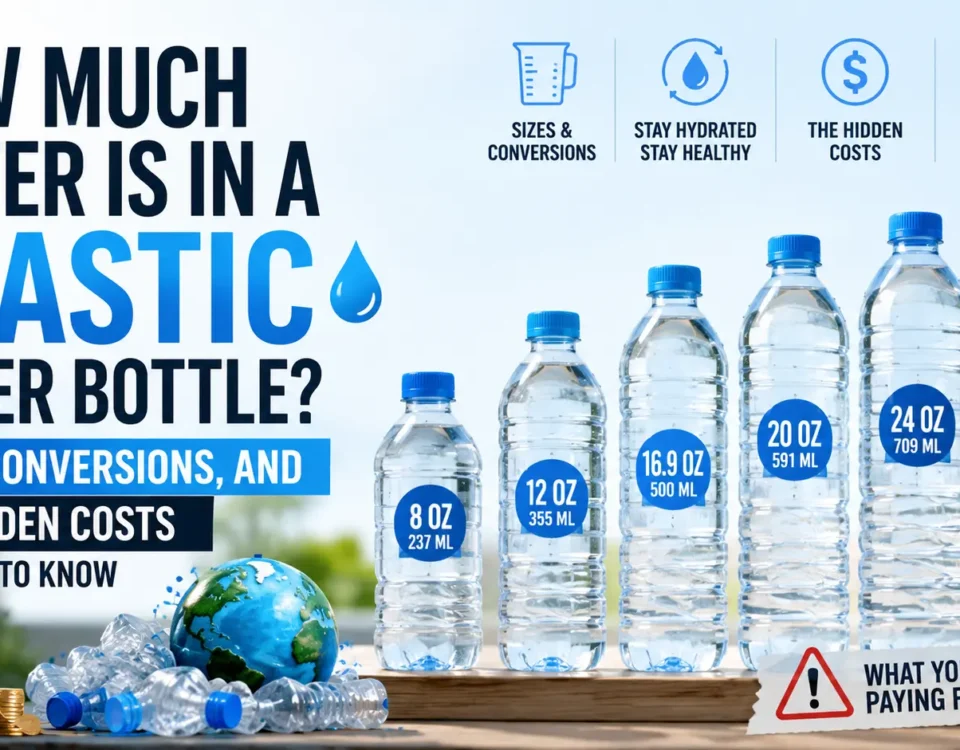
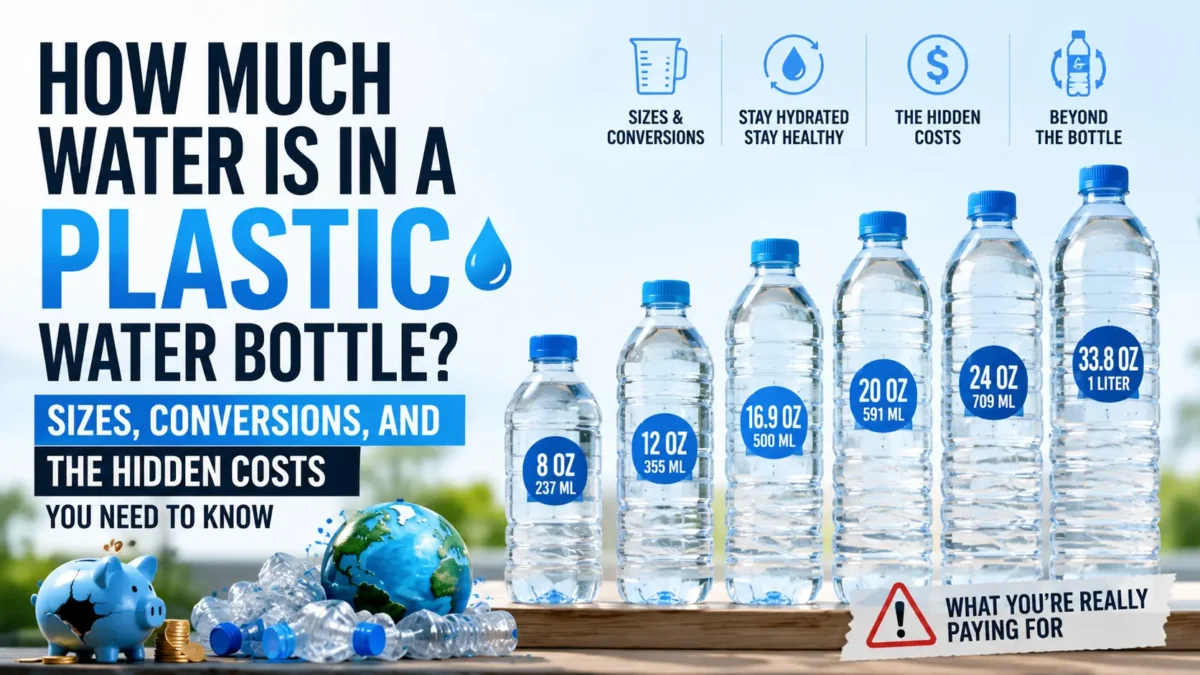
A standard 16.9-ounce disposable bottle is roughly equal to 500 milliliters, though the exact number of ounces in a water bottle can vary by brand. To find out how many make a gallon:
128 ÷ 16.9 = about 7.6 bottles
In practical terms, that is seven full bottles plus about 9.7 ounces from an eighth bottle. Rounding up, you would need eight bottles available to hold at least one gallon.
But carrying and throwing away eight disposable bottles every day is neither convenient nor sustainable. A reusable bottle gives you a much simpler routine: choose your bottle size, calculate your target once, and track each refill as you go.
Remember: 128 divided by your bottle size tells you exactly how many bottlefuls make a gallon.
Now that the basic math is clear, let’s calculate the number of bottlefuls and refills for every common reusable bottle size.
Conversion Table: How Many Bottles Make a Gallon?
The bottle you use can make your daily water goal feel simple, or surprisingly tedious.
A smaller bottle is light, portable, and easy to sip from, but you will visit the sink more often. A larger bottle needs fewer refills, though it can feel heavy when full.
The table below shows how many bottlefuls of each common size equal one US gallon, or 128 ounces.
Bottle size | Bottlefuls per gallon | Practical tracking note |
12 oz | 10.7 | A common size for children or anyone who prefers a small, lightweight bottle. Drink 10 full bottles, then 8 ounces from the eleventh. |
16.9 oz | 7.6 | The standard size of many disposable water bottles. Seven full bottles provide 118.3 ounces, so you need another 9.7 ounces from the eighth. |
18 oz | 7.1 | A portable size that can fit easily into a work bag or cupholder. Hydro Flask offers an 18-ounce Standard Mouth bottle. Drink seven full bottles, then 2 ounces from the eighth. |
20 oz | 6.4 | A practical gym or commuting size. Six full bottles provide 120 ounces, followed by 8 ounces from the seventh. |
22 oz | 5.8 | A useful middle ground between portability and fewer sink trips. Takeya offers 22-ounce Sport and Actives bottles. Drink five full bottles, then 18 ounces from the sixth. |
24 oz | 5.3 | A comfortable everyday size for desks, errands, and workouts. The Owala FreeSip is available in a 24-ounce version. Five full bottles provide 120 ounces, so the final portion is just 8 ounces. |
26 oz | 4.9 | Just under five bottlefuls make a gallon. The YETI Rambler is available in a 26-ounce size. After four full bottles, drink 24 ounces from the fifth. |
32 oz | 4 | One of the easiest sizes to track: four full bottles equal exactly one gallon. Nalgene describes its 32-ounce size as its most popular and offers it in the classic Wide Mouth design. |
40 oz | 3.2 | A good choice when you want fewer trips to refill. Three full bottles provide 120 ounces, leaving only 8 ounces to finish. Hydro Flask offers a 40-ounce Wide Mouth bottle. |
64 oz | 2 | A half-gallon jug makes the math effortless: finish one in the first part of the day and a second later. The trade-off is that 64 ounces of water alone weighs about four pounds, before counting the bottle. |
A Quick Note About “Refills”
People often use bottles and refills to mean the same thing, but there is a small difference.
If you begin the day with a full 32-ounce bottle, you need to drink four bottlefuls to reach a gallon. However, you only physically refill it three times after the initial fill.
So:
Bottlefuls per gallon = 128 ÷ bottle capacity
Actual refills = bottlefuls after your first full bottle
For everyday tracking, counting completed bottlefuls is usually easier. Each time you finish your bottle, add one check mark in your phone, planner, or bottle-tracking app.
Which Bottle Size Fits Your Routine?
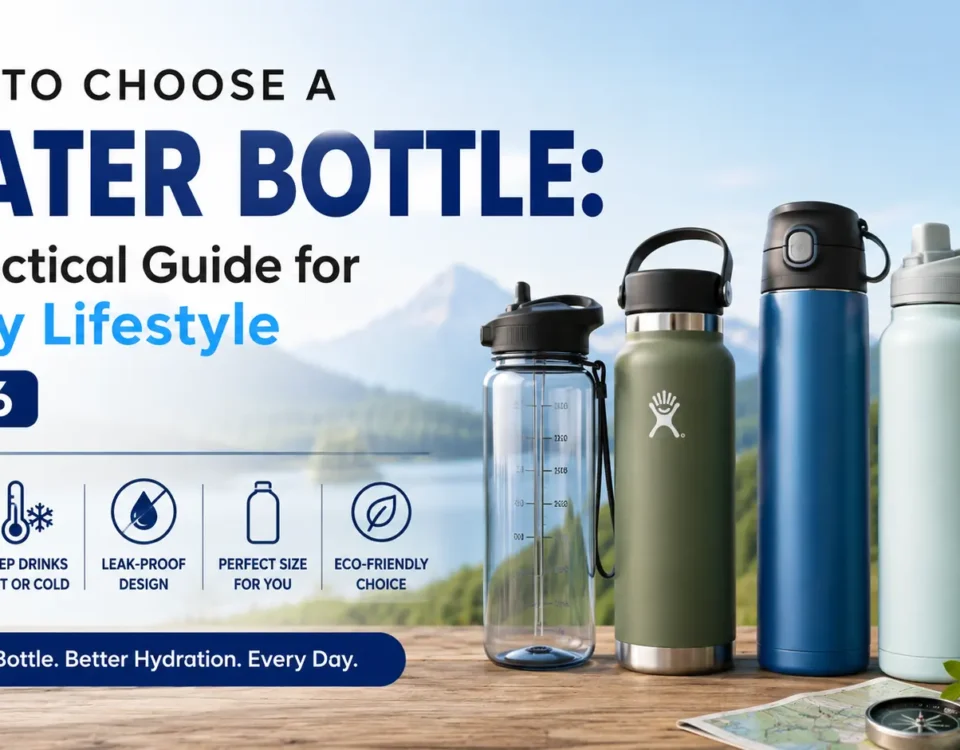
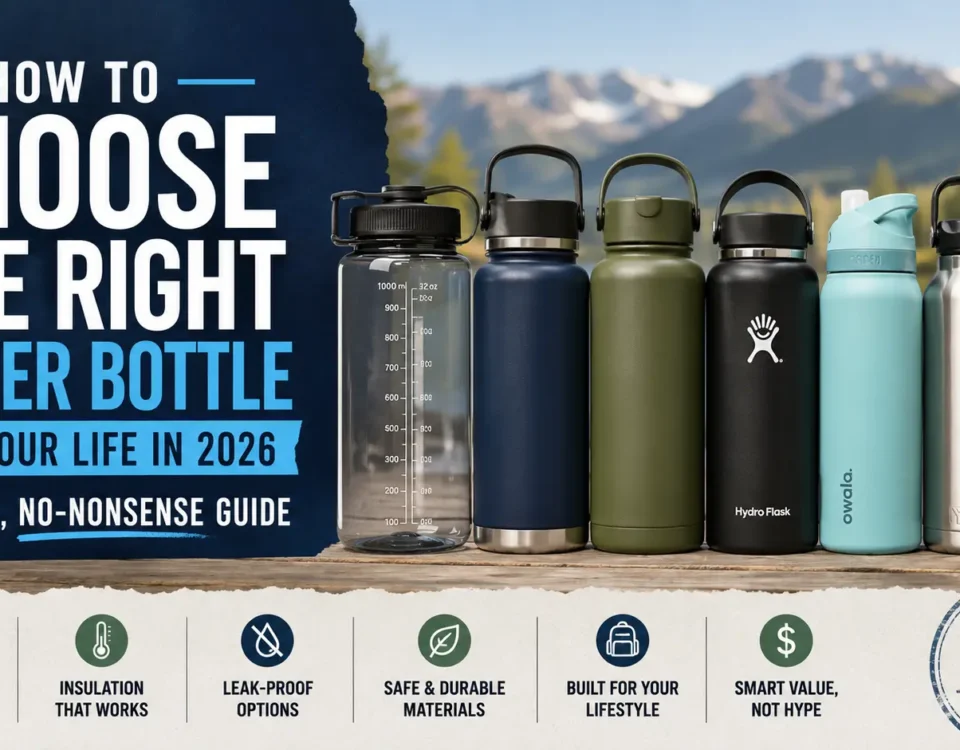
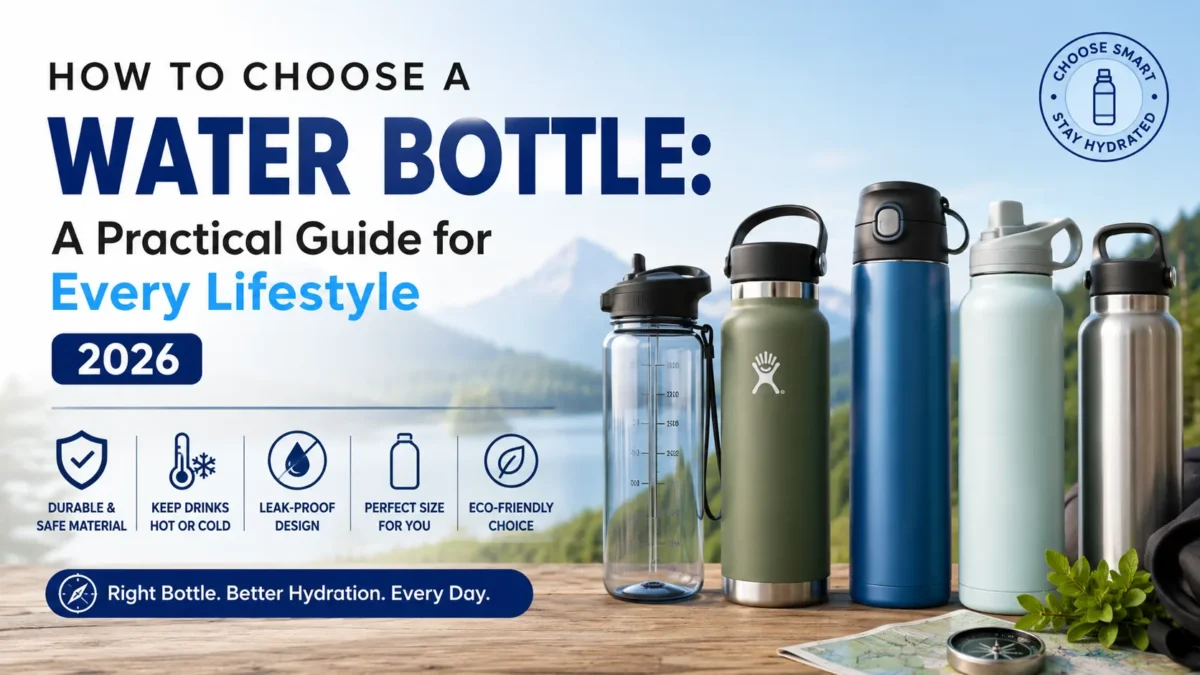
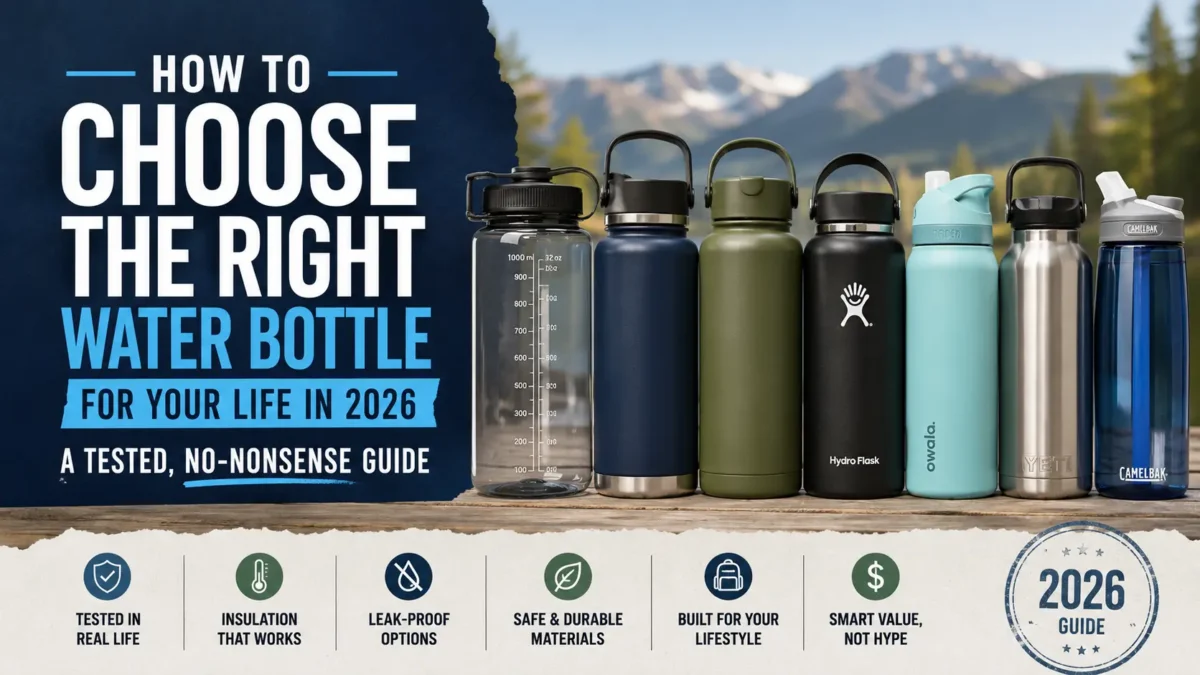
Choose based on how you actually move through the day. If you are still comparing capacities, materials, insulation, and lid styles, our guide on how to choose a water bottle can help you find an option that fits your daily routine as well as your hydration goal.
A 12- to 20-ounce bottle, like the smaller Hydro Flask sizes, may work well if you want something light that fits easily into a bag or cupholder. Just expect more refill stops.
A 22- to 32-ounce bottle offers a comfortable balance, and the CamelBak Chute Mag is a popular choice in this range. It is large enough to reduce trips to the sink but still manageable at a desk, in the car, or at the gym, and our comparison of 34-ounce bottles explores a similar size.
A 40- to 64-ounce bottle cuts down the math and the number of refills. It can work well for long shifts, outdoor activities, or places where cold water is not always nearby. The downside is weight and bulk.
The right bottle is not automatically the largest one.
It is the one you will keep nearby, refill consistently, and enjoy sipping from.
How Much Water Do You Actually Need? Beyond the 8-Glass Rule
The familiar “eight glasses a day” rule gives you a neat target:
8 glasses × 8 ounces = 64 ounces
It is easy to remember. But it is not a personalized requirement.
A 120-pound office worker in a cool climate will not necessarily need the same amount of water as a 200-pound construction worker spending the afternoon outside. Your body size, activity, weather, diet, health, pregnancy status, and even how much you sweat can change your needs.
So, instead of treating 64 ounces, or one full gallon, as a rule, use it as a starting point.
What the Official Guidelines Actually Say
The National Academies of Sciences, Engineering, and Medicine established an adequate daily intake of approximately:
- 125 ounces for men
- 91 ounces for women
Those figures often get repeated without an important detail: they refer to total water from all beverages and food, not the amount of plain water you must pour into your reusable bottle.
Water-rich foods such as fruit, vegetables, soup, yogurt, and cooked grains all contribute. Coffee, tea, milk, and other drinks also count toward the total, and using one of the best tea infuser bottles makes it easy to enjoy tea on the go In the data used by the National Academies, beverages supplied approximately 101 ounces for men and 74 ounces for women ages 19 to 30, with the remainder generally coming from food.
That means most people do not need to drink 125 ounces of plain water on top of everything they eat and drink.
Mayo Clinic: Your Needs Can Change Daily
The Mayo Clinic’s water guidance makes the same point: there is no perfect amount that applies to everyone.
Your needs may increase when you:
- Exercise or sweat heavily
- Spend time in hot or humid weather
- Visit a high-altitude location
- Have a fever, vomiting, or diarrhea
- Are pregnant or breastfeeding
For many healthy adults, thirst is a useful guide. Urine that is pale yellow rather than dark can also be a practical sign that you are drinking enough. The Mayo Clinic recommends drinking regularly throughout the day and adding more water before, during, and after activities that make you sweat.
CDC: Make Plain Water the Easy Choice
The Centers for Disease Control and Prevention also notes that water needs vary according to factors such as age, sex, activity level, pregnancy, breastfeeding, and climate.
Plain water is usually the simplest choice because it has no calories or added sugar. The CDC specifically recommends carrying a reusable bottle, serving water with meals, and keeping cold water available as easy ways to increase fluid intake throughout the day.
That last tip sounds basic, but it works.
When your bottle is beside you, you sip. When it is hidden in a cupboard, or left at home, you forget.
A Simple Personalized Water Formula
There is no officially prescribed formula based only on body weight. However, the following calculation can give you a practical starting estimate for tracking plain water:
Your weight in pounds × 0.5 = baseline ounces per day
For example:
150 pounds × 0.5 = 75 ounces
Treat that number as a flexible planning target, not a medical prescription. It can help you choose a bottle size and create a refill routine, but it cannot measure your exact needs or account for every drink and water-rich food you consume.
You can then make a few simple adjustments:
- Add approximately 12 ounces for every 30 minutes of exercise
- Add around 8 to 16 ounces during a hot or humid day
- Drink more when you are losing extra water through heavy sweating or illness
- Follow professional advice during pregnancy, breastfeeding, or when managing a health condition
Your sweat rate can differ significantly from someone else’s, even during the same workout. Use these additions as planning estimates and pay attention to thirst, weather, workout intensity, and how your body responds.
Manual Calculation Example
Imagine you weigh 150 pounds, exercise for one hour, spend part of the day in hot weather, and use a 24-ounce reusable bottle.
Step 1: Calculate your baseline
150 × 0.5 = 75 ounces
Step 2: Add water for exercise
60 minutes ÷ 30 = 2
2 × 12 ounces = 24 additional ounces
Step 3: Add a weather adjustment
For this example, add 12 ounces for the heat.
Step 4: Find your estimated daily goal
75 + 24 + 12 = 111 ounces
Step 5: Convert the goal into bottlefuls
111 ÷ 24 = 4.6 bottlefuls
Four full 24-ounce bottles provide 96 ounces. You would then drink another 15 ounces from your fifth bottle to reach the estimated 111-ounce goal.
That is much easier to follow than trying to track 111 individual ounces throughout the day.
Your routine could look like this:
- First bottle by breakfast
- Second bottle before lunch
- Third bottle during the afternoon
- Fourth bottle around your workout
- Final 15 ounces with dinner or during the evening
The exact timing can change. The useful part is turning one large number into a few visible refill checkpoints.
Try the Hydration Calculator
Prefer an App?
If you do not want to calculate every refill manually, an app such as WaterMinder lets you set a daily goal, create custom cup or bottle sizes, log drinks, and schedule reminders.
For example, you could save your reusable bottle as “24-ounce bottle.” Each time you finish it, one tap adds 24 ounces to your daily total. That is faster than entering a new amount every time you sip.
You can also use a simpler system:
Draw four or five small lines on a sticky note and cross one out each time you finish a bottle.
No app. No complicated chart. Just sip, refill, and mark your progress.
Do Not Force a Gallon
A gallon is a convenient unit of measurement, not a universal health requirement.
Some people may need close to that amount because of their size, activity, climate, or pregnancy and breastfeeding needs. Others may need considerably less, especially because food and other drinks contribute to their daily total.
More is not always better. Drinking excessive amounts of water too quickly can dilute sodium in the blood, causing a dangerous condition called hyponatremia. Although this is uncommon in healthy adults, it is one reason not to force water after you are comfortably satisfied.
If you have been told to restrict water because of a medical condition or medication, follow your healthcare professional’s plan rather than a general calculator.
The best goal is not the biggest number. It is an amount that fits your body, your day, and a routine you can maintain.
Best Reusable Water Bottles for Tracking Your Gallon Goal
A good reusable bottle should do more than hold water.
It should make your daily goal easier to see, sip, and track.
For this guide, we focused on bottles that fit naturally into real routines. That means clear capacity information, lids that are comfortable to use throughout the day, durable materials, and sizes that make the refill math simple.
The bottles were selected using hands-on experience with reusable bottle styles, verified product specifications, customer feedback, and overall market popularity. We also considered common complaints, not just the features highlighted by manufacturers.
No brand paid to appear in this guide, and no bottle earned a place simply because it was popular. Each option includes both advantages and drawbacks so you can choose based on your routine rather than marketing claims.
How We Chose the Bottles
We compared each bottle using the following criteria:
Easy tracking: The capacity should be clearly listed, and bonus points went to bottles with visible ounce markings or time markers.
Practical bottle size: We chose sizes that match the most common refill goals, including 24, 26, 32, 40, and 64 ounces.
Comfortable lid: Straw lids, chug caps, and wide-mouth openings were assessed for how easy they are to sip from, refill, and clean.
Cold-water performance: Insulated bottles received extra consideration when they could keep water cold for long workdays, workouts, or outdoor use.
Durability: The bottle should handle regular use without leaking, cracking, or wearing out quickly.
Portability: We considered weight, handle design, cupholder compatibility, and whether the bottle is practical to carry when full.
Cleaning: Bottles with complicated lids or hard-to-reach parts may require more maintenance, so ease of cleaning was included in the final assessment.
Value: The most expensive bottle is not automatically the best. We looked at whether the design, materials, insulation, and expected lifespan justified the price.
Every bottle has a trade-off.
A 64-ounce jug may reduce your refill count, but it can feel heavy and awkward to carry. A 24-ounce bottle is easier to handle, yet you will need to refill it more often. An insulated stainless-steel bottle keeps water cold, while a clear plastic bottle makes it easier to see exactly how much you have left.
The best option is the one that matches the way you actually spend your day.
YETI Rambler 26 oz Bottle with Chug Cap
Best for durability and cold water
The YETI Rambler 26 oz Bottle is a strong choice for anyone who wants a tough, insulated bottle without carrying a bulky half-gallon jug.
Its 26-ounce capacity also makes tracking fairly straightforward:
128 ÷ 26 = 4.9 bottlefuls
That means four full bottles give you 104 ounces. You then need another 24 ounces from your fifth bottle to complete a gallon.
If you start the morning with the bottle already full, that works out to four actual refills, with the last fill stopping two ounces below the top.
Why It Works for Tracking
The 26-ounce size sits in a useful middle ground. It carries more water than a small everyday bottle, but it is still easier to manage than most 40- or 64-ounce options.
The Chug Cap has a removable handle and a shatter-resistant spout designed for controlled gulps. Unscrewing the entire cap reveals a wide opening, making it easier to add ice, refill the bottle, and reach inside when cleaning.
Its double-wall vacuum insulation helps keep cold water cold, making it one of the best water bottles for cold water, while the sweat-resistant exterior prevents condensation from leaving your hands or desk wet. The bottle is made from puncture- and rust-resistant 18/8 stainless steel and is dishwasher safe.
Pros
- Extremely durable stainless-steel construction
- Double-wall insulation keeps water cold
- Chug spout makes it easy to drink quickly
- Wide opening accommodates ice and simplifies cleaning
- Leakproof when properly closed
- Bottle and cap are dishwasher safe
Cons
- Weighs approximately 1.4 pounds before water is added
- A full 26-ounce bottle will feel noticeably heavier
- May be too wide for many standard car cupholders
- Costs more than a basic plastic reusable bottle
- Chug-style drinking may not suit people who prefer a straw lid
YETI itself notes that its bottles may be too large for most cupholders, so commuters should measure their available space before buying.
Best For
Choose the YETI Rambler 26 oz Bottle if you want a rugged, no-fuss option for work, the gym, travel, or outdoor use, and you do not mind carrying a little extra weight.
It is particularly useful for people who prefer cold water and want a bottle that can handle daily bumps, drops, and repeated washing.
Simple tracking routine: Finish two bottles by lunch, two more by dinner, and drink 24 ounces from the fifth bottle during the evening.
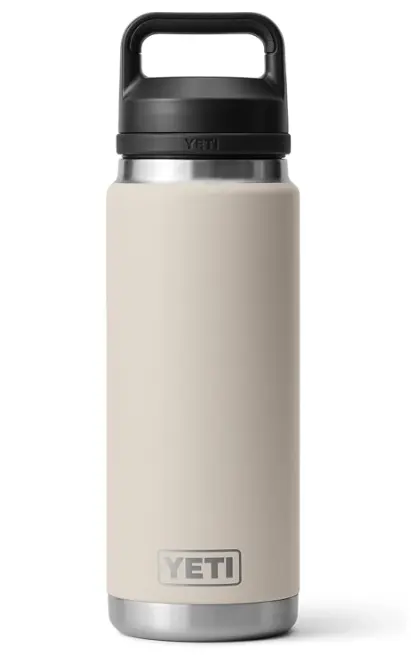
YETI Rambler 26 oz Vacuum-Insulated Water Bottle with Chug Cap
The YETI Rambler 26 oz combines rugged 18/8 stainless-steel construction with double-wall vacuum insulation to keep drinks at the ideal temperature for hours. Its 100% leakproof Chug Cap, sweat-free exterior, and dishwasher-safe design make it a dependable companion for commuting, workouts, travel, and outdoor adventures.
Owala FreeSip 24 oz Water Bottle
Best for easy sipping at a desk or on the go
The Owala FreeSip 24 oz is a practical everyday bottle for people who want the convenience of both a straw and a wide drinking opening.
Its 24-ounce capacity also creates a simple tracking routine:
128 ÷ 24 = 5.3 bottlefuls
Five full bottles provide 120 ounces. You then need just 8 ounces from a sixth bottle to complete one gallon.
If you start the day with a full bottle, that means five actual refills, with the final refill only one-third full.
Why It Works for Tracking
The main attraction is Owala’s patented FreeSip spout. Keep the bottle upright to sip through the built-in straw, or tilt it back to drink through the wider opening. This flexibility is useful when you want small sips while working but prefer a faster drink after a walk or workout.
In my experience, a straw lid can make a meaningful difference during desk work. You do not have to unscrew a cap or tip a heavy bottle toward your face. You simply open the lid and sip while reading, typing, or commuting.
The push-button lid is designed to be leakproof when properly closed. Its carry loop also folds over the button to act as a lock, helping prevent the bottle from opening inside a bag. The wide opening leaves enough room for ice and makes the bottle easier to refill.
The stainless-steel bottle uses triple-layer insulation, and Owala advertises up to 24 hours of cold-water performance. Actual results will vary with the amount of ice used, the outside temperature, and how often you open the bottle.
Pros
- Built-in straw supports comfortable, frequent sipping
- Wider opening allows you to tilt and drink more quickly
- Leakproof push-button lid when properly secured
- Carry loop doubles as a lid lock
- Triple-layer insulated stainless-steel construction
- Wide bottle opening accommodates ice
- Available in a wide range of playful color combinations
- Slimmer and easier to carry than many larger bottles
Cons
- Five full bottlefuls still leave another 8 ounces to finish
- The cup should be hand-washed rather than placed in the dishwasher
- The lid contains more parts and crevices than a basic screw cap
- The straw and mouthpiece require regular, thorough cleaning
- Some people may prefer the faster flow of a traditional chug cap
- The 24-ounce capacity means more sink trips than a 32- or 40-ounce bottle
One detail in the original notes needs correcting: the lid is dishwasher safe, while Owala recommends hand-washing the stainless-steel cup.
Best For
The Owala FreeSip 24 oz is best suited to desk workers, students, commuters, and anyone who naturally drinks more through a straw.
It is also a strong choice for people who switch between slow sipping and quick drinks throughout the day. The locking lid and carry loop make it convenient for bags, while its manageable size is easier to hold than a half-gallon jug.
Simple tracking routine: Finish one bottle by breakfast, two more before the end of the workday, another around dinner, and the fifth during the evening. Then sip 8 ounces from the final fill to complete a gallon.
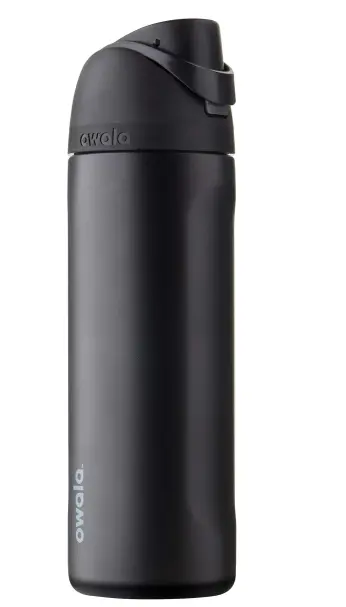
Owala FreeSip 24 oz BPA-Free Sports Water Bottle
The Owala FreeSip 24 oz combines a patented sip-or-swig spout with double-wall insulation to keep drinks cold for up to 24 hours. Its leakproof push-button lid locks securely to prevent spills, while the wide-mouth opening, carry loop, and cupholder-friendly base make it an excellent choice for work, travel, workouts, and everyday hydration.
Nalgene Wide Mouth 32 oz Bottle
Best lightweight bottle for simple tracking
The Nalgene Wide Mouth 32 oz keeps gallon tracking refreshingly simple.
128 ÷ 32 = 4 bottlefuls
There are no awkward decimals and no partially filled final bottle. Finish four full bottles, and you have reached exactly one US gallon.
One terminology note: if you begin the day with a full bottle, this means three actual refills after the initial fill, not four.
Why It Works for Tracking
The printed measurement markings along the side let you see how much water remains without opening the cap. That can be useful when you are halfway through a bottle and want a quick progress check.
The wide opening also makes everyday use easier, which is why many people prefer wide mouth water bottles. You can drop in standard ice cubes, add fruit, fill the bottle from a water filter, and reach inside more easily when cleaning, so it also works well as an infusion water bottle. Nalgene says the opening fits most filtration devices, while the bottle itself is leakproof and dishwasher safe.
Unlike insulated stainless-steel bottles, which can sometimes contain hidden plastic components, the Nalgene is remarkably light. The empty 32-ounce model weighs only 6.25 ounces, making it easier to carry on a hike or clip to a backpack, and it’s a top pick among ultralight water bottles.
The current bottle is made from BPA- and BPS-free Tritan Renew. According to Nalgene, the material is derived from 50% waste plastic using a certified mass-balance process.
Pros
- Four full bottles equal exactly one gallon
- Measurement markings help you track progress
- Lightweight at only 6.25 ounces when empty
- Wide opening accommodates ice and fruit
- Easy to fill and clean
- Fits most portable water-filtration devices
- Leakproof when the cap is properly tightened
- BPA- and BPS-free
- Dishwasher safe
- More affordable than most insulated steel bottles
Cons
- No insulation to keep water cold for long periods
- The exterior can collect condensation when filled with ice water
- The wide opening may release water too quickly when walking or riding in a vehicle
- A splash guard or Easy Sipper insert may be needed for more controlled drinking
- The large body may not fit every car cupholder
- Plastic can pick up scratches and odors over extended use
The phrase “virtually indestructible” is often used to describe Nalgene bottles, but highly durable is more accurate. The manufacturer describes the bottle as built to last, but no reusable bottle is completely resistant to cracking, warping, or wear.
Best For
The Nalgene Wide Mouth 32 oz is well suited to hikers, campers, students, travelers, and anyone who wants a simple bottle without the weight or price of stainless steel.
It is especially useful when low weight and visible tracking matter more than keeping water ice-cold all day.
Simple tracking routine: Finish one bottle by breakfast, a second by lunch, a third during the afternoon, and the fourth by dinner or early evening.
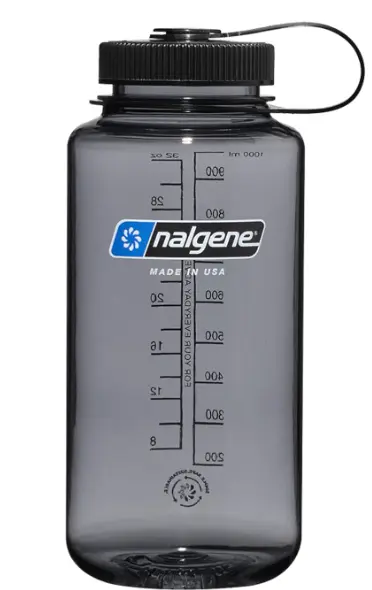
Nalgene 32 oz Wide Mouth Leakproof Water Bottle
The Nalgene 32 oz Wide Mouth bottle combines lightweight Tritan Renew construction with a leakproof, virtually indestructible design for everyday hydration. Its wide opening makes adding ice and cleaning effortless, while measurement markings and a dishwasher-safe build make it perfect for hiking, the gym, work, and travel.
Hydro Flask 40 oz Wide Mouth with Flex Straw Cap
Best for cold water and fewer refills
The Hydro Flask 40 oz Wide Mouth is a strong choice for people who want to carry more water without stepping up to a bulky half-gallon jug.
Its larger capacity makes gallon tracking simple:
128 ÷ 40 = 3.2 bottlefuls
Three full bottles provide 120 ounces. You then need just 8 ounces from a fourth bottle to complete one gallon.
If you begin the day with a full bottle, that means three refill stops, with the final refill only one-fifth full.
Why It Works for Tracking
The 40-ounce capacity gives you long stretches between refills. That can be useful during workouts, long shifts, road trips, or busy workdays when getting up for more water is easy to forget.
A straightforward routine could look like this:
- First bottle during the morning
- Second bottle by mid-afternoon
- Third bottle around dinner
- Final 8 ounces during the evening
The Flex Straw Cap also makes frequent sipping easier. It opens and closes with one hand, includes a flexible carry handle, and is designed to be leakproof when properly closed. The straw cap is intended for cold drinks rather than hot liquids.
Hydro Flask uses TempShield double-wall vacuum insulation and states that the bottle can keep drinks cold for up to 24 hours. Real-world performance will depend on the amount of ice, outside temperature, and how frequently you open it.
The Wide Mouth opening makes it easy to add ice, while the stainless-steel bottle is dishwasher safe and designed not to retain leftover flavors. It is also compatible with Hydro Flask’s other Wide Mouth caps and lids, giving you the option to switch between straw, chug, and standard cap styles.
Pros
- Three full bottles get you within 8 ounces of a gallon
- TempShield insulation keeps water cold for up to 24 hours
- Flex Straw Cap supports easy, frequent sipping
- Leakproof when the cap is properly closed
- Wide opening accommodates standard ice cubes
- Durable stainless-steel construction
- Dishwasher safe
- Compatible with different Wide Mouth lid styles
- Does not retain odors or leftover flavors
Cons
- Weighs about 1.05 pounds before water is added
- Feels noticeably heavy when filled with 40 ounces
- Costs more than a basic uninsulated bottle
- The standard 4-inch-wide body may not fit many car cupholders
- The straw and mouthpiece require more detailed cleaning than a simple screw cap
- Large size may feel awkward for children or people with smaller hands
The standard 40-ounce model measures approximately 4 inches across and 11.7 inches tall. Hydro Flask also sells a separate 40-ounce Travel Bottle with a narrower base for people who need better cupholder compatibility.
Best For
The Hydro Flask 40 oz Wide Mouth works best for gym-goers, outdoor workers, travelers, and anyone who prefers cold water throughout the day.
It is also a practical option for people who regularly forget to refill smaller bottles. You can carry a substantial amount, sip through the straw while working, and reach nearly one gallon with only three full bottlefuls.
Simple tracking routine: Finish one bottle before lunch, a second during the afternoon, and a third by dinner. Pour 8 ounces into the bottle one final time to complete your gallon.
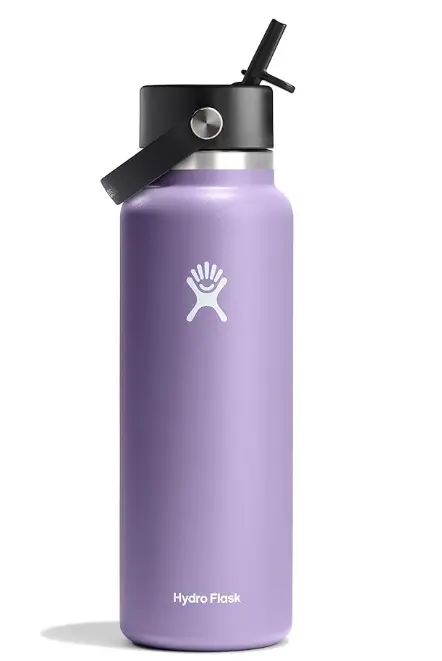
Hydro Flask 40 oz Vacuum-Insulated Water Bottle with Flex Straw Lid
The Hydro Flask 40 oz combines TempShield double-wall insulation with a leakproof Flex Straw Lid to keep drinks cold for up to 24 hours. Its wide-mouth opening makes adding ice and refilling effortless, while the durable stainless-steel construction and dishwasher-safe design make it perfect for work, travel, workouts, and outdoor adventures.
Iron Flask 64 oz Wide Mouth Bottle
Best for minimizing refill stops
The Iron Flask 64 oz is built for people who would rather fill a large bottle twice than keep returning to the sink.
Its half-gallon capacity makes the math effortless:
128 ÷ 64 = 2 bottlefuls
Finish one full bottle during the first half of your day, refill it once, and finish the second bottle later.
That means you need two bottlefuls but only one actual refill to reach a US gallon.
Why It Works for Tracking
A 64-ounce bottle gives you a clear halfway checkpoint. There are no decimals, partial final fills, or check marks to count.
When the first bottle is empty, you are halfway there.
Iron Flask offers its Wide Mouth Bottle in a 64-ounce size. The insulated stainless-steel design is advertised to keep drinks cold for up to 24 hours and hot for up to 12 hours. The bottle family also includes three lid styles: a carabiner straw lid, a flip lid, and a stainless-steel screw-on lid.
The straw lid works well when you want to sip steadily at a desk. The flip lid offers a faster flow, while the screw-on lid gives you a simpler closure for carrying or storage.
Just remember that “portable” is relative at this size.
A retailer lists the empty 64-ounce bottle at approximately 1.70 pounds without its lid. Add four pounds of water, and the filled bottle weighs roughly 5.7 pounds before counting the lid.
That is manageable on a desk or beside a workout station. It is less convenient during a crowded commute.
Pros
- Two full bottlefuls equal exactly one gallon
- Requires only one refill after the initial fill
- Large capacity reduces trips to the sink
- Double-wall vacuum insulation
- Keeps water cold for up to 24 hours
- Sweat-resistant exterior
- Includes multiple lid styles
- Wide opening makes adding ice easier
- Durable stainless-steel construction
- Leakproof when the selected lid is correctly closed
Cons
- Weighs close to six pounds when filled
- Too large for standard car cupholders
- Awkward to carry in many everyday bags
- May feel tiring to lift repeatedly with one hand
- Takes up considerable desk or refrigerator space
- The large body may be difficult to clean in a shallow sink
- Iron Flask recommends hand-washing its insulated bottles rather than relying on a dishwasher.
Best For
The Iron Flask 64 oz works best for people who work from home, sit at a stationary desk, train in a home gym, or spend long periods somewhere without convenient refill access.
It is also useful for anyone who loses track when using a smaller bottle. Instead of counting four, five, or six bottlefuls, you only need to remember one simple milestone:
Finish the first half-gallon, refill, and repeat.
Real-World Refill Scenario
Fill the Iron Flask at 8 a.m. and aim to finish the first 64 ounces by around 1 p.m.
Refill it during lunch.
Sip through the second half-gallon between 1 p.m. and 8 p.m.
This gives you two large tracking blocks instead of several smaller ones:
- 8 a.m.–1 p.m.: First 64 ounces
- 1 p.m.: One refill
- 1 p.m.–8 p.m.: Second 64 ounces
Do not force yourself to finish each half by the exact time shown. The schedule is simply a visual routine you can adjust around meals, exercise, weather, and your personal water goal.
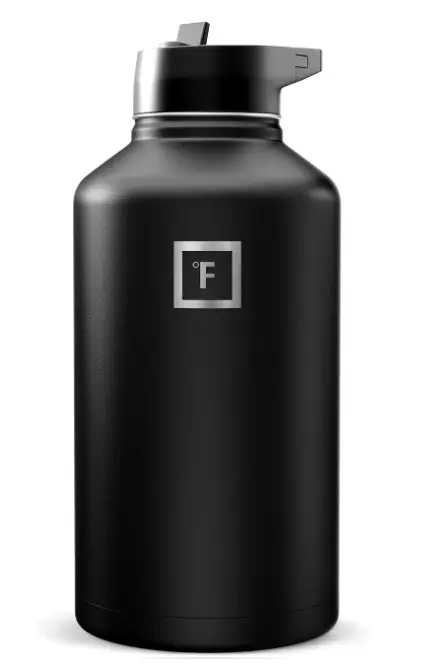
IRON °FLASK 64 oz BPA-Free Stainless Steel Water Bottle
The IRON °FLASK 64 oz combines double-wall vacuum insulation with premium 18/8 stainless steel to keep drinks cold for up to 24 hours and hot for up to 12 hours. Its leakproof straw lid, sweat-free exterior, and large half-gallon capacity make it ideal for long workouts, hiking, travel, and all-day hydration.
Real-World Refill Schedules for Every Bottle
Here is how the five recommended bottle sizes could fit into a typical day. These examples assume a goal of 128 ounces between approximately 8 a.m. and 8 p.m.
Bottle | Example refill routine |
YETI Rambler 26 oz | Fill at 8 a.m. Finish and refill around 10:30 a.m., 1 p.m., 3:30 p.m., and 6 p.m. Drink 24 ounces from the final fill by evening. |
Owala FreeSip 24 oz | Fill at 8 a.m. Finish a bottle around 10 a.m., noon, 2 p.m., 4 p.m., and 6 p.m. Drink another 8 ounces from the sixth fill by 8 p.m. |
Nalgene Wide Mouth 32 oz | Fill at 8 a.m. Finish one bottle around 11 a.m., 2 p.m., 5 p.m., and 8 p.m. Three actual refills complete the gallon. |
Hydro Flask 40 oz | Fill at 8 a.m. Finish the first bottle around noon, the second near 4 p.m., and the third around 7:30 p.m. Drink another 8 ounces with dinner or during the evening. |
Iron Flask 64 oz | Fill at 8 a.m. Finish the first half-gallon by about 1 p.m., refill once, and finish the second half by evening. |
These are examples, not medical schedules.
You may prefer to sip more slowly in the morning, drink more around a workout, or stop well below a gallon because your personal goal is lower.
The point is to connect your bottle size to specific moments in your routine.
Reusable Water Bottle Comparison
Bottle | Approx. price | Empty weight | Insulation | Best use case |
YETI Rambler 26 oz | $40 | 1.40 lb | Double-wall vacuum insulation | Rough use, outdoor work, travel, and people who value durability over low weight. |
Owala FreeSip 24 oz | $29.99 | 13.44 oz retailer-listed | Triple-layer vacuum insulation; advertised for up to 24 hours cold | Desk work, school, commuting, and frequent straw sipping. |
Nalgene Wide Mouth 32 oz | $16.99 | 6.25 oz | None | Hiking, camping, travel, and anyone who values low weight and visible measurements. |
Hydro Flask 40 oz | $34.95 | 1.05 lb | TempShield double-wall insulation; up to 24 hours cold and 12 hours hot | Gym sessions, long workdays, outdoor activities, and fewer refill stops. |
Iron Flask 64 oz | $29 | About 1.70 lb without lid | Double-wall vacuum insulation; up to 24 hours cold and 12 hours hot | Home offices, stationary desks, home gyms, and people who want only one refill. |
The Owala and Iron Flask weights come from retailer specifications because the manufacturers’ current product pages do not clearly publish empty weights for those exact configurations.
The Iron Flask price is also an estimate: the official product family includes the 64-ounce option, while the official collection currently lists the range as reaching approximately $44. The exact amount may depend on the chosen color and lid.
Which One Should You Choose?
Choose the YETI when toughness matters most.
Choose the Owala when an easy straw makes you sip more often.
Choose the Nalgene when you want low weight, clear markings, and simple gallon math.
Choose the Hydro Flask when you want cold water and fewer refill stops without carrying a half-gallon.
Choose the Iron Flask when you spend most of the day in one place and want the simplest possible tracking routine.
The best bottle is not necessarily the largest, coldest, or most expensive.
It is the bottle you will keep nearby and use every day.
Real-Life Case Studies: One Week, One Gallon
Knowing the math is easy.
Remembering to pick up your bottle during a busy day is the hard part.
The following case studies show how three common routines can affect a gallon-tracking goal. Sarah, Marcus, and Priya are composite personas based on typical habits and challenges, not identifiable individuals. Their logs and quotations are illustrative rather than verified testimonials.
They also show something important: the bottle alone does not build the habit.
Placement, timing, lid style, and simple visual cues matter just as much as capacity.
Case Study 1: Sarah, the Desk Worker
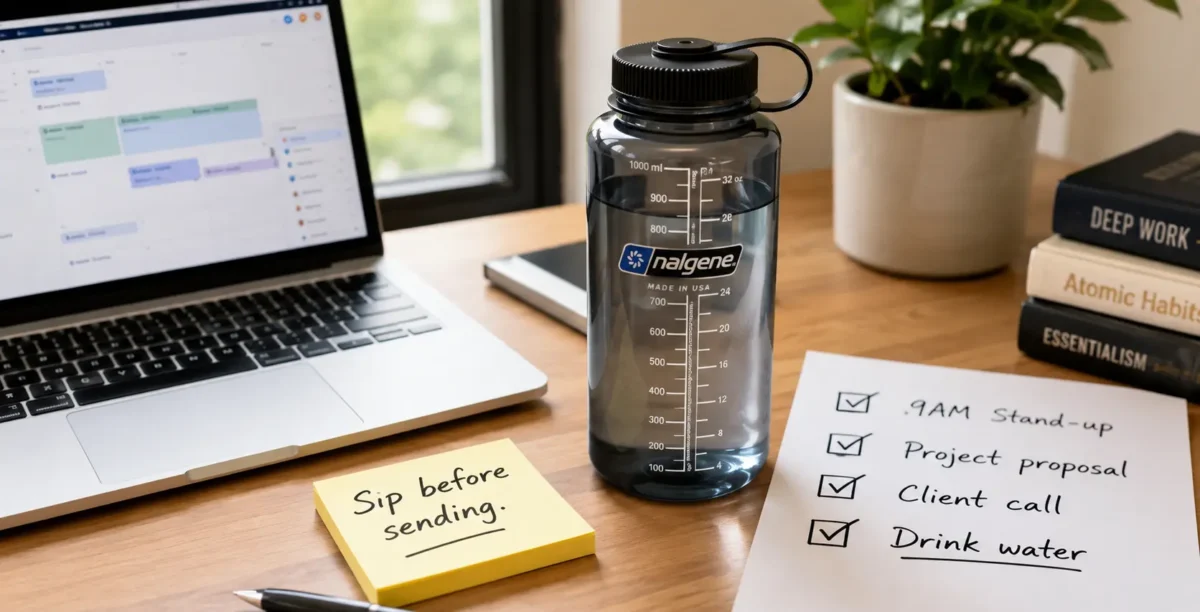
Bottle: Nalgene Wide Mouth 32 oz
Routine: Works from home at a computer for more than eight hours
Main challenge: Becomes absorbed in work and forgets to sip
Tracking goal: Four 32-ounce bottlefuls, or 128 ounces
Sarah chose a 32-ounce Nalgene because the math could not be simpler:
32 oz × 4 bottlefuls = 128 oz
If she started the morning with a full bottle, she only needed to refill it three times. On paper, that sounded easy.
Her first day showed why capacity is only part of the solution.
Day 1: The Bottle Was Full but Invisible
Sarah filled her Nalgene at 8 a.m. and placed it on a side table behind her laptop.
By noon, she had finished only about 20 ounces.
At 3 p.m., she realized she had barely touched the second bottle. She finished the day with two completed bottlefuls, or 64 ounces.
Her reaction was familiar:
“I kept thinking I would drink after finishing one more task. Then I looked at the clock, and the workday was almost over.”
The problem was not motivation. The bottle simply was not in her line of sight.
Day 3: A Visual Cue Made the Difference
On the third morning, Sarah moved the bottle directly beside her monitor. She added a sticky note to the base of the screen:
One bottle by 10:30. Another by lunch.
She also set quiet phone reminders for 10:30 a.m., 1:30 p.m., and 4:30 p.m.
Her progress improved:
- 8–10:30 a.m.: 32 ounces
- 10:30 a.m.–1:30 p.m.: 32 ounces
- 1:30–4:30 p.m.: 32 ounces
- By 7 p.m.: Another 16 ounces
She reached 112 ounces, equal to three and a half bottlefuls.
She was still 16 ounces below her gallon target, but the day no longer felt like a failure. She had identified a system that worked.
Day 5: Pairing Sips With an Existing Habit
Sarah’s breakthrough came when she stopped relying only on reminders.
She paired drinking with something she already did dozens of times a day: checking her email.
Every time she opened her inbox, she took five comfortable sips.
She also used four checkboxes on her sticky note:
- Bottle 1: finished by 10 a.m.
- Bottle 2: finished by 12:30 p.m.
- Bottle 3: finished by 3:30 p.m.
- Bottle 4: finished by 6 p.m.
For the first time that week, she completed all four bottlefuls without rushing through a large amount at bedtime.
The wide opening encouraged bigger sips, although she found it awkward when drinking quickly during video calls. Adding a splash guard gave her better control.
“The 32-ounce size worked because I only had four clear checkpoints. Once the bottle stayed beside my screen, I stopped forgetting it was there.”
Sarah’s Key Takeaway
Put the bottle where the habit happens.
For a desk worker, that usually means beside the keyboard or monitor, not on a shelf, in the kitchen, or inside a bag.
A 32-ounce bottle also offers simple tracking. Four completed bottles equal a gallon, with no partial final fill to calculate.
Case Study 2: Marcus, the Gym Enthusiast
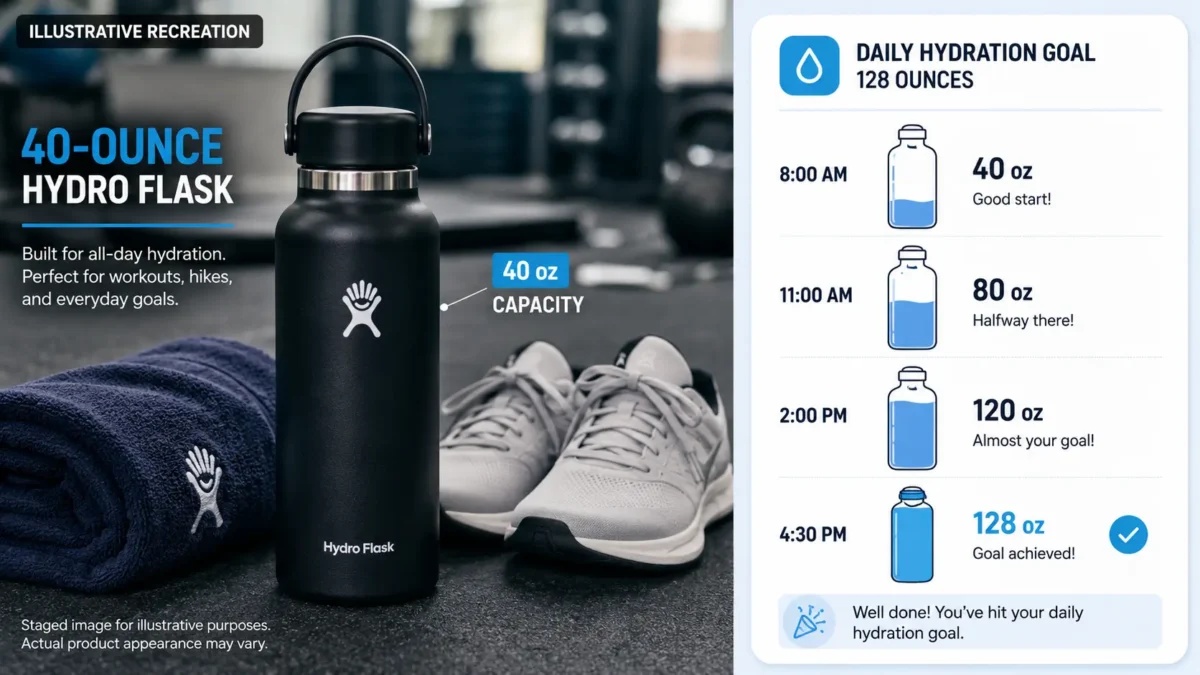
Bottle: Hydro Flask 40 oz Wide Mouth
Routine: Trains five mornings each week
Main challenge: Drinks plenty during exercise but forgets afterward
Tracking goal: Three full 40-ounce bottles plus 8 ounces
Marcus assumed his gym routine meant he was already drinking enough.
During workouts, that seemed true. The problem appeared once he left the gym.
His gallon calculation was:
40 oz × 3 bottles = 120 oz
He then needed another 8 ounces from a fourth fill to reach 128 ounces.
Day 2: Strong Morning, Weak Afternoon
Marcus filled his Hydro Flask before a 7 a.m. workout and finished all 40 ounces by 8:15 a.m.
That felt like a strong start.
But after returning home, he left the empty bottle in his gym bag. He drank only half of another bottle during the rest of the day.
His total was approximately:
- Morning workout: 40 ounces
- Afternoon and evening: 20 ounces
- Daily total: 60 ounces
By dinner, he felt frustrated. He had started the day ahead but lost momentum because there was no next step after training.
“I thought finishing one big bottle at the gym meant I was set. The real problem was the six hours after the workout when the bottle stayed empty.”
Day 4: The Immediate-Refill Rule
Marcus introduced one simple rule:
The workout was not finished until the bottle was refilled.
Before leaving the gym, he rinsed the straw, added cold water, and filled the bottle again. He placed it in the passenger-seat cupholder area where he could see it during the drive.
His schedule looked like this:
- 7–8:15 a.m.: First 40 ounces during training
- 8:15 a.m.: Immediate refill
- 8:15 a.m.–noon: Second 40 ounces
- Noon: Refill during lunch
- Noon–5 p.m.: About 30 ounces
He finished approximately 110 ounces.
Cold water helped. So did having the straw ready while driving and working.
On one particularly sweaty training day, he added an electrolyte product according to its label directions. He did not automatically add it every day, since most ordinary workouts do not require a special drink.
Day 7: A Repeatable Three-Bottle Routine
By the end of the week, Marcus had built three clear checkpoints:
- First bottle during and immediately after his workout
- Second bottle by early afternoon
- Third bottle by early evening
- Final 8 ounces with dinner
He reached the full 128-ounce bottle-tracking goal without trying to catch up late at night.
Marcus also learned that coffee and water-rich foods contribute to total daily water. However, because he had chosen to track a gallon specifically through his bottle, he did not count them as replacements for the missing 8 ounces.
“Keeping the water cold made me want to return to the bottle. The straw also let me sip during work instead of stopping to unscrew a cap.”
Marcus’s Key Takeaway
Connect the refill to the end of the workout.
Leaving the gym with an empty bottle created a break in Marcus’s routine. Refilling before he left removed that gap.
The 40-ounce size also gave him fewer checkpoints than a smaller bottle. He only needed three full bottles and a small final portion.
Case Study 3: Priya, the On-the-Go Parent
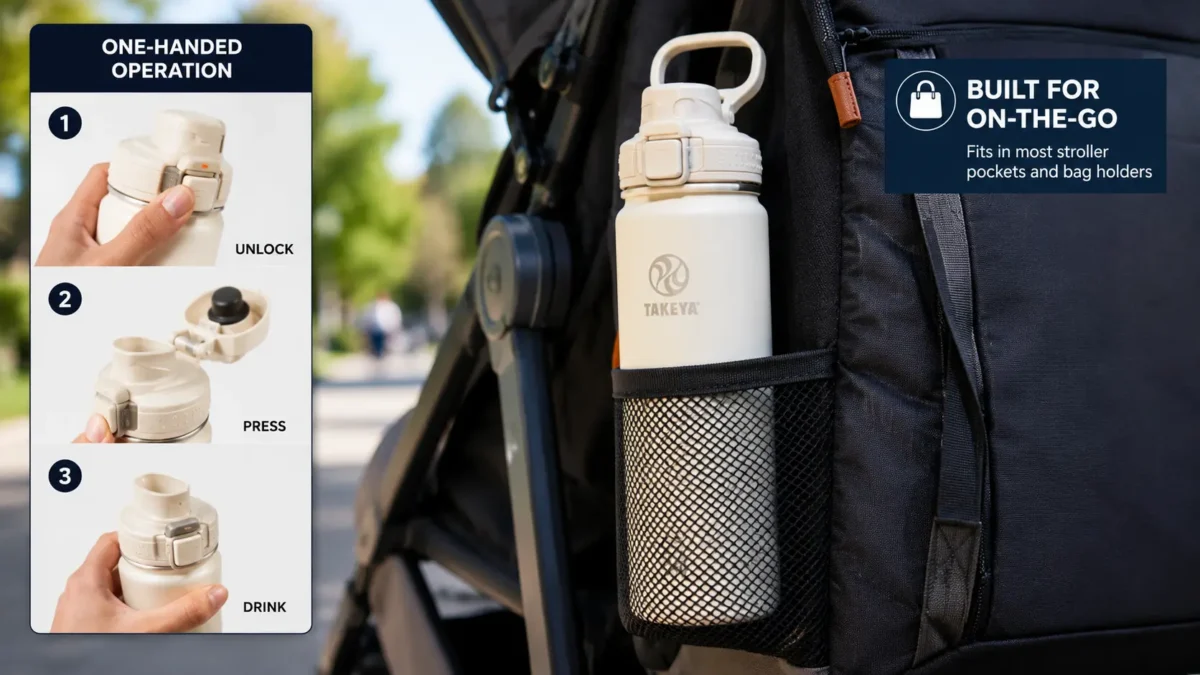
Bottle: Owala FreeSip 24 oz
Routine: Caring for a toddler, running errands, and moving between home and the car
Main challenge: The bottle is often packed away or left in another room
Tracking goal: Five full 24-ounce bottles plus 8 ounces
Priya did not want a heavy 40- or 64-ounce bottle.
She needed something light enough to carry while holding her child, pushing a stroller, or loading groceries into the car.
The 24-ounce Owala suited that routine, but it required more tracking:
24 oz × 5 bottles = 120 oz
She then needed 8 ounces from a sixth fill to reach a gallon.
Day 1: Out of Sight in the Diaper Bag
Priya filled her bottle at 8 a.m. and placed it in the main compartment of her diaper bag.
That seemed practical until the bag became crowded with snacks, clothes, toys, and wipes.
Each time she wanted water, she had to stop and search for the bottle. Most of the time, she did not bother.
By the end of the day, she had completed only two bottlefuls:
24 oz × 2 = 48 oz
She felt annoyed because she had carried the bottle everywhere without actually using it.
“The bottle came with me all day, but it may as well have stayed at home. It was always buried under something.”
Day 3: Make the Bottle Easier to Reach
Priya moved the bottle from inside the bag to an exterior pocket. When using a bag without a suitable pocket, she secured it upright to the stroller or bag strap with an appropriate bottle holder rather than clipping directly to parts not designed to bear the weight.
She also set a gentle phone timer every two hours.
Her new checkpoints were:
- 8–10 a.m.: First 24 ounces
- 10 a.m.–noon: Second 24 ounces
- Noon–2:30 p.m.: Third 24 ounces
- 2:30–5 p.m.: Fourth 24 ounces
She reached 96 ounces, double her Day 1 total.
The timer helped, but visibility helped more. Each time she reached for wipes, keys, or snacks, she saw the bottle.
Day 6: One-Handed Sipping
The FreeSip lid became especially useful when Priya was holding her toddler.
She could press the button, use the built-in straw while keeping the bottle upright, and close it with one hand. She did not have to tilt the bottle toward her face or remove a loose cap.
Her Day 6 routine looked like this:
- 8 a.m.: Filled the first bottle
- 10 a.m.: First refill
- 12:15 p.m.: Second refill
- 2:30 p.m.: Third refill
- 5 p.m.: Fourth refill
- 7 p.m.: Fifth and final partial refill
By dinner, she had finished five full bottles, or 120 ounces. She then drank 8 ounces from the final fill during the evening.
“The 24-ounce size was light enough to carry without thinking about it. The straw mattered because I could sip while doing something else.”
Priya’s Key Takeaway
Accessibility beats capacity.
A larger bottle would have reduced Priya’s number of refills, but it also would have been harder to carry through errands. The smaller bottle worked once she stopped hiding it inside her bag.
The leak-resistant lid also gave her confidence to keep it close to everyday essentials, although every bottle should still be closed carefully before being placed near electronics or clothing.
What These Three Routines Teach Us
The three bottle sizes required very different systems:
Person | Bottle size | Gallon calculation | Habit that helped most |
Sarah | 32 oz | 4 full bottlefuls | Keeping the bottle beside her monitor |
Marcus | 40 oz | 3 full bottlefuls plus 8 oz | Refilling immediately after the gym |
Priya | 24 oz | 5 full bottlefuls plus 8 oz | Keeping the bottle visible and within reach |
Sarah needed a visual cue.
Marcus needed a transition routine.
Priya needed easier access.
None of them succeeded by relying on motivation alone. They changed the environment around the bottle.
That is the real lesson from a week of tracking:
Make sipping the easiest available action.
Keep the bottle visible. Connect it to something you already do. Break the total into clear checkpoints. And choose a bottle that fits your actual day, not the routine you imagine you should have.
A gallon may not be necessary or appropriate for everyone. These scenarios show how to track that amount, not how much every reader should drink. Use your personalized target, thirst, activity, climate, and professional medical guidance when relevant.
Expert Tips for Building a Water Habit That Sticks
The best water routine is not the most complicated one.
It is the one you can repeat on an ordinary Tuesday when work is busy, your bottle is in the wrong room, and motivation is low.
Behavior research suggests that habits become more automatic when a small action is repeated in a consistent context. In one real-world study, participants practiced a chosen behavior after a regular daily cue, such as breakfast. Habit development varied widely between individuals, and missing one opportunity did not ruin the overall process.
In other words, do not aim for a perfect streak.
Build a routine you can return to.
1. Start the Day With a Full Bottle
Fill your reusable bottle before the day becomes busy.
This removes the first decision: whether to get water, where to find it, and how much to pour. Your only job is to begin sipping.
A simple starting rule is:
Finish your first bottle by lunch, then refill it.
Adjust that checkpoint to your bottle size and personal goal. Someone using a 24-ounce bottle may finish it earlier, while a person with a 64-ounce bottle may need a slower pace.
Do not race through a large bottle simply to meet a deadline. The checkpoint is there to help you remember, not to make you uncomfortable.
2. Keep the Bottle Where You Can See It
A reusable bottle cannot remind you to drink when it is hidden inside a bag, cupboard, or another room.
Place it directly in the path of your normal routine:
- Beside your keyboard while working
- Next to your keys before leaving home
- In an accessible bag pocket during errands
- Near your gym shoes before a workout
- On the table when you sit down for a meal
The CDC recommends carrying a reusable water bottle and keeping water readily available as practical ways to drink more throughout the day.
Visibility matters.
When the bottle catches your eye, it becomes a cue to sip.
3. Pair Sipping With Something You Already Do
Instead of trying to remember water at random times, connect it to an action that already happens every day.
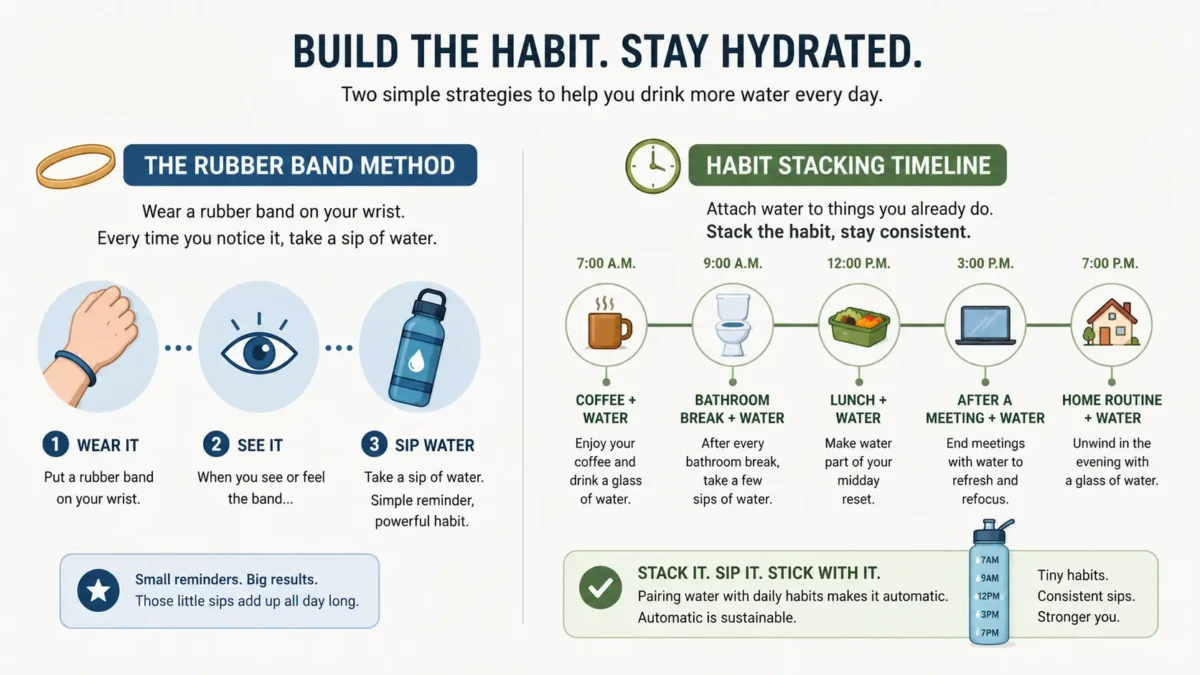
This is often called habit stacking.
Try a specific plan:
- After I start the coffee maker, I will take five sips.
- After I return from the bathroom, I will drink several ounces.
- Before I begin a meal, I will drink some water.
- After I send an email, I will take one sip.
- When I enter the car, I will place my bottle within reach.
The exact number of sips matters less than the consistency of the cue.
Research on habit formation found that repeating a behavior in the same situation gradually increased automaticity. The time required differed considerably from one person to another, so do not assume the routine should feel automatic after seven, 21, or 30 days.
Keep the cue small and realistic.
“Take five sips after checking email” is easier to follow than “drink more water today.”
4. Choose a Bottle That Fits Your Actual Routine
The largest bottle is not automatically the most useful.
Choose the size you will carry, refill, and clean consistently.
A 24-ounce bottle suits commuters, parents, students, and people who want something light enough to carry all day.
A 32-ounce bottle works well at a desk because four full bottlefuls equal exactly one gallon.
A 40-ounce bottle reduces refill stops while remaining more manageable than a half-gallon jug.
A 64-ounce bottle is practical for a home office, stationary workstation, long training session, or location where refill access is limited. It may be too heavy and bulky for everyday errands.
The lid matters too.
In my own comparing, straw lids made it easier to take small sips while typing or driving because I did not have to tilt the bottle. Chug caps worked better after exercise when I wanted a faster drink.
Pick the style that removes the most friction from your day.
5. Use Time Markers or Simple Checkpoints
Time-marked bottles divide the day into visible sections. They can be useful if you tend to forget your bottle for several hours and then try to catch up at night.
You do not need to buy a special motivational bottle, though.
Create your own checkpoints with a sticky note:
- Morning
- Before lunch
- Mid-afternoon
- Dinner
- Evening
Or write specific targets:
- 32 ounces by noon
- 64 ounces by 3 p.m.
- 96 ounces by 6 p.m.
- Final portion by evening
Treat the markings as gentle prompts, not strict medical instructions.
Your pace may change with meals, exercise, weather, and thirst.
6. Try the Rubber Band Method
This is one of the simplest tracking systems because it does not require an app.
Place one rubber band around your bottle for every bottleful included in your daily goal.
For example:
- Four bands for a 32-ounce bottle and a one-gallon goal
- Five bands plus a partial-fill reminder for a 24-ounce bottle
- Two bands for a 64-ounce bottle
Each time you finish the bottle, remove one band.
When the bands are gone, you have completed the planned number of bottlefuls.
Keep the bands around the lower section of the bottle so they do not interfere with the lid or your grip. For a partial final bottle, use a sticky note showing the exact amount you need, such as “8 ounces.”
7. Set Reminders That Match Your Day
A basic phone alarm every two hours may be enough.
Label the alarm with a specific action:
Check bottle progress
That works better than a vague reminder such as “Drink water,” because it encourages you to notice how much is left rather than automatically chugging.
A tracking app can provide more detail. WaterMinder, for example, supports customized cup sizes, intake goals, drink logging, and scheduled reminders. You can create an entry that matches your exact reusable bottle and log one bottleful with a tap.
Reminders should support your awareness, not interrupt you constantly.
Start with two or three meaningful checkpoints and add more only when needed.
8. Make Plain Water More Appealing
You do not have to force yourself to enjoy warm, flavorless water.
Try adding:
- Lemon or lime slices
- Cucumber
- Mint or basil
- Berries
- Orange slices
The CDC suggests adding ingredients such as lemon, lime, cucumber, or berries when you want more flavor without turning water into a sugary drink.
Wash produce first, refrigerate infused water, and clean the bottle thoroughly afterward. Fruit pieces left in a warm bottle all day can affect taste and cleanliness.
A small splash of 100% fruit juice can also add flavor. The CDC specifically suggests adding a splash of juice to sparkling water as an alternative to sugary beverages.
Keep the amount modest so the drink does not quietly become a high-sugar habit.
9. Keep Water at the Temperature You Enjoy
Water at any safe temperature contributes to your daily total.
Still, preference matters.
Many people find cool or cold water more pleasant during hot weather or after exercise. Research and sports guidance suggest that cooler, palatable drinks may encourage consumption during physical activity, although the best temperature ultimately depends on personal comfort.
An insulated stainless-steel bottle may therefore be worth the cost when cold water makes you reach for it more often.
But insulation is not essential.
A lightweight plastic bottle may be the better choice if visible markings, low weight, and easy carrying matter more to you.
10. Write Down Your Personal Goal
Do not choose one gallon simply because it is a round number.
Use the personalized planning estimate from the earlier section, then adjust it for your activity, climate, diet, thirst, and professional medical advice when relevant.
Write the result where you can see it:
Today’s goal: 80 ounces
Then convert it into your bottle size.
For a 24-ounce bottle:
80 ÷ 24 = 3.3 bottlefuls
That means three full bottles plus 8 ounces, not five full bottles just because someone online follows a gallon challenge.
The body-weight formula discussed earlier is a convenient planning tool, not an official medical prescription. People who are pregnant, breastfeeding, ill, taking certain medications, or managing kidney, heart, or endocrine conditions should ask a healthcare professional about an appropriate target.
11. Count Water From Other Drinks and Foods
You do not need to get every ounce from plain water.
Unsweetened tea, sparkling water, coffee, milk, and other beverages contribute to total water intake. Foods with a high water content, such as cucumber, watermelon, oranges, soup, yogurt, and many vegetables, also count.
The CDC confirms that daily water comes primarily from water and other beverages, with water-rich fruits and vegetables also contributing.
This is why a recommendation for total daily water does not necessarily equal the amount you must drink from your reusable bottle.
Tracking plain water can still be useful. Just do not treat food and other drinks as though they contribute nothing.
12. Use Electrolytes Selectively
A sugar-free electrolyte powder can make water more appealing, but it is not automatically necessary for an ordinary desk day or a short, easy workout.
Electrolyte products may be more useful during prolonged exercise, heavy sweating, repeated training in hot conditions, or when a qualified professional has recommended them. The American College of Sports Medicine notes that commercial electrolyte products can be convenient, but regular foods can also replace sodium and other nutrients after sweaty exercise.
For physical activity lasting less than about an hour, plain water is generally adequate for many people. Longer or more intense sessions may require a more individualized water, electrolyte, and carbohydrate plan.
Check the label before adding a powder. Some products contain significant sodium, sweeteners, caffeine, or added sugar.
More electrolytes are not always better.
A Simple Habit-Stacking Timeline
Here is what a practical routine might look like for someone working from home with a 32-ounce bottle:
Time or cue | Water action |
7 a.m., coffee starts brewing | Fill the bottle and take five sips |
9 a.m., open email | Check the measurement line |
11 a.m., bathroom break | Finish the first 32 ounces |
Noon, lunch | Refill and drink with the meal |
3 p.m., afternoon break | Finish the second bottle |
5 p.m., close the laptop | Refill before leaving the desk |
Dinner | Review your goal and decide what remains |
Evening | Finish only the amount that fits your personal target |
The timeline works because each action has a cue.
No guessing. No relying on motivation. No trying to finish half a gallon before bed.
Start With One Change
Do not introduce a new bottle, six alarms, fruit infusions, an app, and seven rubber bands on the same day.
Choose one change:
Place a full bottle beside your workspace every morning.
Repeat it until it feels normal. Then add another small step, such as drinking after lunch or marking each completed bottleful.
A missed checkpoint does not erase the habit.
Refill the bottle, return to your next cue, and continue.
The Environmental and Financial Payoff of Reusable Bottles
A reusable bottle does more than simplify your water routine.
It can also cut a surprising amount of plastic waste and everyday spending.
That matters because the convenience of single-use water adds up fast. One bottle here, two bottles there, a few more during errands or workouts, and suddenly a simple daily habit is creating a steady stream of trash and small purchases that barely register in the moment.
The Plastic Problem Adds Up Quickly
Single-use plastic bottles are designed for a few minutes of convenience.
Then they become a disposal problem.
Commonly cited environmental estimates suggest that Americans buy tens of billions of plastic water bottles each year, while only a fraction are recycled. EPA recycling data consistently shows that plastic recycling rates remain far from perfect, which means many bottles still end up in landfills, incinerators, or the natural environment.
Plastic also does not simply disappear. Many environmental sources note that a plastic bottle can take hundreds of years to break down, often cited as roughly 450 years under typical conditions.
That number is not really the main point, though.
The main point is this:
A product you use for a few minutes can leave a waste footprint that lasts for generations.
What Switching Looks Like Over One Year
If you rely on standard 16.9-ounce single-use water bottles, the gallon math is easy:
128 ÷ 16.9 = 7.6 bottles per day
That works out to roughly:
- 7.5 to 8 bottles per day
- About 53 bottles per week
- About 228 bottles per month
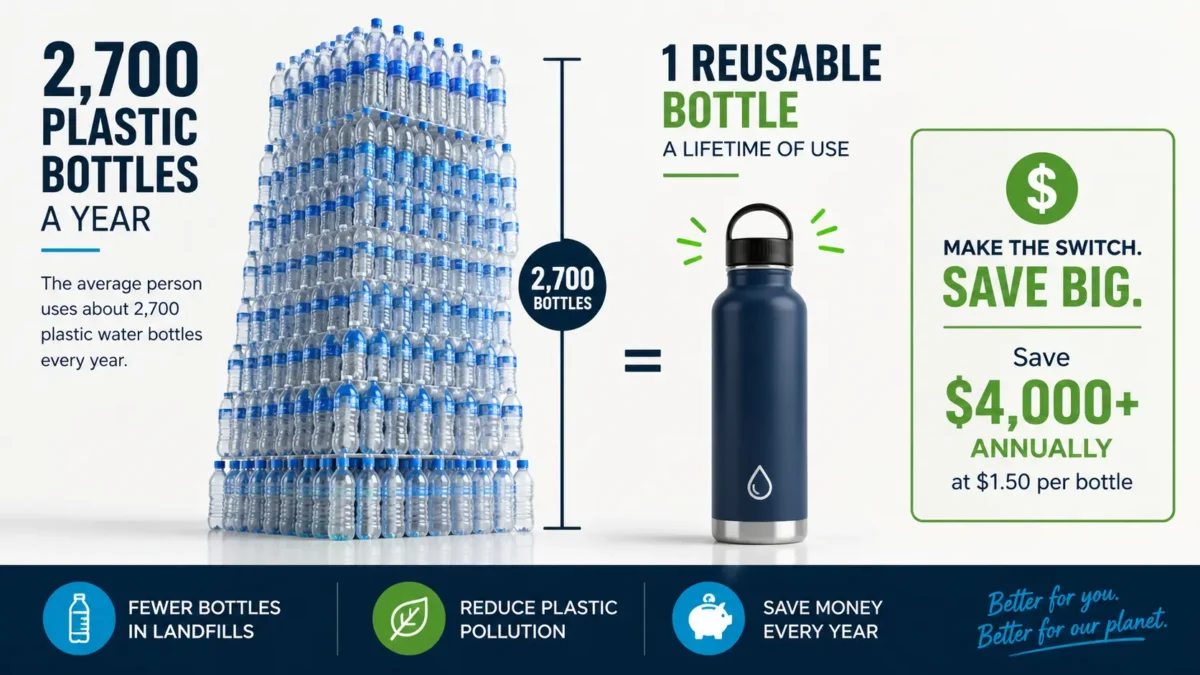
- More than 2,700 bottles per year
So if you are trying to drink around a gallon each day from disposable bottles, you could easily go through 2,700+ plastic bottles in a year.
Switching to one reusable bottle does not erase every environmental impact. The bottle still has to be manufactured, transported, and cleaned. But it drastically reduces the flow of single-use plastic entering your routine.
That is the real win.
Not perfection.
Reduction.
Your Everyday Impact in Plain Numbers
Here is a simple before-and-after picture:
If you drink from single-use bottles:
- Around 7.6 bottles per day
- Around 2,774 bottles per year
If you drink from one reusable bottle:
- 1 bottle used repeatedly
- Plastic waste from daily drinking drops dramatically
Even if your personal water goal is lower than a full gallon, the reduction is still significant. Someone drinking half a gallon a day from disposable 16.9-ounce bottles could still go through well over 1,300 bottles a year.
The Financial Difference Is Hard to Ignore
The money side can be just as eye-opening.
If you buy single-use bottled water individually at around $1.50 per bottle, then a gallon-a-day habit becomes expensive very quickly.
Using 2,700 bottles per year:
2,700 × $1.50 = $4,050 per year
That is a huge number for something as basic as water.
Now compare that with a reusable bottle.
A durable reusable bottle might cost $30 to $50, depending on the brand, size, and insulation. Even a premium insulated bottle is usually a one-time purchase that can last for years when cared for properly.
Tap water costs are tiny by comparison. In most cases, a gallon of tap water costs only a fraction of a cent to a few cents, depending on local utility rates.
So even after paying for your bottle, occasional replacement straws or lids, and the water itself, the long-term savings can still be dramatic.
A Realistic Cost Comparison
Here is a simple side-by-side example for someone aiming for about a gallon a day.
Option | Approximate daily use | Estimated yearly cost |
Single-use 16.9 oz bottles | 7.6 bottles per day at $1.50 each | $4,050+ |
Reusable bottle + tap water | 1 bottle reused daily | About $30–$50 upfront, plus minimal water cost |
That comparison assumes you are purchasing bottled water at a convenience-style price. If you buy bottled water in bulk, your yearly cost would be lower, but still much higher than regularly using a reusable bottle.
So the exact savings depend on how you currently buy water.
The pattern does not change:
Reusable wins by a mile.
A Small Note on Objectivity
Reusable bottles are not impact-free.
Stainless steel and plastic bottles both require materials, energy, packaging, and transportation. You also use water and soap to clean them. But because one bottle can replace hundreds or thousands of disposable bottles over time, the waste reduction is still meaningful.
That is why the environmental case for reusable bottles is strongest when you actually use the bottle consistently for months or years.
A fancy insulated bottle forgotten in a cabinet is not very sustainable.
A simple bottle you refill every day is.
The Market Is Growing for a Reason
The reusable bottle market has expanded rapidly as more people look for practical ways to reduce waste, save money, and keep water cold for longer. Industry reports such as those from Fortune Business Insights have noted strong market growth, including demand for insulated designs, larger-capacity bottles, and smart tracking features.
That growth is good news for consumers.
It means better lid options, more durable materials, more size choices, and bottles designed around real routines rather than one-size-fits-all marketing.
In short, the category is improving because people are using these products every day.
A Simple Savings Calculator
If you want to make this section interactive in the final article, you can include a basic calculator or slider using three inputs:
- Bottle size you currently buy
- Number of disposable bottles used per day
- Average cost per bottle
The tool could then show:
- Bottles used per year
- Estimated yearly spending
- Bottles avoided by switching to reusable
- Approximate money saved in one year
Static Example
Here is a simple example readers can understand immediately:
If you currently drink 7.5 disposable bottles a day at $1.50 each:
- 7.5 × 365 = 2,737.5 bottles per year
- 2,737.5 × $1.50 = $4,106.25 per year
Now compare that with buying one reusable bottle for $40.
Even if you rounded down, replaced a lid once, and included tap water costs, the savings would still be substantial.
Quick Reader Formula
You can also include this simple DIY version:
Bottles saved per year = disposable bottles per day × 365
Money saved per year = (cost per disposable bottle × bottles per day × 365) – cost of reusable bottle
Example:
7.6 bottles × 365 = 2,774 bottles saved
($1.50 × 2,774) – $40 = $4,121 saved approximately
This kind of math turns a vague idea, “reusable is better”, into something readers can actually feel.
The Real Payoff
The biggest benefit is not just plastic avoided or dollars saved.
It is simplicity.
One bottle. One routine. Less waste. Less spending. Less clutter.
Instead of buying and throwing away bottle after bottle, you refill one dependable bottle that fits your day.
That is healthier for your budget.
It is better for the environment.
And it makes your water habit easier to maintain.
Bottom line: If you switch from single-use bottles to a reusable one, you could avoid more than 2,700 plastic bottles a year and potentially save thousands of dollars, depending on how often and where you buy bottled water.
Frequently Asked Questions
Does coffee or tea count toward my daily water intake?
Can I drink too much water?
What if I do not like the taste of water?
Try cold or filtered water with lemon, cucumber, mint, berries, or a small splash of 100% fruit juice. Avoid turning every bottle into a heavily sweetened drink.
How can I remember to drink when I am busy?
Does everyone need to drink a gallon daily?
What is the best bottle size for travel?
A 24-ounce bottle offers a useful balance between capacity and portability. For flights, carry it empty through airport security and refill it afterward.
Do I need a smart water bottle?
No. A basic bottle with visible markings works well for most people. A smart option such as the HidrateSpark PRO may help when you want automatic sip tracking, app syncing, and glowing reminders.
Your Personalized Hydration Plan: Putting It All Together
You now have the math, bottle options, and habit strategies.
The final step is turning them into a routine that fits your actual day.
Do not make the plan more complicated than it needs to be. Choose one daily goal, one bottle, and one tracking method. Test the system for a week, then adjust what is not working.
Step 1: Choose Your Daily Ounce Goal
Start with the planning estimate used earlier:
Body weight in pounds × 0.5 = baseline ounces per day
A 150-pound person would begin with:
150 × 0.5 = 75 ounces
Then consider whether you need more because of exercise, heavy sweating, or hot and humid weather.
Treat this formula as a flexible tracking estimate, not a medical prescription. Your meals and other drinks also contribute water, and your needs may change from one day to the next.
Pregnancy, breastfeeding, illness, medication use, and certain health conditions require more individualized guidance.
Step 2: Choose a Bottle That Fits Your Routine
Select a bottle size from the conversion table, but do not choose based on refill count alone.
Think about where you spend most of your day.
- 24 ounces: Light enough for commuting, errands, and carrying in a bag
- 32 ounces: Easy math and fewer refill stops for desk work
- 40 ounces: Useful for workouts, long shifts, and cold water throughout the day
- 64 ounces: Best for stationary setups where weight and portability are less important
The right bottle is the one you will keep nearby, clean regularly, and enjoy sipping from.
Step 3: Calculate Your Bottleful Target
Divide your daily ounce goal by your bottle capacity:
Daily ounce goal ÷ bottle size = bottlefuls needed
Suppose your goal is 80 ounces and you use a 24-ounce bottle:
80 ÷ 24 = 3.3 bottlefuls
That means:
- Three full bottles provide 72 ounces
- You need another 8 ounces from the fourth bottle
You may round up to determine how many times the bottle needs to be available, but you do not need to finish the entire final bottle.
Also remember the difference between bottlefuls and refill stops. If you begin with a full bottle, four bottlefuls require only three refills after the initial fill.
Step 4: Pick One Tracking System
Choose the method that requires the least thought.
You could:
- Log each completed bottle in an app
- Place rubber bands around the bottle and remove one after each bottleful
- Use time markers or sticky-note checkpoints
- Draw boxes in a planner and check them off
- Pair each refill with lunch, a work break, or the end of a workout
Avoid starting with several systems at once.
A simple row of checkboxes may work better than an app full of notifications.
Step 5: Set Up Tomorrow Before It Arrives
Tonight, wash your bottle and place it somewhere visible.
Tomorrow morning:
- Fill the bottle before starting work or leaving home.
- Write down your daily ounce goal.
- Set two or three meaningful progress reminders.
- Mark each completed bottleful.
- Record any partial final amount separately.
This removes the need to make decisions when the day becomes busy.
Step 6: Review the Routine After One Week
Do not judge the plan after one difficult day.
Track for seven days and look for patterns:
- Did the bottle stay within reach?
- Did its size feel too heavy or require too many refills?
- Which reminder did you actually notice?
- Did you consistently fall behind at the same time?
- Were you forcing water after you were comfortably satisfied?
Then change one part of the system.
You might move the bottle closer to your desk, switch to a straw lid, reduce unnecessary reminders, or choose a different bottle size.
The goal is not to complete a perfect challenge.
It is to build a sustainable routine that works without constant effort.
Example Personalized Plan
Consider someone with an estimated goal of 96 ounces who uses a 32-ounce bottle.
96 ÷ 32 = 3 bottlefuls
Their plan could be:
- First bottle between breakfast and lunch
- Second bottle between lunch and the afternoon break
- Third bottle between the afternoon and dinner
- Three check marks in a weekly planner
No complicated measuring. No partially filled final bottle. Just three clear checkpoints.
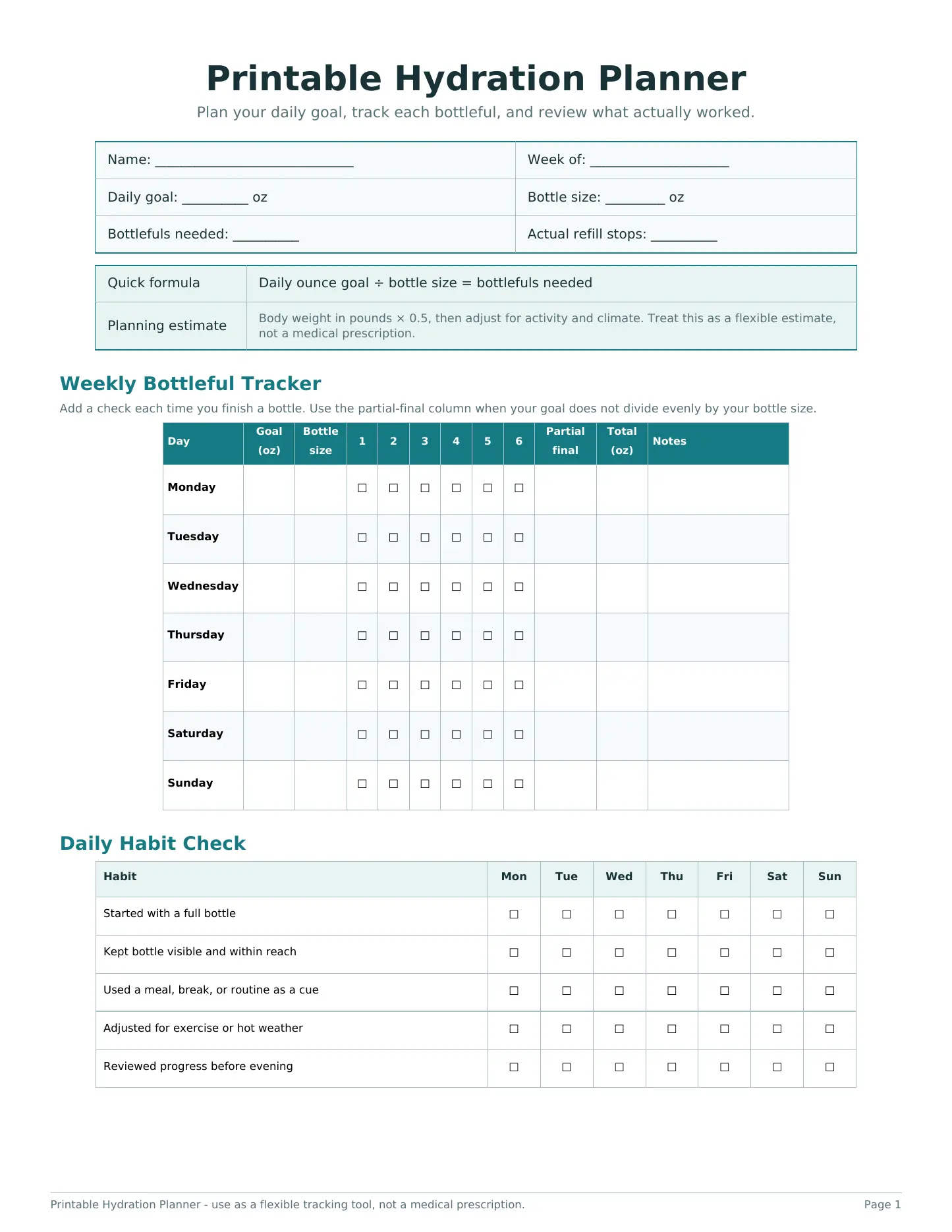
Download the Printable Hydration Planner
The printable planner includes:
- A space for your daily ounce goal and bottle size
- A seven-day bottleful tracking grid
- Separate fields for partial final amounts
- A daily habit checklist
- A 14-day detailed water log
- Space to record activity, climate, and routine notes
Print it and place it beside your desk, on the refrigerator, or wherever you normally refill your bottle.
Start with tomorrow morning. Fill your bottle, choose your first checkpoint, and track what actually happens.