A leaking lid can ruin more than your water bottle.
One loose seal, and suddenly your laptop, notebook, and lunch are sitting in a puddle at the bottom of your bag. Or maybe your bottle promised ice-cold water all day, but by noon it tastes warm and stale. Then there is the oversized bottle that holds plenty of water but refuses to fit in your car cup holder.
Most of us have been burned by impressive labels and thousands of five-star reviews.
The problem is that the “best” water bottle means nothing unless it works for your actual routine. A bottle for a long work shift needs different features than one for the gym, a school bag, or a daily commute.
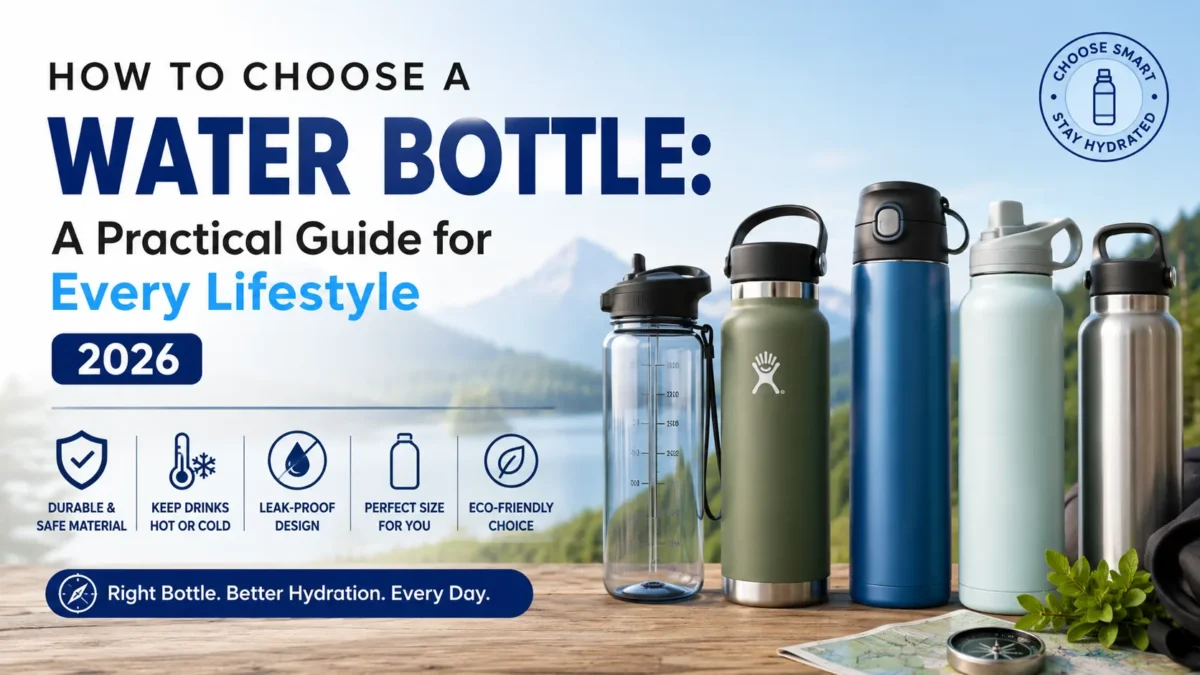
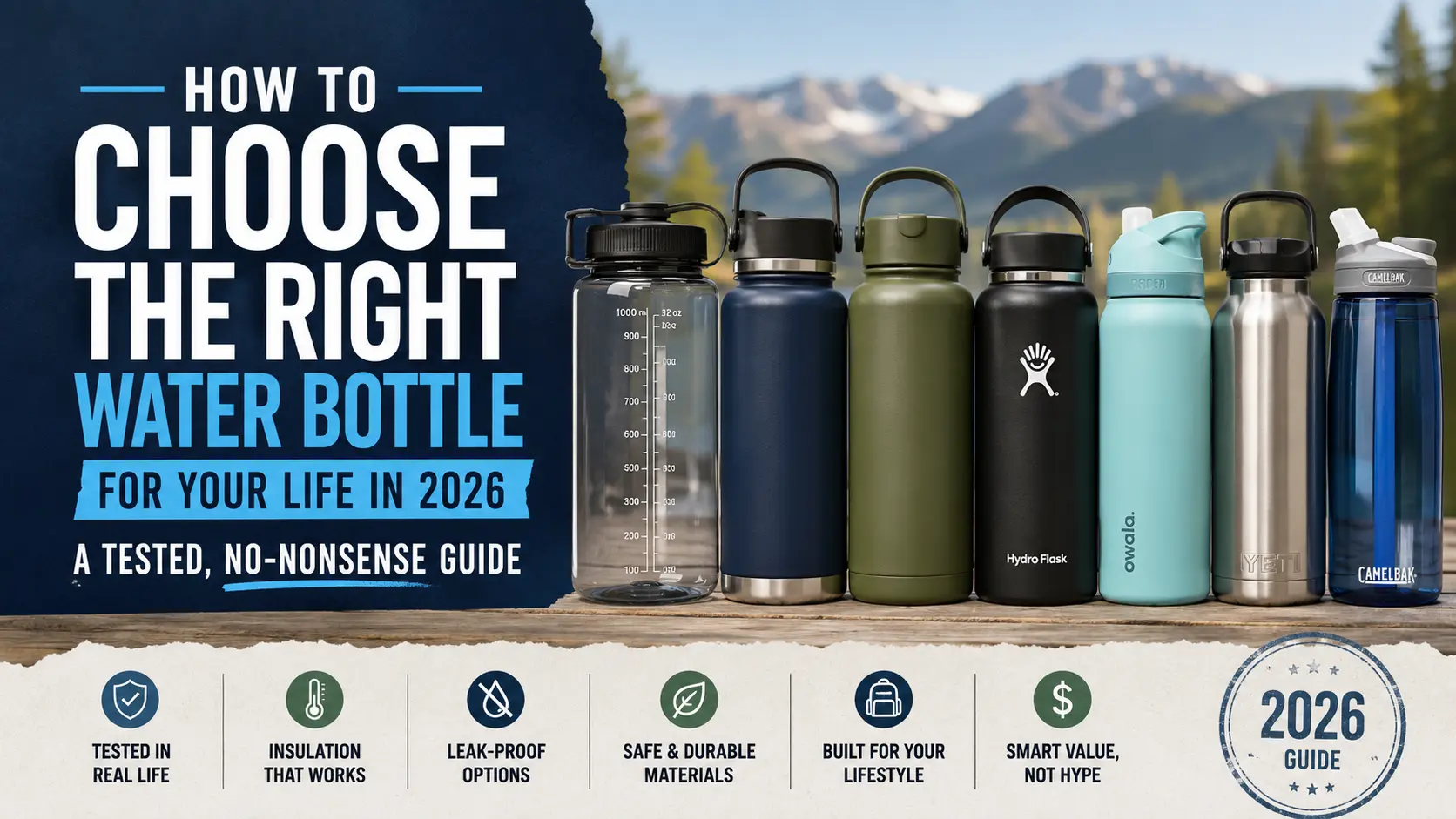
We compared bottles by dropping them, freezing them, carrying them for months, and checking how well they handled leaks, heat, dents, cleaning, and everyday use. This guide will help you choose the right material, size, insulation, lid, and features without getting distracted by marketing claims.
By the end, you will know exactly what type of bottle fits your life and which models are worth your money.
Key Takeaways
- Choose a bottle that fits your routine.
- Focus on material, insulation, size, and lid.
- Insulated stainless steel suits most people.
- A 24-oz to 32-oz bottle offers the best balance.
- Stainless steel lids can reduce plastic contact.
Know Yourself First: The 5-Question Self-Diagnosis
Before you compare materials, lids, or insulation claims, stop and think about how you will actually use the bottle.
A bottle that works perfectly at a desk may be a terrible choice for hiking. A huge gym bottle may hold plenty of water but refuse to fit in your car cup holder.
Start with these five questions. Your answers will make the rest of the decision much easier.
1. Where Will You Use This Bottle Most?
Your daily routine should decide which features matter.
- At a desk: Choose a stable bottle with an easy-to-open lid and enough capacity to avoid constant refills.
- During a car commute: Check the bottle’s width. Cup-holder compatibility matters more than an extra eight ounces of capacity.
- At the gym: Look for a durable bottle that opens quickly and can survive being dropped or thrown into a crowded bag.
- While hiking: Weight matters. A heavy stainless steel bottle can feel much heavier after several hours on a trail.
- During travel: Prioritize a truly leak-proof lid, a secure carry handle, and a shape that fits easily into a backpack.
Do not buy for the life you imagine having.
Buy for the places where you will actually carry the bottle every day.
2. What Do You Drink?
Water is easy. Coffee, tea, smoothies, and fizzy drinks make the choice more complicated.
- Water only: Almost any food-safe material can work, including stainless steel, glass, and BPA-free plastic.
- Coffee or tea: Choose insulated stainless steel or heat-safe glass. Many plastic bottles are not designed for hot liquids.
- Loose-leaf tea: A bottle with a built-in infuser lets you brew and drink from the same container. See our guide to tea infuser bottles for suitable options.
- Smoothies: Look for a wide opening. Thick drinks leave residue, and narrow bottles are miserable to clean.
- Carbonated drinks: Check that the manufacturer approves the bottle for carbonation. Pressure can build inside ordinary sealed bottles.
- Juice or other acidic drinks: Avoid unlined aluminum, which may react with acidic liquids. Stainless steel or glass is the better choice.
Only drink plain water?
Good. You have far more freedom to choose based on weight, durability, price, and cleaning.
3. How Important Is Temperature?
Warm water on a hot afternoon is a fast way to regret your purchase.
If you want ice still rattling around after a long shift, choose a vacuum-insulated stainless steel bottle. Its double-wall construction slows heat transfer, keeping cold drinks cold and hot drinks warm for hours.
The trade-off is simple: insulation adds weight, bulk, and cost.
If room-temperature water is fine, you do not need to carry that extra steel.
- Vacuum-insulated stainless steel: Best for all-day temperature control, hot weather, long shifts, and commuting.
- Single-wall stainless steel: Durable and lighter, but offers little insulation.
- Plastic: Lightweight and affordable, but drinks warm up quickly.
- Glass: Keeps flavors clean, but does not maintain temperature unless it has an insulated sleeve.
Be honest about your routine.
There is no point paying for all-day insulation if you refill your bottle every two hours.
4. How Much Water Do You Actually Drink?
Most people guess wrong.
They buy a tiny bottle and spend all day refilling it. Or they buy a 64 oz jug that feels like a dumbbell by lunchtime.
You may have heard the rough rule of drinking half an ounce to one ounce of water per pound of body weight. Treat that as a starting estimate, not a strict target. Your actual needs depend on your activity level, climate, diet, health, and how much fluid you get from other drinks and food.
Now turn your estimate into refills:
- 24 oz bottle: Portable, but may need three or more refills.
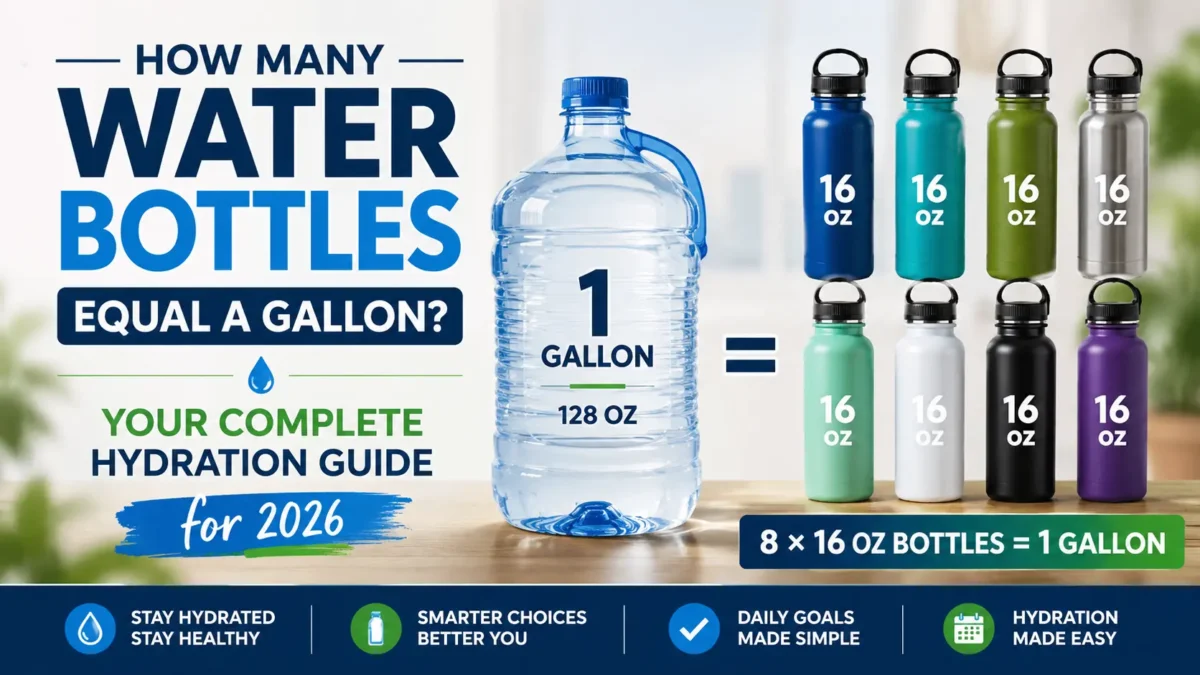
- 32 oz bottle: A practical middle ground. Two refills give you 96 oz for the day.
- 40 oz bottle: Fewer refills, but heavier and less likely to fit smaller cup holders.
- 64 oz bottle: Useful when water access is limited, but annoying to carry when full.
For a closer capacity comparison, read our guide on how many ounces are in a water bottle.
Choose the smallest bottle that can cover your day without forcing you to hunt for a water fountain every hour.
5. What Is Your Tolerance for Weight and Bulk?
A bottle can feel light on a product page and annoyingly heavy after three hours in your hand.
That matters if you commute, hike, travel, or carry it around campus all day.
It matters much less if the bottle lives beside your keyboard.
- For hiking or backpacking: Choose lightweight plastic or single-wall metal. Every extra ounce becomes noticeable after several miles.
- For commuting: Look for a slimmer bottle that fits your bag and does not feel like a brick when full.
- For the gym: A little extra weight is usually fine, but bulky bottles can be awkward to carry between machines.
- For desk use: Weight barely matters. Capacity, stability, and easy cleaning are more important.
- For travel: Avoid bottles so wide or heavy that they become a chore once your bag is packed.
Remember that water itself is heavy. A large bottle may look manageable when empty, then feel completely different when filled.
For the lightest practical options, see our guide to ultralight water bottles.
Do not carry a 64 oz steel tank all day just to avoid one refill.
Material Deep Dive: What Your Bottle Is Actually Made Of
A bottle can say “stainless steel” in large letters and still put your drink in contact with plastic every time you take a sip.
The body may be steel, but the lid, straw, mouthpiece, gasket, or inner lining may not be.
That matters if you are trying to reduce plastic exposure, avoid lingering smells, or stop replacing cracked lids every few months. Before choosing a material, check the entire bottle, not just the main body.
Our guide to hidden plastic in stainless steel bottles explains where plastic is commonly used and which designs come closest to being truly plastic-free.
Most reusable bottles fall into three main groups:
- Stainless steel: Durable, resistant to odors, and available with vacuum insulation. It is the best all-around choice for most people, but it is heavier and usually more expensive.
- Plastic: Lightweight, affordable, and easy to carry. It works well for sports, hiking, and daily water use, but it does not insulate well and may hold onto smells over time.
- Glass: Clean-tasting and free from metal or plastic flavor. It is easy to wash, but heavier, more fragile, and less practical for rough commutes or gym bags.
The right material depends on what you drink, where you carry the bottle, and how much weight you are willing to deal with.
There is no perfect material.
There is only the one whose downsides will annoy you the least.
Stainless Steel
If you want one bottle that can survive daily commutes, gym bags, hot cars, and the occasional drop onto concrete, stainless steel is the safest bet.
Look for 18/8 or 304 food-grade stainless steel. These labels usually describe the same durable, corrosion-resistant material. It does not hold onto old flavors easily, and it is tough enough for everyday use.
Add vacuum insulation, and it gets even better.
A double-wall vacuum-insulated bottle can keep water cold for hours and coffee hot through most of a workday. In our testing, Hydro Flask and Yeti delivered the strongest insulation and handled drops better than most cheaper bottles.
The downside is weight.
A 32 oz stainless steel bottle feels noticeably heavier once it is full. Good models also cost more than basic plastic bottles, especially when you are paying for thicker steel, stronger lids, and reliable insulation.
And do not trust the word “stainless” on its own.
Some bottles still use plastic mouthpieces, straws, lid interiors, epoxy coatings, or hidden linings. Check our guide to hidden plastic in stainless steel bottles for a closer look at where plastic can still appear.
For people trying to reduce plastic contact, Klean Kanteen stands out because it offers a stainless steel lid option.
Best for: Commuting, office use, hot climates, long shifts, and anyone who wants one durable bottle for daily use.
Skip it if: You count every ounce in your backpack or hate carrying anything bulky.
Plastic: Tritan, HDPE, and Similar Materials
Plastic bottles are light, affordable, and difficult to destroy.
That makes them a practical choice for hiking, sports, school bags, and anyone who does not want to carry a heavy steel bottle all day.
Tritan plastic is clear, BPA-free, and tough enough to handle regular drops. Because you can see through it, checking your water level takes one glance. HDPE plastic is usually softer, more opaque, and slightly lighter.
Nalgene’s Tritan bottles are a cult classic for a reason. They are simple, inexpensive, easy to clean, and can survive years of rough use.
But plastic has limits.
It does not keep water cold. Leave it in a warm car, and your drink will heat up quickly. It can also hold onto the smell or taste of sports drinks, juice, and flavored water after repeated use.
Some people avoid plastic because they are concerned about microplastic exposure or simply dislike drinking through a plastic mouthpiece.
Best for: Hiking, sports, travel, school, and anyone who values low weight and durability.
Skip it if: You need all-day insulation, regularly carry hot drinks, or want to avoid plastic contact entirely.
Glass
Glass is the cleanest choice for people who care about taste.
It does not hold onto odors, add a metallic flavor, or leave water tasting like yesterday’s sports drink. With a glass drinking surface and a carefully chosen lid, it can also keep plastic out of the drinking path.
The downside is obvious.
Glass is heavy, and it can break.
Most glass bottles come with a silicone sleeve to improve grip and soften minor knocks. The sleeve helps, but it does not turn glass into something you should throw into a crowded gym bag.
Glass bottles also have little to no insulation. Cold water warms up quickly unless the bottle has a separate insulated design.
Best for: Desk use, home, bedside tables, and anyone who prioritizes clean taste and minimal material contact.
Skip it if: You hike, travel light, drop things often, or need a bottle that can survive rough daily use.
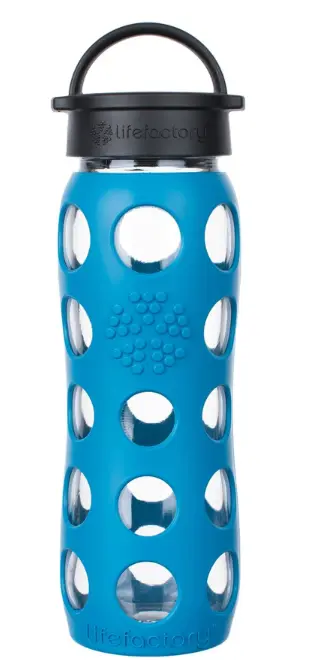
Lifefactory 22 oz Glass Water Bottle with Silicone Sleeve
The Lifefactory 22 oz combines a pure-tasting glass interior with a protective silicone sleeve for a secure, comfortable grip. Its wide-mouth opening easily fits ice and fruit, while the BPA-free, dishwasher-safe design and leak-resistant chug cap make it a dependable choice for work, the gym, and everyday hydration.
Water Bottle Materials at a Glance
Material | Durability | Insulation | Weight | Taste Neutrality | Plastic-Free Drinking Path? | Best For |
Stainless steel, 18/8 or 304 | Excellent | Excellent when vacuum insulated | Heavy | Very good with quality, unlined steel | Possible with a stainless steel lid | Everyday use, commuting, hot or cold drinks |
Plastic, Tritan or Tritan Renew | Very good and impact-resistant | None | Light | Good, but flavors may linger over time | No | Budget buyers, gym use, hiking and travel |
Glass | Poor without a sleeve, better with silicone protection | None | Heavy | Excellent | Depends on the lid | Desk use, home and clean-tasting water |
Insulation: The Truth About “24-Hour Cold”
The label promised cold water for 24 hours.
By lunch, it was barely cooler than the air in your car.
That does not always mean the bottle is useless. It usually means the claim was compared under better conditions than the ones you face every day.
Vacuum-insulated bottles use two steel walls with a space between them. That gap slows heat from reaching your drink. Better vacuum insulation means ice lasts longer and hot drinks stay warm for more of the day.
But the bottle body is only part of the story.
Cold-retention performance also depends on:
- Vacuum quality: Cheap bottles often lose temperature faster because the insulation is less effective.
- Lid design: Heat enters more quickly through thin plastic lids, straw openings, and large drinking spouts.
- Starting temperature: Room-temperature water will not become cold just because you pour it into an insulated bottle.
- Ice quantity: A few cubes melt much faster than a bottle filled with cold water and plenty of ice.
- Opening frequency: Every sip lets warm air enter.
- Outside conditions: A bottle sitting in a hot car has a much harder job than one kept inside an office.
For better results, pre-chill the bottle with ice water for five to ten minutes. Empty it, refill it with properly chilled water, and add enough ice to last.
That simple step often matters more than the number printed on the label.
For a closer look at insulation testing, common failure points, and the pre-chill method, read our guide to the best water bottles for cold water.
Treat “24-hour cold” as a best-case claim.
What really matters is whether the bottle can keep your water cold through your actual workday.
Do You Need Insulation?
Not everyone needs a heavy vacuum-insulated bottle.
If you finish your water quickly, refill often, or do not mind drinking it at room temperature, skip the insulation. You will save money, carry less weight, and usually get a slimmer bottle.
But if you want ice water at 4 p.m. or coffee that is still hot at 10 a.m., vacuum-insulated stainless steel is non-negotiable.
Choose insulation when:
- You work long shifts without easy refills.
- Your bottle sits in a warm car.
- You live in a hot climate.
- You carry coffee or tea.
- Warm water makes you drink less.
Skip it when:
- You drink your water within a few hours.
- Weight matters more than temperature.
- You mainly hike, travel light, or carry the bottle all day.
- You are happy with room-temperature water.
The decision is simple.
Do not pay for insulation unless you will actually notice it.
Insulated vs. Non-Insulated: Real-World Performance
In controlled testing, the best insulated bottles from Hydro Flask and Yeti kept ice for more than 20 hours.
Real life is less forgiving.
Opening the lid throughout the day, leaving the bottle in a hot car, using room-temperature water, and adding only a few ice cubes can cut that performance significantly.
Non-insulated plastic, glass, and single-wall steel bottles offer almost no temperature control. In warm conditions, the water may start heating up within an hour or two.
Vacuum insulation gives you more time, but your filling method still matters.
Pre-chilling the bottle with ice water for five minutes before filling can greatly extend cold retention and, in favorable conditions, may keep drinks cold for up to twice as long.
For full test results from bottles carried in hot cars, gym bags, and everyday conditions, see our guide to the best insulated water bottles.
💡Expert Tip: Add ice first, then water, and pack the bottle with ice. More ice means less air, slower melting, and hours of extra cold.
Size and Capacity: The Goldilocks Problem
A bottle that is too small turns your day into a refill schedule.
A bottle that is too large feels like carrying a dumbbell, takes up half your bag, and may not fit in a standard car cup holder.
The right size sits somewhere in the middle.
It should hold enough water to match your routine without becoming annoying to carry. Think about how often you can refill, how far you carry the bottle, and whether it needs to fit in a cup holder or backpack pocket.
For most adults, a 24 to 32 oz bottle offers the best balance.
A 24 oz bottle is easier to carry and fits more cup holders. A 32 oz bottle reduces refills without becoming too bulky for everyday use.
Larger bottles make sense when water access is limited, but bigger is not automatically better.
The best capacity is the one you will actually carry, fill, and use every day.
The Sweet Spot: 24 to 32 Ounces
For most adults, 24 to 32 ounces is the size that causes the fewest problems.
It holds enough water for a morning commute, a gym session, or several hours at your desk without forcing constant refills.
But it is still manageable when full.
A 24 oz bottle is easier to carry and more likely to fit in a standard cup holder. A 32 oz bottle gives you more water without crossing into oversized-jug territory.
That is why 32 oz bottles are so popular. They offer enough capacity for daily use without feeling like a weight-training accessory.
For a comparison of options across commuting, workouts, travel, and desk use, see our guide to the best 32 oz water bottles, where we compare seven leading models for different routines.
For most people, this is the safest place to start.
Go smaller only if portability matters more than refills. Go larger only if you regularly spend hours away from a water source.
Small Bottles for Specific Uses
Not everyone needs to carry 32 ounces of water all day.
Small bottles in the 10 to 16 oz range work better when you only need a drink for a short trip or a specific purpose.
They are easier to hold, fit into smaller bags, and take up less space in a car cup holder.
Choose a small bottle for:
- Coffee or tea: A 10 to 16 oz bottle matches a normal serving and feels less bulky than a full-size water bottle.
- Kids: Smaller bottles are lighter, easier to grip, and less tiring to carry.
- Short errands: There is no reason to haul a heavy bottle around for a 30-minute trip.
- Cocktails or mixed drinks: Compact insulated bottles can keep a small serving cold without taking up much room.
- Small bags: A shorter bottle is often easier to pack without fighting zippers and pockets.
The choice between 10 and 16 ounces comes down to portability versus capacity.
A 10 oz bottle is compact and easy to carry, but it may feel too small for longer outings. A 16 oz bottle gives you a more useful serving without becoming bulky.
Our Hydro Flask 10 oz vs. 16 oz comparison shows how those two sizes perform for coffee, cocktails, errands, and everyday use.
Small bottles are not worse.
They are just built for shorter days and smaller jobs.
Large Bottles: 40 Ounces and Up
Large bottles make sense when refilling is difficult.
They work well for outdoor workers, long hikes, road trips, and anyone who spends hours away from a clean water source. They are also useful for people who would rather carry one heavy bottle than refill a smaller one several times.
But the weight adds up quickly.
A 40 oz insulated bottle already feels substantial when full. Half-gallon and gallon bottles can become awkward to lift, difficult to pack, and nearly impossible to fit in a normal cup holder.
Choose a large bottle if:
- You work outdoors for most of the day.
- You hike where refill points are limited.
- You regularly forget to refill smaller bottles.
- The bottle stays in one place rather than being carried constantly.
Skip it if you commute on foot, carry a small bag, or expect the bottle to fit in a standard cup holder.
More capacity means fewer refills.
It also means more weight every time you pick it up.
Lid Types: The Part You Actually Touch Every Day
The bottle body gets all the attention.
The lid is the part that decides whether water reaches your mouth or the bottom of your bag.
A bad lid leaks, traps grime, breaks after a few drops, or makes every sip more annoying than it should be. In our leak and drop testing, lid design was often the difference between a bottle we kept using and one we stopped trusting.
Chug and Spout Lids
Chug lids give you a fast, controlled stream without forcing you to drink from a huge opening.
They are easy to clean, quick to use, and ideal when you want to drink a lot of water after a workout or during a hot commute.
The downside is splash.
Tilt the bottle too quickly, and water can hit your face or shirt. The Hydro Flask Flex Chug Cap is a good example of a simple chug lid that balances fast flow with a more controlled opening.
Best for: Workouts, outdoor jobs, commuting, and fast drinking.
Watch out for: Splashing and small seals that can collect residue.
Straw Lids
Straw lids are convenient when you do not want to tilt the bottle.
That makes them especially useful at a desk, while driving, or during workouts. You can take small sips without stopping what you are doing.
But straws create more parts to clean.
Liquid can sit inside the tube, mouthpiece, and seals. Most bottle straws are also plastic, which matters if you are trying to reduce plastic contact.
The Owala FreeSip stands out because its lid allows you to sip through the built-in straw or tilt the bottle and drink through the wider opening.
Best for: Desk use, driving, frequent sipping, and people who drink more through a straw.
Watch out for: Hidden residue, plastic parts, and extra cleaning.
Flip-Top and Sport Caps
Flip-top lids are built for speed.
You can open them with one hand, take a drink, and close them without stopping your workout or hike. That convenience makes them popular for gyms, cycling, and outdoor use.
The hinge is also a weak point.
In our testing, several flip-top lids began leaking or closing less securely after repeated drops. Small locking tabs and moving parts simply have more chances to fail than a basic screw cap.
Best for: Gym sessions, running, hiking, and one-handed use.
Watch out for: Broken hinges, worn locks, and leaks after hard drops.
Screw-Top and Wide-Mouth Lids
Screw-top lids are simple, dependable, and difficult to beat for leak protection.
There are fewer moving parts, fewer hidden spaces, and less to break. Wide openings also make it easier to add ice, wash the bottle, or mix drink powders.
The classic example is the Nalgene wide-mouth bottle.
The trade-off is convenience. You normally need two hands to open it, and drinking from a wide mouth while walking can end with water down your shirt.
Best for: Hiking, travel, easy cleaning, adding ice, and reliable leak protection.
Watch out for: Spills while moving and slower one-handed access.
Which Lid Is Most Reliable?
Simple lids usually last the longest.
In our reusable bottle leak and drop tests, the Yeti Rambler chug cap survived repeated drops without leaking, while several more complicated lids developed loose seals or leaks.
That does not mean everyone needs a Yeti.
It means you should treat lid strength, seal quality, and cleaning access as seriously as insulation or bottle material. Our guide to the best reusable water bottles explains the full leak-testing method and shows how each lid performed.
Choose the lid you will enjoy using every day.
A perfect bottle with an irritating lid is still the wrong bottle.
Weight and Portability: When Every Ounce Counts
A bottle that feels reasonable in your kitchen can feel like a brick after hours in your bag.
That matters for backpackers, travelers, students, commuters, and anyone who carries water all day.
A lightweight 32 oz Nalgene weighs about 6.2 ounces when empty. A vacuum-insulated stainless steel bottle of similar capacity can weigh close to 1 pound before you add water.
Then comes the water itself.
A full 32 oz bottle carries roughly 2 pounds of water, so the bottle’s empty weight quickly becomes noticeable.
This is where worth-it weight matters.
Insulated steel is heavier, but those extra ounces buy better temperature control, stronger impact resistance, and fewer cracked bottle bodies. For someone working a long shift in hot weather, that weight may be completely justified.
For a backpacker counting every gram, it probably is not.
Choose lightweight plastic or single-wall metal when:
- You carry the bottle for hours.
- You hike long distances.
- Your luggage weight is limited.
- Room-temperature water does not bother you.
- You can refill regularly.
Accept the extra weight of insulated steel when:
- You want ice water late in the day.
- The bottle regularly gets knocked around.
- You carry coffee or tea.
- Durability matters more than pack weight.
- The bottle mostly sits in a car, office, or gym.
The right bottle carries only the weight you are willing to notice.
Special Features and Use Cases
Some bottles solve one very specific problem better than a standard water bottle.
These extra features can be useful, but only when they match something you actually do. Otherwise, they add weight, cleaning time, and more parts that can break.
Tea and Infuser Bottles
Tea drinkers need more than a bottle that simply holds hot water.
A good tea infuser bottle should let the leaves expand, keep the drink hot, and stay sealed when it is dropped into a bag.
Pay attention to three things:
- Infuser basket size: Small baskets crowd the leaves and weaken the brew. A larger basket gives loose-leaf tea room to open properly.
- Heat retention: Vacuum-insulated stainless steel keeps tea hot longer, but it can also keep it too hot to drink. Glass lets you see the tea steep, though it loses heat faster.
- Leak protection: Tea stains are difficult to ignore. Choose a secure screw lid with a reliable gasket rather than a loose flip-top.
The infuser should also be easy to remove.
Leaving tea leaves inside too long can turn a smooth drink bitter. A removable basket gives you more control and makes cleaning much easier.
Best for: Loose-leaf tea, herbal blends, office use, and brewing while traveling.
Skip it if: You mostly use tea bags or do not want another small filter to scrub after every drink.
Plastic-Free Bottles
“Stainless steel” on the label does not guarantee a plastic-free bottle.
Plastic often hides inside the cap, straw, drinking spout, or lid lining. Some steel bottles also use internal coatings that are easy to miss.
For a genuinely plastic-free drinking path, look for:
- An unlined stainless steel body
- A stainless steel lid interior
- No plastic straw or mouthpiece
- No epoxy or plastic coating
- A food-grade silicone seal for leak protection
Silicone seals are difficult to avoid because metal alone rarely creates a dependable, watertight closure. The seal should sit around the lid without placing a plastic layer between your drink and the steel.
The Klean Kanteen Classic can be a good low-plastic option, but only with the correct cap. Its standard sport cap contains plastic, while the separate Steel Loop Cap provides an all-stainless drinking surface.
For a more straightforward plastic-free choice, the Klean Kanteen Reflect uses stainless steel, bamboo, and food-grade silicone. It has no plastic, paint, or internal coating, and its bamboo cap creates a full stainless steel interior.
Best for: People who want to reduce plastic contact, avoid plastic straws, or keep their water away from coated interiors.
Watch out for: Steel bottles with plastic hidden across the entire underside of the lid.
Do not judge the bottle by its body.
Check every surface your water touches.
Fruit Infusers and Other Extras
Some bottles come with fruit baskets, built-in filters, pill compartments, or small storage sections.
These features can be useful, but they also create more pieces to wash, lose, and replace.
Fruit infuser baskets work well for lemon, berries, cucumber, or mint. Look for a basket with enough space for water to flow around the ingredients and holes small enough to keep pulp out of the drinking spout.
Built-in filters may help with taste or sediment, but they require regular replacement. They should not be treated as a guaranteed way to make unsafe water drinkable unless the filter is specifically certified for that purpose.
Compartmentalized bottles can hold tea, supplements, keys, or small snacks, but the extra sections often make the bottle bulkier and harder to clean.
Best for: People who regularly use the feature and do not mind extra washing.
Skip it if: You want a simple bottle that can be cleaned in under a minute.
More parts usually mean more maintenance.
How We Test: Why You Can Trust This Guide
We do not rank bottles by reading a few Amazon reviews and repeating the product description.
We use them.
For months.
That means carrying them to work, leaving them in hot cars, dropping them onto hard floors, stuffing them into gym bags, and cleaning them often enough to find out which lids trap grime.
Our testing includes:
- Leak tests: We fill each bottle, tighten the lid, shake it hard, and hold it upside down over paper, electronics, and other surfaces that should never get wet.
- Drop tests: We drop bottles from everyday carrying height to see whether the body dents, the lid cracks, or the seal starts leaking.
- Ice-retention tests: We track how long ice lasts under controlled conditions, then compare those results with normal use.
- Daily-use testing: Bottles are carried during commutes, workouts, errands, travel, and long workdays.
- Cleaning checks: We inspect straws, seals, threads, hinges, and narrow openings for trapped residue and hard-to-reach buildup.
- Fit and portability checks: We test whether bottles fit standard cup holders, backpack pockets, and crowded bags.
We take leak claims personally.
Members of our testing team have ruined laptops, soaked notebooks, and opened gym bags to find everything sitting in a puddle. A bottle does not earn a leak-proof recommendation because the lid feels tight.
It has to prove it.
We also compare controlled results with real life. A bottle may keep ice for more than 20 hours while sitting untouched indoors, then perform very differently when it is opened repeatedly or left in a hot car.
That difference matters.
Our recommendations are based on months of use, repeated tests, and sometimes destructive testing, not attractive spec sheets or marketing claims.
Top Picks: The Best Water Bottles for Every Lifestyle
You understand the materials, sizes, lids, and insulation claims.
Now comes the useful part.
These are not six bottles pretending to suit everyone. Each one solves a different daily problem. For complete test results and side-by-side scores, see our guide to the best water bottles of 2026.
Best Overall for Most People: Hydro Flask Wide Mouth With Flex Chug Cap, 32 oz
This is the bottle we would recommend to someone who wants one dependable option and does not want to keep shopping.
It keeps water cold, handles everyday knocks, and has a leakproof chug cap with a controlled flow. Remove the lid, and the wide opening makes adding ice and cleaning straightforward.
Best for: Work, commuting, gym sessions, and general daily use.
Skip it if: Low weight or a low price matters more than insulation.
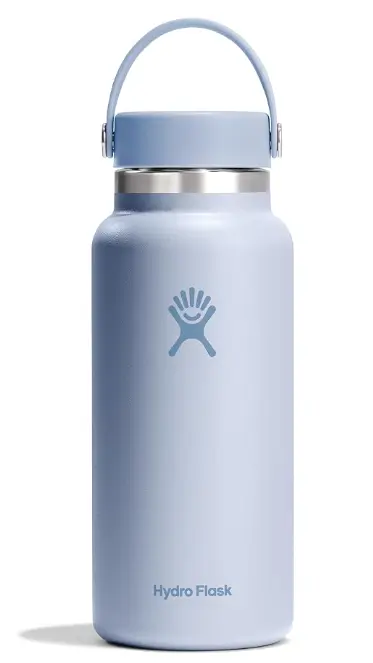
Hydro Flask 32 oz Wide Mouth Water Bottle with Flex Cap
The Hydro Flask 32 oz combines TempShield double-wall insulation with durable stainless-steel construction to keep drinks cold for up to 24 hours and hot for up to 12 hours. Its leakproof Flex Cap, wide-mouth opening, and dishwasher-safe design make it a dependable choice for commuting, workouts, travel, and everyday hydration.
Best Budget: Nalgene Wide-Mouth Tritan Renew, 32 oz
The Nalgene is not fancy.
That is part of its appeal.
It costs about $17, weighs only 6.25 ounces, and can survive the sort of drops that crack cheaper plastic bottles. The wide opening accepts ice and many common filtration devices.
There is no insulation, so expect warm water if you leave it in a hot car.
Best for: Budget buyers, hiking, travel, school, and rough daily use.
Skip it if: You need cold water late in the day.
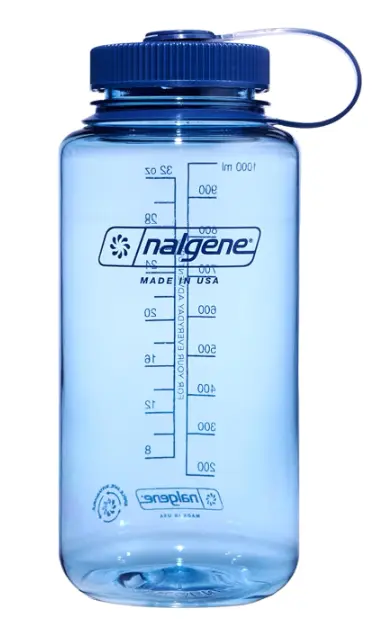
Nalgene 32 oz Leakproof Water Bottle for Hiking and Travel
The Nalgene 32 oz Wide Mouth bottle combines legendary durability with a lightweight, leakproof design for everyday hydration. Made from BPA-free Tritan Renew, it features a wide opening for easy filling and cleaning, built-in measurement markings, and dishwasher-safe convenience, making it a reliable choice for hiking, the gym, hiking, and travel.
Best for Ice Water All Day: Yeti Rambler With Chug Cap, 26 oz
The Yeti is heavier and more expensive than the Nalgene.
It also takes more abuse.
In our testing, it kept ice for more than 20 hours under controlled conditions and survived repeated drops without developing a leak. Its chug cap is easy to drink from, and the entire bottle is dishwasher-safe. Yeti currently describes the 26 oz Rambler as vacuum-insulated, puncture-resistant, and fully leakproof.
Best for: Hot climates, outdoor work, long shifts, and people who are rough on their gear.
Skip it if: You want the lightest bottle in your bag.
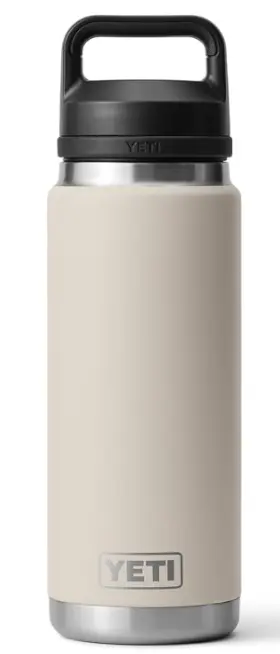
YETI Rambler 26 oz Stainless Steel Water Bottle with Chug Cap
The YETI Rambler 26 oz combines rugged 18/8 stainless-steel construction with double-wall vacuum insulation to keep drinks at the right temperature for hours. Its 100% leakproof Chug Cap delivers quick, convenient hydration, while the No Sweat exterior and dishwasher-safe design make it a dependable companion for work, travel, and outdoor adventures.
Best for Commuters and Desk Use: Owala FreeSip Sway, 30 oz
The FreeSip Sway solves the straw-versus-chug argument by giving you both.
Keep it upright to sip through the built-in straw. Tilt it back when you want a faster drink. The locking lid is designed to prevent leaks, while the contoured base fits cup holders better than many wide 30 oz bottles.
The large carry handle also makes it easier to grab while leaving the house.
Best for: Driving, office desks, frequent sipping, and daily commuting.
Skip it if: You want a simple lid with fewer plastic parts to clean.
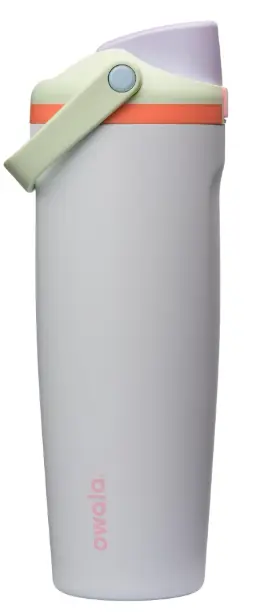
Owala FreeSip Sway 30 oz Insulated Stainless Steel Water Bottle
The Owala FreeSip Sway 30 oz combines triple-layer insulation with a patented 2-in-1 FreeSip spout, letting you sip through the built-in straw or swig from the spout. Its leakproof push-button lid, ergonomic carry handle, and cupholder-friendly base make it an excellent choice for commuting, workouts, travel, and everyday hydration.
Best for Hikers and Backpackers: CNOC Outdoors ThruBottle 1L
The Smartwater 1L bottle remains the absolute lightweight option. It weighs roughly 1.2 ounces and connects to common Sawyer filters through its 28 mm threads. The problem is that it is still a disposable PET bottle being reused as hiking gear.
The CNOC ThruBottle 1000 is the better long-term choice. It was designed as a reusable alternative, holds one liter, fits common 28 mm filters, and weighs only a few ounces.
Best for: Backpacking, thru-hiking, filtration systems, and anyone counting pack weight.
Skip it if: You want insulation or a bottle that sits upright firmly on a desk.
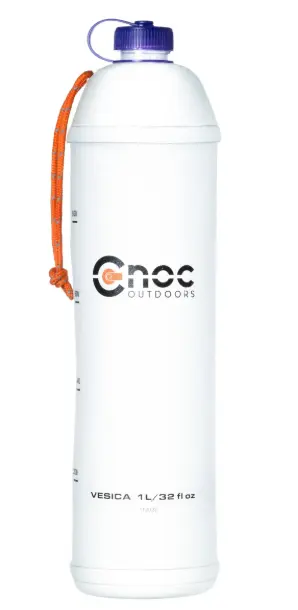
Cnoc Outdoors Vesica 1 L Reusable Water Bottle for Travel
The Cnoc Outdoors Vesica 1 L combines an ultralight, collapsible design with rugged TPU construction for hiking, backpacking, and travel. Weighing just 67 grams, it packs down small when empty, stands upright for easy filling, and features 28 mm filter compatibility, making it a dependable hydration companion on any adventure.
Best Plastic-Free Drinking Path: Klean Kanteen Classic, 27 oz, with Steel Loop Cap
The standard Klean Kanteen Classic is not automatically plastic-free.
The cap decides that.
Pair the 27 oz stainless steel bottle with the separate Steel Loop Cap, which creates an all-stainless interior so your water does not touch plastic. A silicone seal is still used to prevent leaks.
The bottle is single-wall and uninsulated, which keeps it lighter but does nothing for temperature control.
Best for: People avoiding plastic in the drinking path and anyone who prefers a simple steel bottle.
Skip it if: You need all-day ice retention or one-handed drinking.
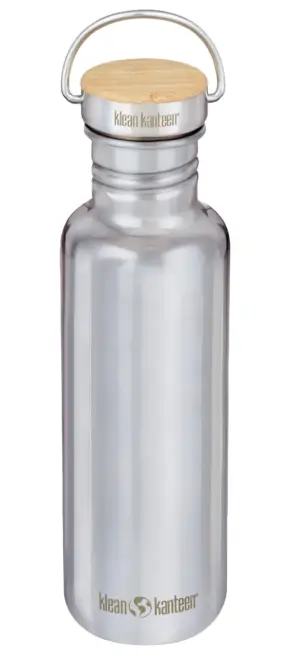
Klean Kanteen Classic, 27 oz, With Steel Loop Cap
The Klean Kanteen Reflect 27 oz features a minimalist, plastic-free design with durable stainless steel and a natural bamboo cap for a pure drinking experience. Its leakproof construction, lightweight single-wall body, and premium materials make it an excellent choice for everyday hydration, commuting, travel, and outdoor adventures.
The Blunt Verdict
For most people, buy the 32 oz Hydro Flask.
Choose the Nalgene when weight and price matter more than cold water. Choose the Yeti when durability and ice retention come first. Pick the Owala for easy sipping in the car or at your desk.
The specialized options are only better when your routine makes them better.
Frequently Asked Questions
What is the safest water bottle material?
How should I clean a water bottle?
Can insulated bottles go in the dishwasher?
How long do insulated bottles keep water cold?
What size water bottle should I get?
Are plastic water bottles safe?
Conclusion
The best water bottle is not the one with the longest feature list.
It is the one that fits your actual day.
Start with your routine. Think about where you carry it, what you drink, how often you refill, and whether cold water matters to you. Then choose the four things that decide everything else: material, insulation, size, and lid.
For most people, a 24 to 32 oz vacuum-insulated stainless steel bottle with a simple, leak-proof lid is the safest all-around choice.
But that does not make it right for everyone.
A lightweight plastic bottle may be better for hiking. Glass may make more sense at a desk. A straw lid may help you drink more while driving, while a screw cap may be the better choice when leaks are unacceptable.
The perfect bottle is the one you will fill, carry, clean, and use every day.
Browse the top picks, read the full reviews, and stop fighting with a bottle that was never designed for your life.