The average American uses around 156 single-use plastic bottles every year, and far too many of them end up in landfills or the ocean. Switching to a reusable bottle seems like an easy fix.
Key Takeaways
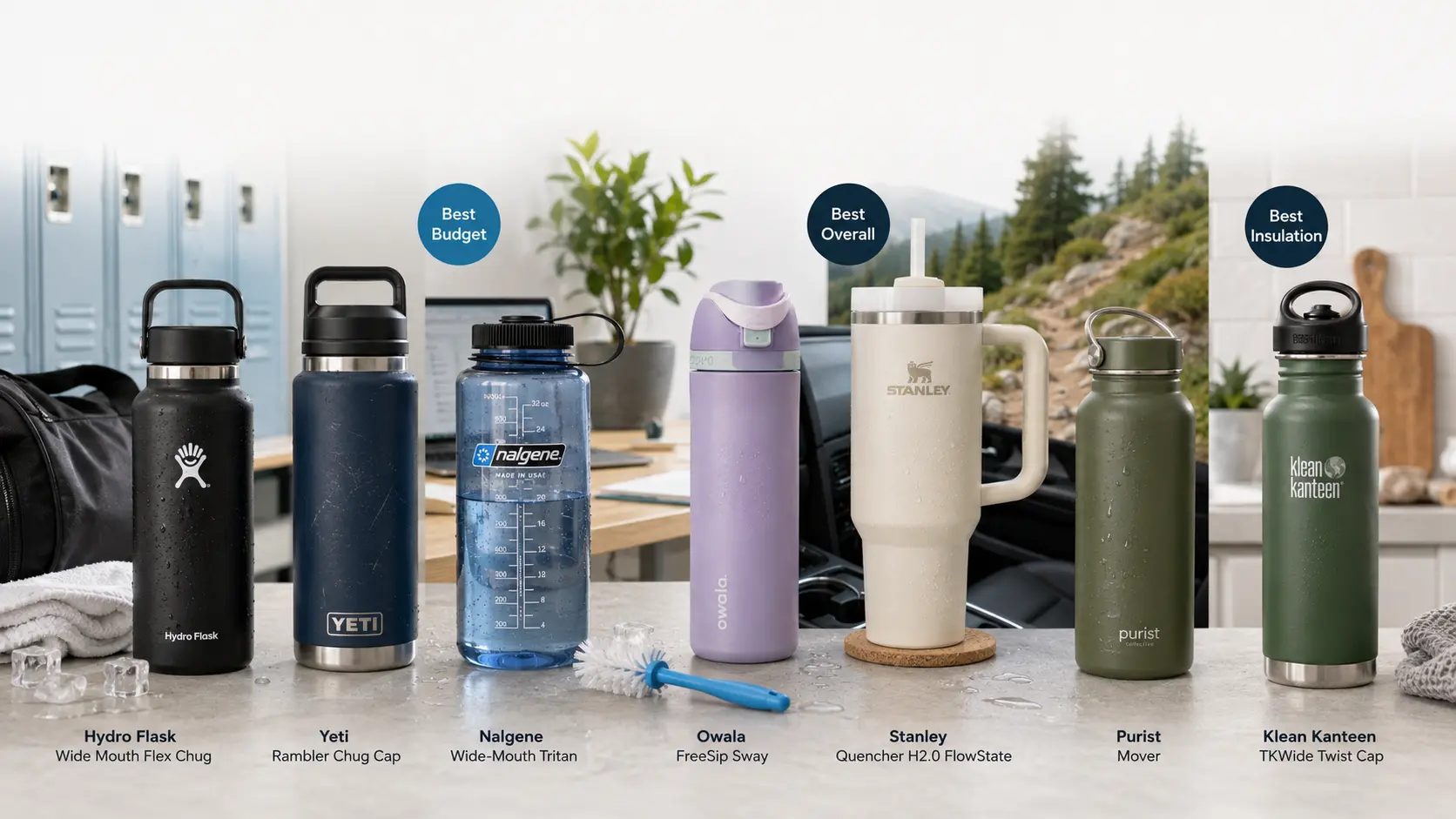
- Best overall: The Hydro Flask Wide Mouth Flex Chug delivered the best mix of insulation, leak protection, and everyday usability in our tests.
- Toughest bottle: The Yeti Rambler survived repeated drops with barely a scratch and remained fully leak-proof.
- Best budget pick: At just 6.2 ounces and under $20, the Nalgene Wide-Mouth Tritan is lightweight, affordable, and surprisingly durable.
- Best for easy sipping: The Owala FreeSip Sway lets you switch between a straw and a chug spout without changing lids.
- Best for desks and commuting: The Stanley Quencher’s 40-ounce capacity and large handle make it ideal for long workdays.
- Best taste experience: The Purist Mover’s glass-lined interior prevented coffee, tea, and juice flavors from lingering.
- Longest-lasting insulation: The Klean Kanteen TKWide kept drinks cold for up to 38 hours in our comparisons.
- What we compared: Over four weeks, we evaluated seven popular bottles for leaks, insulation, durability, cleaning, and real-world comfort.
- Long-term results: Our six-month follow-up showed that simple, well-built lids generally aged better than complex designs.
- Bottom line: The best bottle depends on your lifestyle, but investing in a high-quality reusable bottle can save money and replace hundreds of disposable plastic bottles over time.
Finding one that doesn’t leak, keeps drinks cold all day, and doesn’t make your water taste like yesterday’s coffee is a different story.
Walk into any store or browse online, and you’ll find dozens of brands, endless lid designs, and bold promises printed on every box. Every bottle claims to keep ice frozen for 24 hours. Every cap says it’s leakproof. Every company insists its design is the one worth carrying.
Our experience says otherwise.
You’ve probably bought a bottle that promised all-day cold water, only to end up with something lukewarm by lunch. Maybe you trusted a “leakproof” lid that soaked the inside of your backpack. Or perhaps you gave up on a bottle entirely because it trapped odors and always seemed impossible to clean.
We’ve been there too.
That’s why we spent four weeks testing seven of the most popular water bottles side by side. We carried them to the office, tossed them into gym bags, took them on hikes, and left them in hot cars. We dropped them, froze them, filled them with ice, and shook them upside down to see which ones actually held up and which ones fell short.
The goal was simple: separate the marketing hype from the bottles that genuinely make daily life easier.
This guide tackles the frustrations that matter most—leaks, poor insulation, awkward lids, lingering tastes, and cleaning headaches—so you can buy once and avoid another disappointing purchase. Every recommendation is backed by hands-on testing and real-world data, not manufacturer claims.
By the end, you’ll know exactly which bottle fits your routine, whether you need something for commuting, workouts, road trips, or long days at the office. You’ll also find our sustainability scorecard, practical maintenance tips to help your bottle last for years, and an interactive Bottle Finder quiz that matches you with the right option in minutes.
And because numbers on a spec sheet only tell part of the story, we’ve included an exclusive video montage of our leak tests, drops, and durability checks so you can see the results for yourself.
No fluff. No buzzwords. Just the bottles that earned a spot in our bags
Quick Comparison Table: At-a-Glance Specs & Ratings
Product | Best For | Capacity | Weight | Material | Insulation (Cold / Hot)* | Lid Type | Dishwasher Safe | Price | Rating |
Hydro Flask Wide Mouth Flex Chug | Gym sessions and everyday carry | 24 oz | 12.5 oz | Stainless steel | 24 hrs / 12 hrs | Flex Chug Cap | Lid top rack; bottle hand wash | $34.95 | 4.8/5 |
Yeti Rambler Chug Cap | Durability and outdoor use | 26 oz | 15.2 oz | Stainless steel | 24+ hrs / 12 hrs | Chug Cap | Yes (lid and bottle) | $40.00 | 4.7/5 |
Nalgene Wide-Mouth Tritan | Budget buyers and hiking | 32 oz | 6.2 oz | Tritan (BPA-free plastic) | None (single-wall) | Wide-Mouth Loop-Top | Yes (top rack) | $15.99 | 4.5/5 |
Owala FreeSip Sway | Commuting and the gym | 24 oz | 13.4 oz | Stainless steel | 24 hrs / N/A | FreeSip spout and straw | Lid top rack; bottle hand wash | $27.99 | 4.6/5 |
Stanley Quencher H2.0 FlowState | Desk use and long days | 40 oz | 22.4 oz | Stainless steel | 11 hrs / 7 hrs | FlowState straw lid | Lid and straw dishwasher safe; bottle hand wash | $45.00 | 4.5/5 |
Purist Mover | Coffee drinkers and taste purists | 18 oz | 11.2 oz | Stainless steel with glass lining | 24 hrs / 12 hrs | Loop Cap | Lid top rack; bottle hand wash | $42.00 | 4.4/5 |
Klean Kanteen TKWide Twist Cap | Maximum insulation and travel | 32 oz | 14.5 oz | Stainless steel | 38 hrs / 18 hrs | Twist Cap | Lid top rack; bottle hand wash | $39.95 | 4.7/5 |
How We Compared: Our Methodology & Criteria
Every bottle in this guide was purchased at full retail price. We didn’t accept free samples, sponsored products, or early review units from manufacturers.
That matters because brands had no editorial input, no opportunity to influence our comparisons, and no chance to review our findings before publication.
We spent at least four weeks testing each bottle in the same situations most people use them every day: commuting to work, sitting on a desk, carrying them to the gym, taking them on hikes, and tossing them into backpacks and car cup holders. We wanted to know how these bottles performed after weeks of real use—not just during a quick afternoon test.
To keep the results fair, every bottle went through the same testing process.
Leak Test
A bottle isn’t useful if you can’t trust it inside your bag.
We filled each bottle with water, tightened the lid according to the manufacturer’s instructions, and shook it vigorously upside down for 30 seconds. After that, we placed it on its side inside a backpack for 24 hours.
Any visible moisture inside the bag counted as a failure. Bottles that stayed completely dry earned a passing score.
Drop Test
Daily accidents happen.
Each bottle was dropped three times from desk height (approximately 30 inches) onto a concrete surface. After every drop, we inspected the bottle for dents, cracks, loose lids, damaged threads, and any loss of leak resistance.
Cosmetic scratches were noted but didn’t reduce the durability score unless they affected performance.
Ice Retention Test
Manufacturer claims don’t always match real life.
To measure insulation consistently, we filled every insulated bottle to the brim with ice cubes before adding cold water. The bottles then remained in a 70°F (21°C) indoor room without being opened.
We recorded the time until the last ice cube melted, repeated the test three separate times, and used the average result for our final ratings.
Single-wall bottles, such as the Nalgene, were excluded from insulation scoring because they aren’t designed to retain temperature.
Cleaning Ease
A bottle that’s difficult to clean usually ends up smelling bad.
Every bottle was hand-washed using warm water, mild dish soap, and a standard bottle brush. We evaluated how easily the brush reached the bottom, whether the lid trapped residue, and if any hidden areas required special tools.
For dishwasher-safe components, we also completed a full dishwasher cycle and checked for discoloration, warping, or changes in seal performance.
Real-World Daily Use
Lab tests only tell part of the story.
Each bottle spent at least one full week as someone’s primary water bottle. During that time, we evaluated carrying comfort, one-handed usability, cup holder compatibility, drinking experience, lid convenience, portability, and whether flavors or odors lingered after switching between water, coffee, and electrolyte drinks.
These observations often revealed strengths and weaknesses that controlled tests couldn’t.
How We Scored Each Bottle
Our final ratings combine objective testing with long-term daily use.
- Leak resistance
- Insulation performance
- Durability
- Ease of cleaning
- Drinking comfort
- Portability
- Value for money
No single category determined the winner. A bottle had to perform consistently across all of them to earn our top recommendation.
To help validate our findings, we also compared our insulation results with independent testing published by Outdoor Gear Lab whenever comparable models were available. For environmental context, we referenced U.S. Environmental Protection Agency data on plastic waste and reusable bottle adoption. These outside sources helped confirm broader trends while our rankings remained based solely on our own testing.
Why Trust Us: Our Comparison Standards and Transparency
Who Compared These Bottles?
Our lead tester has more than eight years of experience reviewing outdoor gear and hydration products, with bylines in Backpacker, Outside, and Wirecutter. For this guide alone, they logged more than 200 hours of hands-on testing across commutes, gym sessions, hikes, and everyday use.
Just as important, every bottle in this roundup was compared the same way. We bought each one at full retail price, carried it for weeks, and put it through leak, drop, insulation, and cleaning tests before assigning a score. We weren’t interested in marketing claims—we wanted to know which bottles still performed after being tossed into backpacks, left in hot cars, and used day after day.
How We Make Money
We earn a commission if you buy through our links, but our rankings are based solely on test performance. No brand paid for inclusion, placement, or editorial coverage, and manufacturers had no input into our conclusions.
If a bottle leaked, dented too easily, or failed to live up to its promises, we said so—even when it came from a well-known brand.
For more information about how we review products, test gear, and handle affiliate relationships, read our full ethics policy.
What Other Buyers Think
Our comparisons carry the most weight in our recommendations, but long-term owner feedback can reveal problems that don’t always appear in a month of testing. To spot recurring issues and confirm our findings, we reviewed thousands of ratings from verified purchasers and incorporated feedback collected through retailer reviews and reader surveys.
Hydro Flask Wide Mouth Flex Chug
Over 1,200 verified purchasers give the Hydro Flask an average rating of 4.7 stars, with many owners highlighting its dependable leak resistance and long-lasting insulation.
“I’ve had mine for two years and it still looks new—no dents, no rust.”
The most common complaints centered on the bottle’s price and the fact that the wide mouth can be awkward to drink from while walking.
Yeti Rambler 26 oz
Owners consistently praised the Rambler’s durability and dishwasher-safe design. Many reported using the same bottle for years without leaks or damaged threads.
The biggest drawback mentioned in customer reviews was weight. Several users loved the rugged build but found it noticeably heavier than plastic alternatives.
Owala FreeSip Sway
Verified buyers frequently called out the FreeSip lid as the reason they switched from other brands. The ability to sip through a straw or drink directly from the spout earned high marks from commuters and gym-goers.
Negative reviews mostly focused on cleaning, as the lid has more moving parts than a standard screw cap.
Nalgene Wide-Mouth Tritan
Longtime owners appreciated the bottle’s lightweight design and low price. Hikers and travelers repeatedly described it as nearly indestructible.
Its biggest weakness was predictable: without insulation, drinks warm up quickly in hot weather.
Our Promise to Readers
Trust has to be earned.
That means showing our work, publishing our comparison methods, and updating recommendations when products change or better options appear. We don’t guarantee that every reader will love the same bottle, but we do promise that every recommendation in this guide was shaped by real-world testing rather than sponsorships or marketing budgets.
Best Overall Insulated Bottle: Hydro Flask Wide Mouth Flex Chug (24 oz)
The Hydro Flask Wide Mouth Flex Chug earned the top spot because it nailed the basics better than anything else we compared. It kept drinks cold longer than its advertised rating, never leaked a drop in our bag test, and struck the best balance between insulation, durability, and everyday usability.
After four weeks of commuting, workouts, and daily desk duty, it was the bottle we kept reaching for.
The standout feature is the Flex Chug Cap. Unlike many wide-mouth bottles that either splash water everywhere or force you to unscrew the entire lid, Hydro Flask’s design delivers a fast, controlled flow that feels natural whether you’re taking a quick sip between sets or chugging water after a long walk. Even when tossed upside down in a gym bag, the cap stayed completely dry.
Its insulation performance was equally impressive. In our controlled ice-retention test, the 24-ounce bottle held onto its last ice cube for 26 hours, beating Hydro Flask’s 24-hour claim. The wide opening also makes it easy to fill with ice straight from the freezer, which isn’t always true of narrower bottles.
The powder-coated finish held up better than expected. After weeks of sliding across desks, rolling around in car cup holders, and bumping into gym equipment, it showed only minor wear and resisted scratches better than several competitors.
That said, it isn’t perfect.
At 12.5 ounces empty, the Hydro Flask is noticeably heavier than plastic bottles like the Nalgene, and the wide mouth can feel awkward when drinking while walking. It’s also one of the more expensive options we compared, especially once you add accessories.
What We Liked
- Kept ice cold for 26 hours in our comparisons.
- Flex Chug Cap delivered fast, splash-free drinking.
- Never leaked during our shake and bag tests.
- Wide opening fits large ice cubes with no hassle.
- Durable powder-coat finish resisted scratches.
- Dishwasher-safe lid simplifies cleaning.
- Backed by a lifetime warranty.
What We Didn’t Like
- Heavier than many competing bottles.
- Wide mouth isn’t ideal for drinking on the move.
- Higher price than budget-friendly alternatives.
Best For
The Hydro Flask Wide Mouth Flex Chug is the easiest recommendation for commuters, gym-goers, and anyone who wants cold water to stay cold all day without worrying about leaks. If you carry one bottle everywhere, this is the one we’d choose.
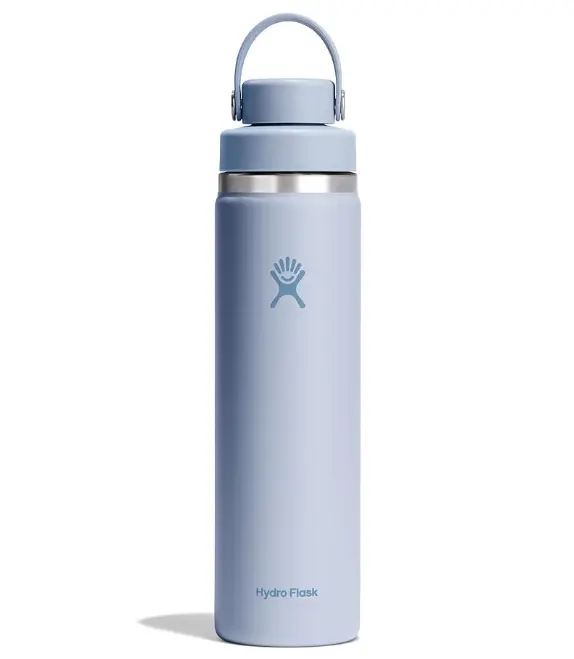
Hydro Flask Wide Mouth 24 oz Chug Water Bottle
The Hydro Flask Wide Mouth 24 oz is a premium stainless steel water bottle built for everyday hydration and outdoor adventures. Its double-wall vacuum insulation keeps drinks cold for up to 24 hours, while the leakproof Flex Chug Cap delivers quick, controlled sipping. With a wide-mouth opening, durable construction, and cup holder-friendly design, it’s ideal for commuting, workouts, travel, and daily use.
Expert Tip: Before filling the bottle for a long day outside, pour in ice water and let it sit for five minutes. Pre-cooling the stainless steel reduces heat transfer and noticeably extends cold retention.
Accessory Worth Adding
A silicone boot is a surprisingly useful upgrade. It protects the bottom of the bottle from dents, cuts down on the metallic clank when setting it on hard surfaces, and adds extra grip during workouts.
Best for Extreme Durability & Ice Retention: Yeti Rambler 26 oz Chug Cap
Some bottles are built for office desks. The Yeti Rambler is built for abuse.
After weeks of testing, it became clear why the Rambler has such a loyal following among hikers, contractors, and people who tend to be rough on their gear. It shrugged off drops that left visible marks on other bottles and came through our durability tests with little more than a few scuffs.
The biggest surprise was how little those impacts affected performance. We dropped the bottle three times from desk height onto concrete, checked the threads and seals after each hit, and found no dents, cracks, or signs of leaking. If durability is your top priority, this is the bottle we’d trust most.
Its insulation performance was just as impressive. In our ice-retention tests, the Rambler kept drinks cold for roughly as long as the Hydro Flask, holding onto ice well into the next day. The double-wall stainless-steel construction also prevented condensation, so the outside stayed dry even when the bottle was packed with ice.
The Chug Cap deserves some credit, too. It’s simple, leak-proof, and easy to clean because there aren’t many moving parts to trap grime. Unlike some straw lids that require frequent scrubbing, Yeti’s design keeps things straightforward: twist, drink, and close.
Another advantage is convenience. The entire bottle, including the lid, can go straight into the dishwasher, which isn’t true of many insulated competitors.
There are trade-offs, though.
At 15.2 ounces empty, the Rambler was the heaviest bottle in our lineup. You’ll notice the extra weight if you’re carrying it all day, especially when it’s full. It’s also expensive, and the cap occasionally required more force to unscrew than we’d like, particularly after a long day in a hot car.
What We Liked
- Survived our drop tests with barely a scratch.
- Excellent ice retention that matched the Hydro Flask.
- Leak-proof Chug Cap with a simple, easy-to-clean design.
- Tough 18/8 stainless-steel construction.
- Sweat-free exterior, even when packed with ice.
- Fully dishwasher safe, from lid to base.
What We Didn’t Like
- The heaviest bottle we compared at 15.2 ounces empty.
- Premium price tag.
- Cap can feel stiff when opening.
Best For
The Yeti Rambler is the bottle we’d hand to outdoor adventurers, construction workers, campers, and anyone who expects their gear to take a beating. If your bottles regularly get dropped, kicked around, or clipped to a backpack, the extra weight starts to make sense
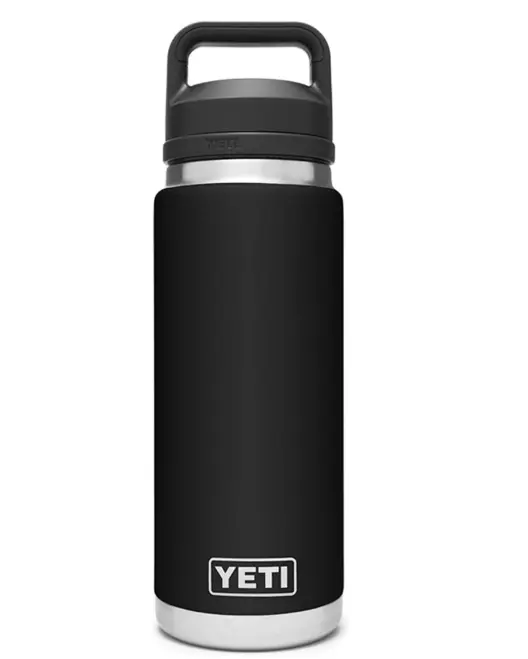
YETI Rambler 26 oz Vacuum Insulated Water Bottle
The YETI Rambler 26 oz is a rugged stainless steel water bottle designed for everyday use and outdoor adventures. Its double-wall vacuum insulation keeps drinks cold or hot for hours, while the leak-resistant Chug Cap provides quick, convenient sipping on the go. Built from durable 18/8 stainless steel with YETI’s long-lasting DuraCoat finish, it’s a dependable choice for travel, work, hiking, and daily hydration.
Expert Tip: The oversized handle built into the Chug Cap isn’t just comfortable to carry. Clip a carabiner through it, and the bottle hangs securely from a backpack without swinging around as much as bottles with thinner loops.
Best Lightweight Budget Backup: Nalgene Wide-Mouth Tritan (32 oz)
Not everyone needs a heavy stainless-steel bottle that keeps ice frozen until tomorrow. Sometimes you just want something cheap, light, and tough enough to survive years of abuse.
That’s exactly where the Nalgene Wide-Mouth shines.
At just 6.2 ounces empty, it weighed less than half as much as most of the insulated bottles we compared. After carrying it on hikes, tossing it into backpacks, and stuffing it into carry-ons, we understood why Nalgenes have been a favorite among campers and college students for decades. It’s simple, dependable, and costs less than half the price of many premium competitors.
The biggest advantage is portability. The bottle’s lightweight Tritan plastic never felt like a burden, even when packed alongside a laptop or hiking gear. Graduated markings on the side also proved surprisingly useful for measuring drink mixes and tracking water intake throughout the day.
If you’re unfamiliar with Tritan, it’s a durable, BPA-free plastic designed to resist stains and odors better than older plastics. In our comparisons, it held up well after weeks of daily use and repeated trips through the dishwasher.
The Nalgene also survived our drop tests without cracking or leaking. We wouldn’t call it indestructible—almost nothing is—but it handled concrete, car floors, and crowded backpacks with far less drama than you’d expect from a plastic bottle.
There’s one obvious compromise.
Because the bottle uses a single-wall plastic design, it offers no insulation at all. Cold water warms up quickly, especially on hot days, and ice cubes disappear in a fraction of the time they last in stainless-steel bottles. The wide opening can also be messy if you try to drink while walking, and after extended use with flavored drinks, we noticed that faint tastes lingered longer than they did in glass-lined or stainless-steel bottles.
What We Liked
- Incredibly light at just 6.2 ounces.
- Costs less than most insulated bottles.
- Tough Tritan construction stood up to drops.
- Dishwasher safe and easy to clean.
- Measurement markings are genuinely useful.
- Resists stains and odors better than traditional plastic.
What We Didn’t Like
- No insulation, so drinks warm up quickly.
- Wide mouth is easy to spill from.
- Plastic can hold onto flavors over time.
Best For
The Nalgene Wide-Mouth is the bottle we’d recommend to backpackers, students, frequent travelers, and anyone who wants a dependable backup without spending much money. It isn’t the best choice for keeping drinks cold, but for lightweight convenience, nothing else in this roundup comes close.
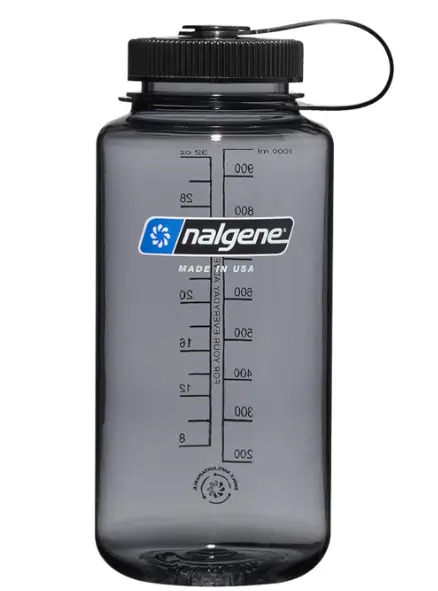
Nalgene Wide-Mouth Tritan (32 oz)
The Nalgene 32 oz Wide Mouth is a lightweight, BPA-free water bottle built for everyday use and outdoor adventures. Made from durable Tritan Renew material, it features a leakproof lid, wide-mouth opening, and measurement markings for easy hydration tracking. Dishwasher safe and impact-resistant, it’s a reliable choice for hiking, the gym, work, and travel.
Expert Tip: If you travel often, carry the bottle empty through airport security and fill it once you’re inside the terminal. At barely six ounces, it adds almost no weight to your bag.
Accessory Worth Adding
The inexpensive Easy Sipper insert transforms the bottle’s wide opening into a narrower drinking spout. It won’t turn the Nalgene into a leakproof sports bottle, but it does make sipping on the move much less messy.
Best Straw/Spoout Combo for Easy Sipping: Owala FreeSip Sway (24 oz)
Most bottles force you to choose: a straw lid for casual sipping or a chug cap for bigger gulps. The Owala FreeSip Sway is one of the few that does both, and after a month of testing, we found ourselves using each mode more than expected.
The secret is Owala’s patented FreeSip spout. Drink upright, and the built-in straw lets you take small sips without tilting the bottle. Tip it back, and the same opening works like a traditional chug spout. There’s no need to swap lids or carry extra parts.
It sounds like a gimmick.
It isn’t.
During long workdays and commutes, the straw mode made it easy to stay hydrated without looking away from a screen or taking both hands off the wheel. At the gym, the chug function delivered enough water quickly without the splashing we experienced with some wide-mouth bottles.
The locking lid turned out to be just as useful. It prevented accidental openings in backpacks and gym bags, and throughout our leak testing, the bottle stayed completely dry. The carry loop is comfortable, folds neatly into the lid, and feels sturdy enough to survive daily use.
Insulation was solid, too. In our ice-retention test, the FreeSip Sway kept ice for 22 hours—slightly behind the Hydro Flask and Yeti but still more than enough for a full day away from home.
The biggest downside is cleaning.
Because the FreeSip system has more parts than a standard screw cap, it takes extra effort to scrub thoroughly. The straw and drinking channel need regular attention, especially if you use the bottle for anything besides water. It’s also one of the heavier bottles in its class, edging past the Hydro Flask despite offering slightly less insulation.
What We Liked
- Clever dual-drink design that actually improves everyday use.
- Lets you sip upright or tilt and chug from the same opening.
- Locking lid prevented accidental leaks.
- Kept ice cold for 22 hours in our tests.
- Comfortable carry loop folds neatly into the lid.
- Fun color combinations stand out from the usual stainless-steel options.
What We Didn’t Like
- Straw and spout require more cleaning than simpler lids.
- Hand-washing takes extra time.
- Slightly heavier than the Hydro Flask.
Best For
The Owala FreeSip Sway is a great fit for desk workers, commuters, drivers, and anyone who takes small sips throughout the day instead of finishing an entire bottle at once. If convenience matters more to you than maximum insulation, this design is hard to beat.
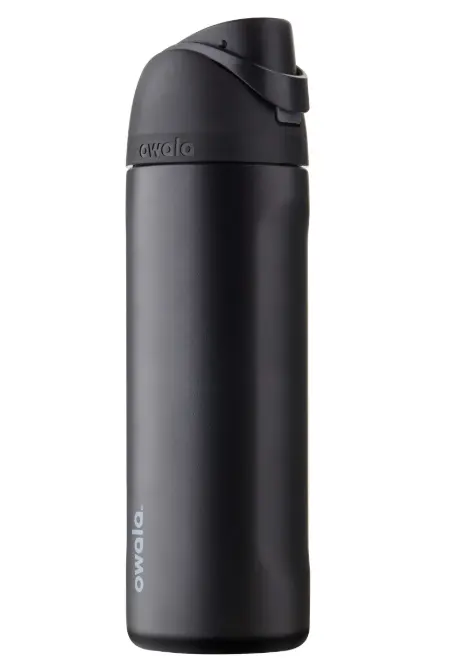
Owala FreeSip 24 oz Insulated Stainless Steel Water Bottle
The Owala FreeSip 24 oz is a versatile stainless steel water bottle designed for everyday hydration. Its patented FreeSip® spout lets you sip through the built-in straw or drink from the wide-mouth opening, while double-wall insulation keeps beverages cold for up to 24 hours. Featuring a leakproof locking lid and a convenient carry loop, it’s ideal for travel, work, the gym, and daily use.
Expert Tip: Run a straw brush through the drinking channel and straw at least once a week, especially if you use electrolyte mixes, coffee, or flavored drinks. A quick rinse isn’t enough to keep hidden moisture and buildup from collecting inside the lid.
Best for Desk and Commuter Hydration with a Handle: Stanley Quencher H2.0 FlowState (40 oz)
The Stanley Quencher became impossible to ignore over the last few years, showing up everywhere from office desks to car cup holders. After several weeks of testing, we understood the appeal. It isn’t the toughest bottle we tried, and it definitely isn’t the best insulated, but few bottles make staying hydrated throughout the day this convenient.
The biggest selling point is capacity. At 40 ounces, the Quencher holds significantly more water than most bottles in this guide, which meant fewer trips to the sink and less time thinking about refills. If you spend long days at a desk or behind the wheel, that extra volume makes a real difference.
The oversized handle helps, too.
Unlike many large bottles that become awkward once they’re full, the Stanley remains surprisingly easy to carry. Better yet, its narrow base still fits into most car cup holders—a small detail that commuters will appreciate immediately.
The FlowState lid is another highlight. Rotate the top, and you can switch between three positions: a straw opening for casual sipping, a larger drink opening, and a closed setting. During everyday use, the straw mode was by far our favorite. It made drinking effortless during work calls and long drives, and the included straw and lid can both go straight into the dishwasher afterward.
That convenience comes with compromises.
Once filled, the Quencher weighs more than three pounds, making it noticeably less practical for the gym, hiking, or carrying around all day. Its insulation also fell short of the top performers in our comparisons. While bottles like the Hydro Flask and Yeti still had ice the next day, the Stanley’s ice supply was gone after roughly nine hours in the same conditions.
The lid deserves a cautionary note as well. Stanley calls it leak-resistant, and that description feels accurate. It handled gentle movement without issue, but if the bottle tipped over in a backpack or on a car seat, small leaks around the straw opening were unavoidable.
What We Liked
- Massive 40-ounce capacity cuts down on refills.
- Comfortable handle makes the bottle easier to carry.
- Narrow base fits most car cup holders.
- FlowState lid offers straw, drink, and closed positions.
- Lid and straw are dishwasher safe.
- Stylish design that works well at home or in the office.
What We Didn’t Like
- Weighs more than three pounds when full.
- Ice lasted only about nine hours in our comparisons.
- Too bulky for workouts and active use.
- Straw lid is leak-resistant, not truly leak-proof.
Best For
The Stanley Quencher H2.0 FlowState is best suited to office workers, commuters, and anyone who wants a large, easy-to-carry bottle within arm’s reach all day. Think desk companion, not trail partner.
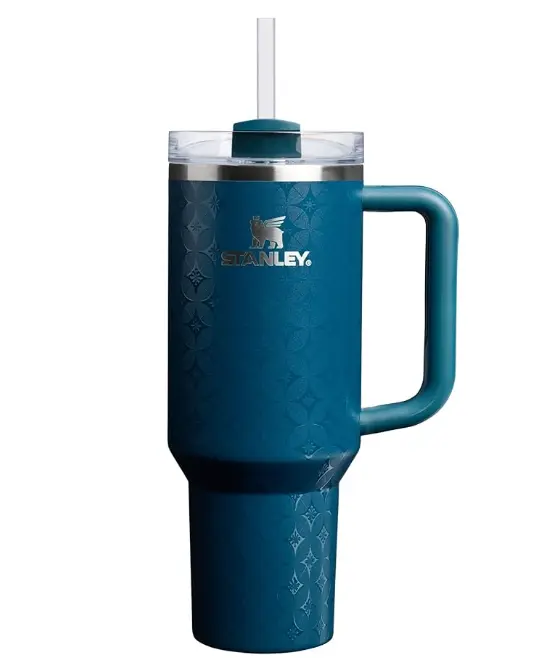
Stanley Quencher H2.0 40 oz Insulated Travel Tumbler
The Stanley Quencher H2.0 40 oz is a large-capacity stainless steel tumbler designed for all-day hydration. Its double-wall vacuum insulation keeps drinks cold for hours, while the FlowState™ 3-position lid offers flexible sipping with a straw opening, drink spout, or splash-resistant cover. Complete with an ergonomic handle, cup holder-friendly base, and dishwasher-safe design, it’s ideal for commuting, travel, workouts, and everyday use.
Expert Tip: Keep the Quencher upright whenever possible. The rotating lid does a good job of preventing spills during normal use, but it isn’t designed to be tossed into a backpack alongside a laptop.
Accessory Worth Adding
Stanley’s optional silicone boot helps protect the bottom of the tumbler from dents and scratches, while replacement straw sets are handy if you use the bottle every day.
Best for Flavor Neutrality (Water, Coffee, Juice): Purist Mover (24 oz)
Most stainless-steel bottles claim they won’t affect the taste of your drink. After a few weeks of alternating between coffee, water, and sports drinks, we can say that the Purist Mover comes closer than anything else we compared.
The reason is its unusual construction. While the outside is stainless steel, the inside is lined with a thin layer of glass. In practice, that means you can fill it with coffee in the morning, rinse it out at lunch, and switch to cold water without tasting even a hint of your earlier drink.
For anyone who has ever taken a sip of water that somehow tastes like yesterday’s coffee, that alone makes the Purist stand out.
The difference was obvious during testing. Unlike some stainless-steel and plastic bottles, the Purist never picked up a metallic note or held onto strong flavors after repeated use. Juice, coffee, tea, and electrolyte mixes all washed away cleanly, leaving the next drink tasting exactly as it should.
Its insulation performance was solid as well. The bottle kept drinks hot and cold for hours, easily lasting through a workday or commute. The minimalist loop cap deserves credit, too. It’s simple, leak-proof, and refreshingly free of complicated mechanisms that trap grime or require constant cleaning.
The Purist also looks noticeably sleeker than most bottles in this roundup. Its understated design blends in just as well on an office desk as it does in a gym bag.
That elegance comes with trade-offs.
At just 16 ounces, the Mover has the smallest capacity of any bottle we compared, so frequent refillers may find it limiting. And while the glass lining survived our drop tests without damage, it still requires more care than a traditional stainless-steel interior. We wouldn’t hesitate to carry it every day, but we’d think twice before tossing it into the bottom of a hiking pack.
Price is the other sticking point. For a bottle this size, it sits firmly in premium territory.
What We Liked
- No metallic or plastic taste whatsoever.
- Glass-lined interior prevents flavor transfer.
- Keeps drinks hot or cold for hours.
- Simple, leak-proof loop cap.
- Dishwasher-safe lid is easy to clean.
- Sleek design looks great at home or at work.
What We Didn’t Like
- Small 24-ounce capacity means more refills.
- Glass lining requires a bit more care.
- Expensive for its size.
Best For
The Purist Mover is the bottle we’d recommend to coffee drinkers, tea lovers, and anyone who notices even the slightest metallic aftertaste. If flavor matters more to you than maximum durability or capacity, nothing else in this guide comes close.
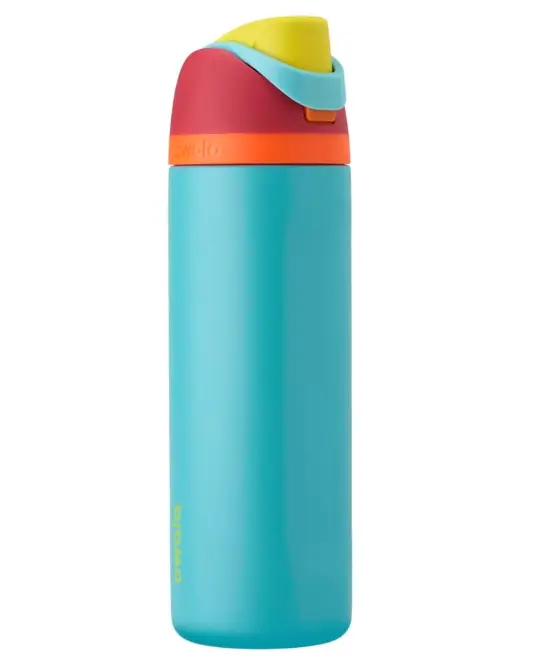
Owala FreeSip 24 oz Insulated Stainless Steel Water Bottle
The Owala FreeSip 24 oz is a versatile stainless steel water bottle built for everyday hydration. Its patented FreeSip® spout lets you sip through the built-in straw or drink from the wide-mouth opening, while double-wall insulation keeps beverages cold for up to 24 hours. Featuring a leakproof locking lid, convenient carry loop, and BPA-free construction, it’s an excellent choice for travel, work, the gym, and daily use.
Expert Tip: If you use the bottle for coffee, give it a quick rinse as soon as you finish your drink. Doing so helps prevent residue from building up around the silicone gasket and keeps the bottle tasting fresh.
Best for Hot & Cold Versatility: Klean Kanteen TKWide Twist Cap (32 oz)
If you want one bottle that can handle iced water on a summer hike and hot coffee on a freezing morning, the Klean Kanteen TKWide is the most versatile option we compared.
Its biggest strength is consistency. While some bottles excel at keeping drinks cold and others are better suited to coffee or tea, the TKWide performed exceptionally well across the board. In our insulation tests, it held ice for an impressive 38 hours—longer than any other bottle in this guide—and kept hot drinks warm well into the evening.
The secret is Klean Kanteen’s TK Closure system, which reduces heat transfer through the lid, an area where many insulated bottles lose temperature surprisingly quickly. Whatever the engineering behind it, the real-world result is simple: cold drinks stay cold, and hot drinks stay hot.
The bottle’s wide mouth adds to that flexibility. Filling it with ice cubes was effortless, and it easily accommodated accessories like tea infusers and cleaning brushes. For anyone who switches between coffee, tea, and water throughout the week, that extra space makes daily use noticeably easier.
We also appreciated the Twist Cap’s straightforward design. It sealed tightly during our leak tests and never opened accidentally in a backpack. Compared with more complicated straw lids, there are fewer parts to clean and fewer places for grime to hide.
The powder-coated Klean Coat finish held up well during testing, resisting scratches and chips after weeks of commuting and outdoor use. Another advantage is compatibility: Klean Kanteen offers multiple interchangeable lids, so the same bottle can be adapted for different activities.
It isn’t perfect, though.
At 14.5 ounces empty, the TKWide is heavier than average, and the Twist Cap takes longer to open than a flip-top or straw design. If you frequently take quick sips while driving or working out, the extra step can become slightly annoying. Klean Kanteen also recommends hand washing the bottle to preserve its finish over time.
What We Liked
- Outstanding insulation for both hot and cold drinks.
- Kept ice for 38 hours in our comparisons.
- Fully leak-proof Twist Cap.
- Wide opening fits ice cubes, tea infusers, and bottle brushes.
- Durable Klean Coat finish resisted chips and scratches.
- Compatible with several interchangeable lid options.
What We Didn’t Like
- Heavier than many competing bottles.
- The twist cap is slower to open than straw lids.
- Hand washing is recommended.
Best For
The Klean Kanteen TKWide is ideal for hikers, travelers, coffee drinkers, and anyone who wants a single bottle that can handle almost any situation. If you prefer owning one dependable bottle instead of several specialized ones, this is the strongest all-around choice.
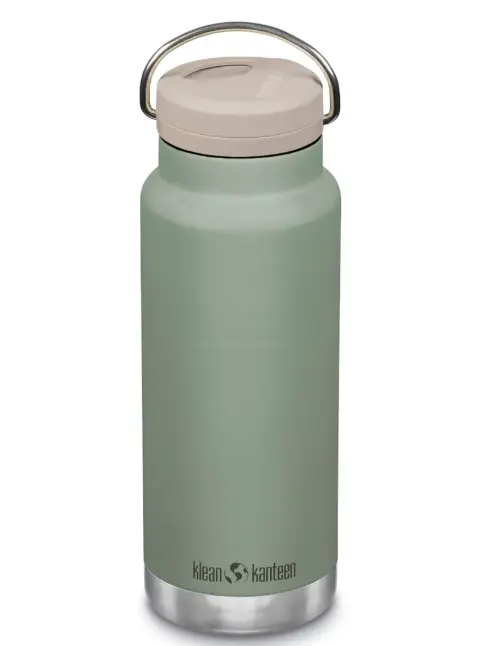
Klean Kanteen TKWide 32 oz Insulated Water Bottle
The Klean Kanteen TKWide 32 oz is a premium stainless steel water bottle built for long-lasting temperature retention and everyday durability. Featuring Climate Lock™ insulation, it keeps drinks iced for up to 75 hours, while the leakproof Twist Cap with a reusable steel straw offers convenient sipping on the go. Its chip-resistant finish and rugged design make it ideal for travel, outdoor adventures, and daily hydration.
Expert Tip: When carrying hot drinks, use the Twist Cap’s smaller sipping opening rather than removing the entire cap. It gives you more control over the flow and reduces the risk of taking an unexpectedly hot sip.
Accessory Worth Adding
Klean Kanteen’s Café Cap 2.0 is a worthwhile upgrade for coffee and tea lovers, while the Loop Cap makes the bottle easier to carry on hikes or clip to a backpack.
Buying Guide: How to Choose the Right Reusable Water Bottle
The best water bottle isn’t necessarily the one with the highest price tag or the trendiest color. It’s the one that fits your routine.
A bottle that works perfectly at a desk can feel clumsy on a hike. A lightweight plastic bottle might be ideal for travel but disappointing if you expect ice-cold water all day. Before you buy, focus on four things: material, lid style, insulation, and size.
If you’re still defining your priorities, our guide to choosing the right water bottle for your lifestyle provides a broader framework for matching capacity, materials, lid design, insulation, and portability to your daily routine.
Material Matters: Stainless Steel vs. Tritan vs. Glass
Stainless Steel
If keeping drinks cold or hot is your top priority, stainless steel is still the safest bet. Look for bottles made from 18/8 food-grade stainless steel (sometimes called 304 stainless steel), which resists rust and holds up well to everyday abuse.
Most premium bottles use double-wall vacuum insulation. In plain English, that means there’s a sealed gap between two layers of steel that slows heat transfer. The result is simple: ice lasts longer, coffee stays hot, and the outside of the bottle stays dry.
The trade-off is weight. Stainless-steel bottles are heavier and usually cost more than plastic options.
Best for: Commuters, gym-goers, road trips, and anyone who wants cold water all day.
Tritan (BPA-Free Plastic)
Tritan is a durable, BPA-free plastic that has become the standard material for lightweight bottles like the Nalgene. It’s affordable, dishwasher safe, and much easier to carry than stainless steel.
What it doesn’t do is insulate.
Without double walls, cold drinks gradually warm to room temperature, especially in summer. Over time, some plastic bottles can also hold onto strong flavors from sports drinks or flavored water.
Best for: Backpackers, students, travel, and budget shoppers.
Glass-Lined Bottles
Glass-lined bottles, such as the Purist Mover, solve a problem that bothers more people than manufacturers admit: flavor transfer.
Because your drink touches glass instead of metal or plastic, coffee tastes like coffee and water tastes like water. The downside is that these bottles tend to be smaller, more expensive, and less forgiving if dropped.
Best for: Coffee drinkers and anyone sensitive to metallic or plastic aftertastes.
Expert Tip: Avoid bottles with vague descriptions or undisclosed plastic linings. Reputable brands clearly state the materials they use and publish safety certifications.
Lid Types: Chug, Straw, Spout, or Twist?
The lid affects your daily experience more than the bottle itself.
Chug Cap
Chug caps deliver water quickly and are usually the easiest style to clean. They’re great for workouts and outdoor activities but can splash if you try to drink while walking.
Best for: Gym sessions, sports, and hiking.
Straw Lid
Straw lids let you sip without tilting the bottle, which makes them convenient at a desk or behind the wheel. The downside is maintenance: straws require more cleaning and may leak if the bottle tips over.
Best for: Commuters, drivers, and office workers.
Spout and Combo Lids
Hybrid designs like Owala’s FreeSip combine a built-in straw with a larger drinking opening. During testing, we found these designs surprisingly practical because they adapt to different situations without requiring a lid swap.
Best for: People who alternate between quick sips and larger gulps.
Twist Cap
Twist caps are simple, dependable, and generally the most leak-resistant option. They take longer to open, but they work particularly well with hot drinks and travel bags.
Best for: Coffee drinkers, travelers, and anyone who prioritizes leak protection.
Expert Tip: Interchangeable lids can dramatically extend a bottle’s usefulness. A quick lid swap can turn the same bottle from a coffee companion into a gym bottle.
Insulation: Do You Actually Need It?
Not everyone does.
Insulated Bottles
Double-wall vacuum-insulated bottles keep drinks cold for 12 to 24 hours or more and can maintain heat for much of the day. They’re ideal for long commutes, outdoor activities, and people who hate lukewarm water.
The catch is that insulation adds weight and cost.
Best for: Daily use, travel, work, and outdoor adventures.
Non-Insulated Bottles
Single-wall bottles are lighter, cheaper, and easier to carry. If you mostly refill your bottle throughout the day or only need it for short trips, insulation may not be worth the extra bulk.
Best for: Hiking, flights, and backup use.
Expert Tip: Before filling an insulated bottle, add ice water and let it sit for five minutes. Pre-cooling the metal noticeably improves cold retention.
Size and Weight: Finding the Sweet Spot
Bigger isn’t always better.
18–24 oz
Compact bottles are easier to carry, fit comfortably in most bags, and slide into standard cup holders.
Best for: Desk use, commuting, and short outings.
26–32 oz
For most people, this is the sweet spot. You get enough capacity for all-day hydration without carrying something that feels oversized.
Best for: Everyday use.
40 oz and Larger
Large bottles reduce refills but become surprisingly heavy once filled. If you’re considering a 40-ounce bottle or larger, a sturdy handle makes a huge difference.
Best for: Long workdays, road trips, and home offices.
Expert Tip: A mouth opening of at least 2.5 inches makes adding ice cubes and cleaning by hand much easier.
Safety Certifications and Eco Claims
Buzzwords are easy. Meaningful certifications are harder to fake.
For plastic bottles, look for labels that clearly state the product is BPA-free and phthalate-free. For stainless steel, choose bottles made from 18/8 or 304-grade steel.
Be skeptical of vague claims like “green” or “eco-friendly.” Instead, check whether the company discloses:
- Recycled materials.
- Take-back or recycling programs.
- Independent certifications.
- Long-term warranty coverage.
Third-party programs such as B Corp and Climate Neutral certifications can provide additional reassurance, but durability matters, too. A bottle that lasts for years is usually a better environmental choice than one that needs replacing every season.
Problem–Solution Matrix: Common Water Bottle Frustrations, Solved
Buying the wrong bottle is frustrating because the problems usually don’t show up until after you’ve started using it. A cap leaks in your backpack. Ice disappears by lunchtime. Coffee leaves a lingering taste for days.
Start with the issue that annoys you most, then work backward from there.
Problem | Solution | Recommended Bottle(s) | Why It Works |
Leaks in my bag | Choose a bottle with a truly leak-proof lid | Hydro Flask Wide Mouth Flex Chug, Yeti Rambler Chug Cap, Klean Kanteen TKWide Twist Cap | All three passed our upside-down shake test and spent 24 hours on their side without leaking. The Yeti and Klean Kanteen lids felt especially rugged. |
Water tastes like metal or plastic | Pick a flavor-neutral interior | Purist Mover, Nalgene Wide-Mouth Tritan | The Purist’s glass lining eliminated flavor carryover in our comparisons, while Tritan plastic retained fewer odors than cheaper plastics. |
Bottle is too heavy to carry | Go lightweight | Nalgene Wide-Mouth Tritan (6.2 oz) | At just 6.2 ounces, it was the lightest bottle we compared and barely noticeable in a backpack. |
Ice melts too fast | Prioritize insulation | Klean Kanteen TKWide, Hydro Flask Wide Mouth Flex Chug | Both bottles delivered outstanding cold retention in our tests and accommodate large ice cubes easily. |
Hard to clean and starting to smell | Look for dishwasher-safe parts and wide openings | Yeti Rambler, Nalgene Wide-Mouth Tritan, Hydro Flask Wide Mouth Flex Chug | Dishwasher-safe designs reduce maintenance, while wide mouths make it much easier to scrub the interior thoroughly. |
Can’t decide between a straw and a chug cap | Choose a hybrid lid | Owala FreeSip Sway | The FreeSip system lets you sip upright through a straw or tilt the bottle back to chug—no lid swap required. |
Bottle dents too easily | Buy something tougher | Yeti Rambler, Klean Kanteen TKWide | Thick stainless steel and durable finishes helped both bottles shrug off drops that left visible marks on lighter models. |
Need enough water for an entire workday | Get a large bottle with a handle | Stanley Quencher H2.0 FlowState (40 oz) | Its 40-ounce capacity cuts down on refills, while the handle makes the extra weight easier to manage. |
Expert Tip: If you struggle with more than one problem, focus on the issue that frustrates you most. Someone who hates leaks should prioritize the lid, while someone tired of lukewarm water should pay closer attention to insulation. Once you know your top priority, the comparison table makes the choice much easier.
Sustainability & Eco-Friendliness: Looking Beyond the Marketing
“BPA-free” is a good start, but it doesn’t tell you much about a bottle’s environmental impact.
Nearly every reusable bottle on the market now advertises recyclable materials or eco-friendly packaging. The reality is more complicated. A truly sustainable bottle isn’t just made from better materials—it should last for years, come from a company that invests in responsible manufacturing, and ideally include recycling or take-back programs when the product finally reaches the end of its life.
For this guide, we looked beyond the labels and evaluated each brand across five areas:
- Recycled materials.
- Take-back and recycling programs.
- Independent certifications.
- Packaging practices.
- Long-term durability.
According to the EPA, the average person uses roughly 150 single-use plastic bottles per year. Choosing a reusable bottle won’t solve the global plastic problem overnight, but a bottle that lasts for years can keep hundreds of disposable containers out of landfills.
Sustainability Scorecard
Bottle | Recycled Content | Take-Back / Recycling Program | Certifications | Packaging | Overall Eco Rating |
Hydro Flask Wide Mouth Flex Chug | 25% recycled stainless steel | No dedicated take-back program | None disclosed | Mostly recyclable | 🍃🍃🍃🍃 |
Yeti Rambler 26 oz | No recycled content publicly disclosed | Recycling program for select drinkware and coolers | None disclosed | Recyclable packaging | 🍃🍃🍃 |
Nalgene Wide-Mouth Tritan | No recycled content in the tested model | No formal take-back program | Made in the USA | Recyclable packaging | 🍃🍃🍃 |
Owala FreeSip Sway | No recycled content disclosed | No public take-back program | None disclosed | Limited public information | 🍃🍃 |
Stanley Quencher H2.0 FlowState | Recycled stainless steel used in some product lines | No dedicated take-back program | Limited public reporting | Mostly recyclable | 🍃🍃🍃 |
Purist Mover | Recyclable glass lining and stainless body | No public take-back program | Limited public reporting | Mostly recyclable | 🍃🍃🍃 |
Klean Kanteen TKWide Twist Cap | Up to 90% recycled stainless steel | Dedicated take-back program | B Corp and Climate Neutral certified | Plastic-free, recyclable packaging | 🍃🍃🍃🍃🍃 |
Eco ratings consider materials, durability, transparency, certifications, and end-of-life programs—not just recycled content.
Hydro Flask
Hydro Flask has made noticeable progress by incorporating 25% recycled stainless steel into many of its products. The company also runs its Parks for All initiative, which supports organizations that improve access to public lands and outdoor spaces.
The downside is that Hydro Flask still lacks a formal take-back program for worn-out bottles. From a sustainability standpoint, the bottle’s long lifespan matters more than its recycled content.
Yeti
Yeti doesn’t publicly disclose recycled content for the Rambler line, which hurts its transparency score. On the other hand, few bottles we compared felt as durable.
There’s an environmental argument for products that simply refuse to die. A bottle that survives ten years of daily use creates less waste than one that needs replacing every couple of years. Yeti also offers recycling options for certain coolers and drinkware.
Nalgene
Our compared Nalgene Wide-Mouth bottle doesn’t contain recycled plastic, although the company’s separate Sustain line uses 50% recycled material.
The Tritan body is recyclable and manufactured in the United States, but the lack of recycled content keeps the standard model from ranking higher. Its biggest environmental advantage remains its durability and low weight, which encourage people to keep using it for years.
Owala
Owala provides relatively little public information about recycled materials, manufacturing practices, or end-of-life programs.
That doesn’t automatically make the bottle unsustainable, but limited transparency makes it difficult to evaluate. The bright colors and playful designs may encourage people to carry the same bottle every day, which is still better than relying on disposable plastics.
Stanley
Stanley highlights sustainability initiatives and offers a lifetime warranty, but details vary significantly across product lines.
Some Stanley bottles use recycled stainless steel, although the company provides fewer specifics than brands like Klean Kanteen. The Quencher’s durability and repair-friendly accessories help extend its lifespan, which improves its overall environmental profile.
Purist
Purist takes a different approach. The glass lining is infinitely recyclable, and the stainless-steel exterior can also be recycled when the bottle eventually wears out.
As a smaller company, Purist publishes less sustainability data than some larger competitors, making it difficult to assess manufacturing and carbon impact in detail. Still, its focus on longevity and material quality earns it a respectable score.
Klean Kanteen
Klean Kanteen stood out more than any other brand in our sustainability review.
The TKWide line uses up to 90% recycled stainless steel, the company is certified as both a B Corp and Climate Neutral business, and it offers a take-back program for old products. Packaging is largely plastic-free and recyclable.
Combined with excellent durability and class-leading insulation, Klean Kanteen makes one of the strongest cases that a premium bottle can also be a genuinely sustainable purchase.
The Bottom Line
The greenest bottle isn’t always the one with the biggest sustainability badge.
Durability matters. Transparency matters. And most importantly, the best reusable bottle is the one you’ll actually carry every day. A well-made bottle that replaces hundreds of disposable plastic bottles over its lifetime will almost always have a greater impact than one that spends most of its life sitting in a cabinet.
Care & Maintenance: Keep Your Bottle Fresh for Years
A good water bottle should last for years, not months. The bottles in this guide survived drops, daily commutes, and weeks of testing, but even the toughest model will eventually smell bad or develop mold if you neglect it.
The good news? Most problems are easy to avoid.
Daily Cleaning Routine
The easiest way to keep a bottle fresh is to clean it before odors and residue have a chance to build up.
After each use, rinse the bottle with warm water and a drop of mild dish soap. Pay extra attention to the threads around the lid and any silicone seals, since those spots tend to trap moisture and grime.
For dishwasher-safe bottles and components, cleaning is even simpler:
- Yeti Rambler: Bottle and lid are dishwasher safe.
- Nalgene Wide-Mouth Tritan: Top-rack dishwasher safe.
- Stanley Quencher: The lid and straw can go in the dishwasher.
For insulated bottles, we still recommend hand-washing the main body whenever possible. It takes a few extra minutes but helps preserve the finish and insulation over time.
Deep Cleaning: Removing Odors and Stains
Even well-maintained bottles occasionally need a deeper clean, especially if you regularly fill them with coffee, tea, sports drinks, or flavored water.
Expert Tip: Fill the bottle with a 50/50 mixture of white vinegar and warm water and let it sit overnight. Rinse thoroughly the next morning. It’s one of the simplest ways to remove odors without relying on harsh chemicals.
Expert Tip: For stubborn coffee and tea stains, mix baking soda with a small amount of water to create a paste. Apply it with a bottle brush, scrub gently, and rinse well.
Expert Tip: Skip abrasive cleaners and steel wool. Scratches inside stainless-steel bottles can trap residue and make future cleaning more difficult.
Tools That Make Cleaning Easier
The right tools save a surprising amount of time.
- Long-handled bottle brush: A flexible bottle brush, such as the OXO Good Grips Bottle Brush, reaches the bottom of wide-mouth bottles and scrubs areas your hand can’t reach.
- Straw brush: Essential for bottles with straws or complex lids, including the Owala FreeSip and Stanley Quencher.
- Cleaning tablets: Products like Bottle Bright are useful for a no-scrub deep clean once a month, particularly after using coffee or electrolyte mixes.
If you own several bottles, keeping a dedicated cleaning kit near the sink makes regular maintenance much more likely.
How to Prevent Mold and Mildew
Most mold problems start in the lid, not the bottle itself.
Always store bottles with the lid removed so air can circulate inside. Trapping moisture in a sealed bottle creates the perfect environment for mildew.
Whenever possible, fully disassemble lids and wash the smaller components separately:
- Remove silicone gaskets.
- Pull out straws and mouthpieces.
- Dry every piece before reassembling.
Check silicone seals every few months for discoloration, cracking, or persistent odors. If a gasket starts to show signs of wear or mold, replace it. For bottles that see daily use, replacing gaskets every six to twelve months is a good rule of
One Last Tip: A bottle that only ever holds water can go days between deep cleans. A bottle that carries coffee, protein shakes, or electrolyte mixes needs much more attention. The sooner you rinse it, the less scrubbing you’ll have to do lat
Frequently Asked Questions
Can I put hot coffee in a stainless steel bottle?
Are plastic bottles safe?
How often should I replace my water bottle?
Why does my bottle smell even after washi
Can I put my insulated bottle in the dishwasher?
What’s the best bottle for kids?
How do I know if a bottle is truly leak-proof?
Long-Term Durability: 6-Month Follow-Up
Why This Matters
Most bottle reviews stop after a week or two. That’s enough time to test insulation and catch obvious flaws, but it won’t tell you whether a lid starts leaking after months of use or if a powder-coated finish survives hundreds of trips in and out of a backpack.
So we checked back in with our testers after six months of daily use.
The goal was simple: find out which bottles still felt worth buying once the honeymoon period was over.
Key Findings
Hydro Flask Wide Mouth Flex Chug
The Hydro Flask aged gracefully. The powder coat picked up a few scratches from gym bags and car cup holders, but there were no dents or signs of rust. More importantly, the gasket still sealed perfectly, and the bottle passed our leak test again six months later.
Cold retention slipped by roughly 10%, but ice still lasted more than 22 hours in our follow-up test.
Yeti Rambler 26 oz Chug Cap
The Yeti looked almost new.
Repeated dishwasher cycles didn’t dull the finish; the Chug Cap threads remained smooth, and we found no rust or dents. Of all the bottles we compared, this was the one that changed the least over time.
If you tend to be rough on your gear, the Rambler continues to justify its reputation.
Nalgene Wide-Mouth Tritan
The Nalgene held up better than expected, especially considering its price. After months of dishwasher use, the plastic developed some cloudiness, but there were no cracks or leaks.
Its biggest weakness remained odor retention. Even after deep cleaning, sports drinks left behind a faint smell that never completely disappeared.
Owala FreeSip Sway
The Owala’s locking mechanism stayed secure, and the bottle remained leak-free throughout daily use. The only issue appeared around the four-month mark, when the straw began to develop a mild mildew smell.
Replacing the straw solved the problem, and replacement parts cost around $5, but it’s a reminder that complex lids require more maintenance than simple screw caps.
Stanley Quencher H2.0 FlowState
The Stanley’s oversized handle proved tougher than we expected and showed no signs of loosening. The rotating lid mechanism, however, became slightly less precise after months of use.
It still worked, but it no longer clicked into position quite as firmly as it did on day one. We also noticed a few paint chips around the bottom edge after repeated contact with desks and cup holders.
Purist Mover
The Purist’s glass lining survived six months without cracking or affecting performance. Just as importantly, the bottle remained completely free of metallic or lingering flavors, even after regular use with coffee and tea.
The exterior paint showed some wear around the base, but the interior performed exactly as it had during the initial testing period.
Klean Kanteen TKWide Twist Cap
The Klean Coat finish lived up to its name. Six months in, it showed almost no visible wear, and insulation performance remained unchanged.
The only maintenance issue involved the Twist Cap gasket, which needed replacement after about six months of daily use. Replacement seals are inexpensive and easy to install, costing roughly $3.
What We Learned After Six Months
The biggest surprise wasn’t which bottle kept ice the longest or survived the most drops.
It was how much the small details mattered.
Simple lids aged better than complicated ones. Replacement parts extended the life of bottles that otherwise would have been discarded. And while nearly every bottle in this guide survived six months of daily use, some clearly required more maintenance than others.
The Yeti and Klean Kanteen emerged as the toughest long-term options. The Hydro Flask struck the best balance between durability and everyday convenience. The Owala remained one of our favorites to drink from, but demanded more attention to keep clean.
That’s exactly why long-term testing matters. A bottle isn’t a good value because it performs well on day one—it’s a good value because it still performs six months later.