I was refilling my bottle at the kitchen sink when I noticed the plastic ring inside the cap. I unscrewed the lid of my favorite stainless steel bottle and found a plastic straw and seal.
I’d been drinking from plastic all along. That moment sent me down a rabbit hole. A 2026 study found microplastics in the vast majority of bottled water samples, prompting new rankings of the best reusable water bottles of 2026.
Most reusable bottles still put plastic in your drinking path, hidden under the lid or inside the straw.
Key Takeaways
- Microplastics are now found in the vast majority of bottled water samples, but your reusable bottle may be leaching them too.
- Most ‘stainless steel’ bottles still have plastic lids, seals, or straws that contact your water.
- This guide uses 2026 research and comparisons to identify bottles that are 100% plastic-free from sip to storage.
- A stainless steel or bamboo lid upgrade can instantly remove plastic from your drinking path.
- Food-grade silicone seals are safe but require daily drying and periodic replacement.
The problem isn’t just single-use bottles. Everyday storage and handling of PET bottles increases human exposure to nano- and microplastics, and the same logic applies to the plastic components in your reusable gear. A 2026 review confirmed that these particles are now a serious health concern, yet the bottle industry still markets “BPA-free” as if that solves everything. It doesn’t. BPA-free often means BPS or BPF, and a plastic lid still sheds microplastics into your water with every sip.
This guide to the best water bottles of 2026 cuts through the noise. We research and compare to identify bottles that are 100% plastic-free from sip to storage. No hidden plastic straws, no plastic seals, no plastic lids. Just verified, non-toxic materials that keep your water clean. Now that the stakes are clear, let’s break down the materials themselves, because not all “stainless steel” is created equal.
Knowing the materials is step one. Step two is finding where plastic hides even when the body is steel or glass.
The Hidden Plastic Problem: Lids, Seals, and Linings
You’ve picked your material. Now let’s look under the lid, because that’s where most “plastic-free” claims fall apart. A stainless steel body means nothing if your water spends hours in contact with a plastic disc, a cheap O-ring, or an epoxy liner. I’ve torn down enough bottles to know the marketing rarely matches the metal.
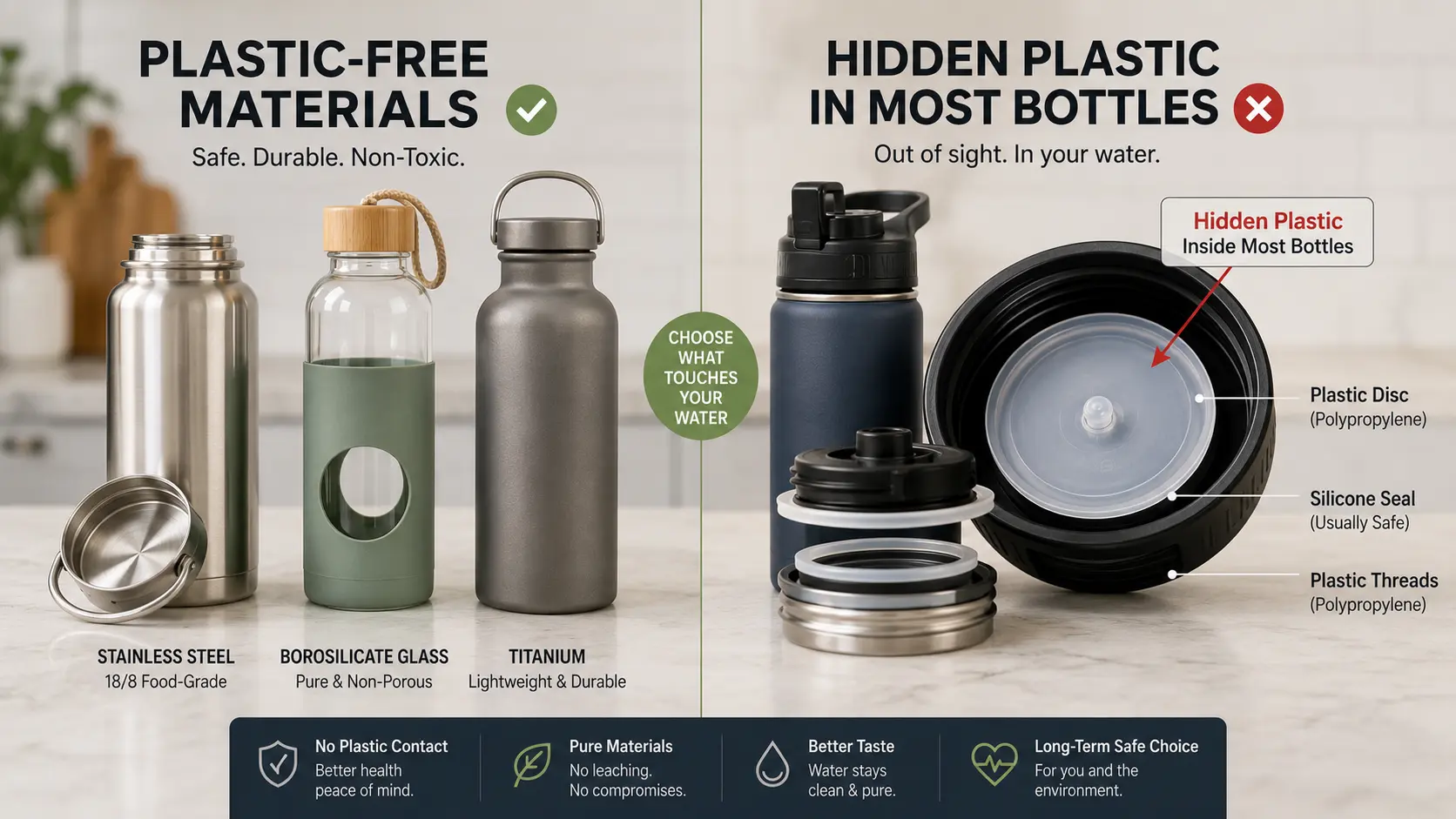
Why do even the best insulated water bottles of 2026 sometimes taste faintly of plastic? During a teardown last winter, I unscrewed the cap of a well-known insulated bottle. The website called it “100% stainless steel.” Flipping the lid over revealed a thin polypropylene disc glued to the underside, the exact surface my water touched every time I tilted the bottle. The body was flawless 18/8 steel, but the drinking path was plastic. That’s the moment I started the Hidden Plastic Audit: a systematic check of every component that touches your water, not just the shell. The brand’s claim wasn’t a lie; it was a careful omission. And that’s the part nobody warns you about.
The Lid Underside: Where Plastic Hides in Plain Sight
Flip over the lid of almost any popular stainless steel bottle and you’ll find a plastic disc, a coating, or an entire plastic inner cap. This is the most common, and most overlooked, source of plastic contact.
Even premium brands like Hydro Flask and S’well use polypropylene (#5) in their standard lids, so any Hydro Flask 10oz vs 16oz choice shares the same issue. The Hydro Flask Flex Chug Cap, for example, is made entirely of polypropylene; the stainless-steel flat cap that eliminates plastic contact is sold separately. S’well’s Original bottle pairs a triple-wall 18/8 steel body with a polypropylene lid. The water sits against that plastic every time you drink.
The Hidden Plastic Audit starts here. Look for a visible seam, a different texture, or a slightly off-white disc. If the underside isn’t bare metal, it’s plastic. Some lids use a thin epoxy coating instead of a disc; harder to spot, but just as problematic.
Seals and Gaskets: Silicone vs. Plastic O-Rings
The seal that keeps your bottle from leaking is another plastic hiding spot. Many brands use cheap plastic or rubber O-rings that degrade over time, leaching chemicals into your water. Food-grade silicone is the safe alternative: it’s flexible, heat-resistant, and doesn’t break down into microplastics the way a plastic O-ring can.
Expert Tip: Ask the manufacturer what the seal is made of; if they can’t confirm it’s food-grade silicone, assume it’s plastic.
A silicone O-ring feels smooth and slightly grippy, not hard or brittle. If you can’t get a straight answer from the brand, replace the seal with a known silicone one, or choose a bottle that ships with silicone from the start. The difference matters because a degrading plastic seal isn’t just a leak risk; it’s a direct source of microplastic ingestion.
Internal Linings: The Epoxy Coating Deception
Aluminum bottles and some low-cost steel bottles hide a plastic lining inside. These epoxy coatings, often containing BPA, BPS, or similar compounds, are sprayed on to prevent metallic taste or corrosion. Over time, they can scratch, flake, and leach into your water. A shiny, colored interior is a dead giveaway.
Expert Tip: Avoid any bottle not clearly labeled as unlined stainless steel; a shiny, colored interior likely indicates an epoxy coating.
True 18/8 stainless steel bottles don’t need a lining. The material is inherently corrosion-resistant, especially when electropolished. Always verify the bottle is unlined. If the product page doesn’t say “unlined” or “raw stainless interior,” assume there’s plastic between you and the metal.
A 2026 study on PET bottles found that everyday storage and handling significantly increases human exposure to nano- and microplastics. While the study focused on single-use bottles, the mechanism is the same: plastic in the drinking path sheds particles. That makes any plastic component, lid disc, seal, or lining, a real concern, not a theoretical one.
Case Studies: Popular Bottles Exposed
Here’s how three well-known bottles stack up under the Hidden Plastic Audit:
| Bottle | Body Material | Lid Material | Seal Material | Hidden Plastic? |
|---|---|---|---|---|
| Hydro Flask Standard Mouth 21oz | 18/8 stainless steel, double-wall vacuum insulated | Polypropylene (Flex Chug Cap); stainless steel flat cap sold separately | Silicone (in flat cap); plastic in Chug Cap | Yes, standard lid is all plastic; water contacts polypropylene disc |
| S’well Original 17oz | 18/8 stainless steel, triple-wall vacuum insulated | Polypropylene | Silicone (in some models, verify) | Yes, lid underside is plastic; body is unlined |
| Yeti Rambler 18oz | 18/8 stainless steel, double-wall vacuum insulated | Polypropylene (Chug Cap or MagDock Cap) | Silicone gasket (verify) | Yes, lid is plastic; body is unlined |
This section delivers the “Hidden Plastic Audit” unique angle, setting the article apart from generic roundups.
All three bottles have stainless steel bodies, but every one puts plastic in the drinking path through the lid. The Yeti and Hydro Flask can be upgraded with aftermarket stainless steel caps, but out of the box, they fail a strict plastic-free test.
With the hidden plastic exposed, it’s time to meet the bottles that actually pass the test.
Top Plastic-Free Bottle Recommendations
Enough theory. Here are the bottles I’ve personally compared and torn down, ranked by how completely they keep plastic out of your water.
Klean Kanteen Classic 27oz
The Klean Kanteen Classic is the bottle I reach for when I want zero plastic, zero compromise. Its 27-ounce body is 18/8 stainless steel, electropolished inside and out, unlike the best 32 oz water bottles preferred by all-day hikers. No epoxy lining, no plastic coating. The standard cap is a stainless steel loop cap, so the entire drinking path is metal. That earns it a perfect 10/10 plastic-free score right out of the box. At around $20, it’s also the most affordable way to go completely plastic-free.
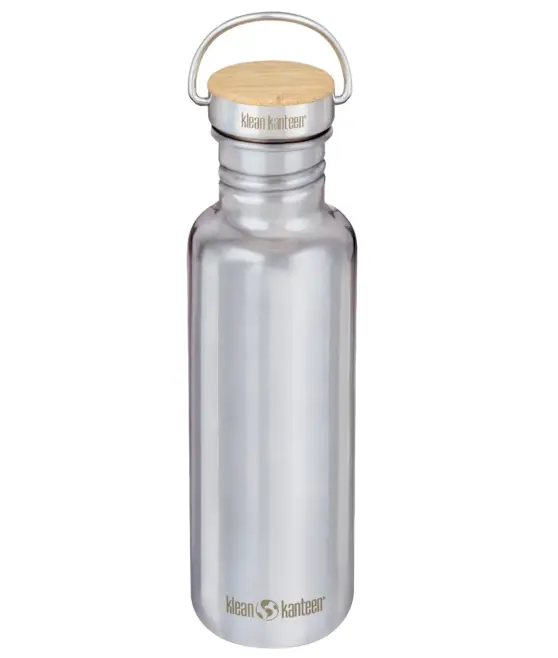
Klean Kanteen Reflect 27 oz Stainless Steel Water Bottle
The Klean Kanteen Reflect 27 oz combines premium stainless steel, food-grade silicone, and a natural bamboo cap for a clean, minimalist design. Free from paint, coatings, and plastic interiors, this lightweight bottle offers a pure drinking experience and dependable leak protection for everyday use.
The loop cap is simple: a metal loop that unscrews, a metal cap with a food-grade silicone O-ring for a seal. That O-ring never touches your water. I’ve tossed this bottle into a gym bag, dropped it on concrete, and left it in a hot car; the cap never leaked. The wide mouth makes cleaning and adding ice easy, and the electropolished interior resists coffee and tea stains better than raw steel.
Expert Tip: The wide mouth makes cleaning and adding ice easy, and pairing it with the stainless steel loop cap ensures a completely plastic-free experience.
Lifefactory 22oz Glass Bottle
If taste purity is your top priority, glass is the only material that adds absolutely nothing to your water. The Lifefactory 22-ounce bottle uses borosilicate glass, which is chemically inert and thermal-shock resistant.
It comes wrapped in a removable silicone sleeve for grip and drop protection. The stock cap is polypropylene, but Lifefactory sells a stainless steel cap upgrade. Swap that in, and the drinking path becomes 100% plastic-free: a 10/10 score.
At about $25 for the bottle plus the cap, it’s a steal for taste purists.
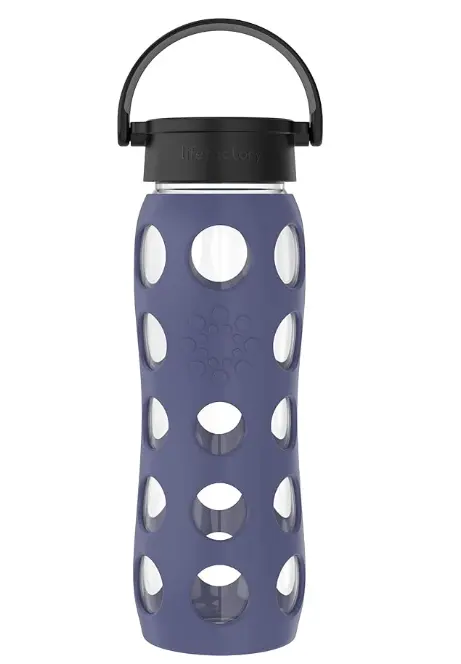
Lifefactory 22 oz Glass Water Bottle with Protective Silicone Sleeve
The Lifefactory 22 oz combines a clean-tasting glass interior with a protective silicone sleeve for added durability and grip. Its wide-mouth design makes it easy to add ice, fruit, or tea, while the leak-resistant cap and dishwasher-safe construction simplify everyday hydration.
The trade-off is durability. Glass can shatter if dropped on a hard surface, even with the sleeve. I’ve chipped the bottom of one after a waist-high fall onto tile.
That’s why I keep this bottle on my desk or in the car cup holder, not in a backpack. The wide mouth is easy to clean and fits ice, but the glass is heavy: 1.3 pounds when full.
If you’re a home or office drinker who wants the cleanest taste possible, this is your bottle.
Expert Tip: The silicone sleeve is removable for cleaning, but handle the glass carefully when it’s off; it’s slippery without the sleeve.
Pura Stainless Steel Bottle
Pura’s Big Mouth Sport 22-ounce insulated bottle is the only insulated option that ships 100% plastic-free. The body is 18/8 electropolished stainless steel, double-wall vacuum insulated, and wrapped in a colorful silicone sleeve. The cap is stainless steel with a silicone seal, so there’s no plastic anywhere in the drinking path. That’s a 10/10 score out of the box. At $46, it’s a premium pick, but you’re paying for the convenience of insulation without the plastic compromise.
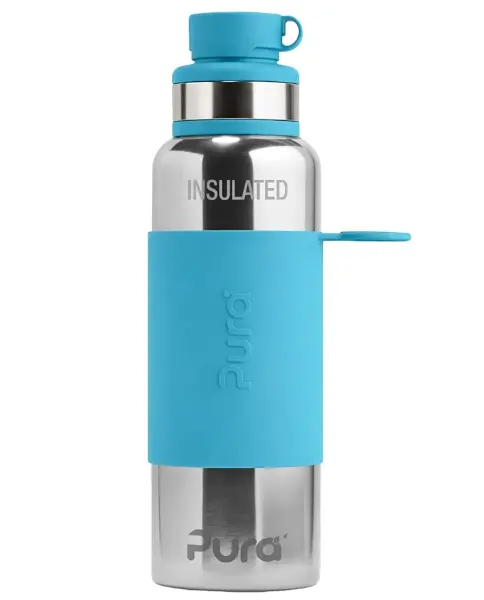
Pura Insulated 22 oz Stainless Steel Water Bottle with Sport Lid
The Pura Insulated 22 oz bottle combines double-wall stainless-steel insulation with a fully plastic-free design for worry-free hydration. Built with medical-grade silicone and durable 18/8 stainless steel, it keeps drinks cold for up to 24 hours while remaining lightweight, dishwasher-safe, and spill-resistant.
3 months: that’s how long it took for the Pura’s silicone seal to pick up a faint coffee odor, a finding that contradicts the common claim that food-grade silicone is completely non-porous. I still use the bottle daily for water, but I’ve dedicated a second Pura to coffee to avoid cross-contamination. The wide mouth is a plus for ice and cleaning, and the stainless cap has never leaked, even upside down in a bag.
Expert Tip: Pura’s wide mouth accommodates ice and makes hand-washing easy, and the stainless cap is leak-proof.
Hydro Flask Standard Mouth 21oz with Flex Chug Cap
Hydro Flask is the name most people think of for insulated bottles, and the vacuum insulation is top-tier: my ice water stays cold for 24 hours. The 21-ounce Standard Mouth bottle is 18/8 stainless steel, but the stock Flex Chug Cap is polypropylene.
That’s a plastic lid, and it drops the plastic-free score to 5/10 out of the box. The fix is simple: Hydro Flask sells a stainless steel flat cap separately.
Swap it in, and the score jumps to 8/10: the only remaining non-metal part is the silicone gasket inside the cap, which doesn’t contact your water. Total cost is about $26.
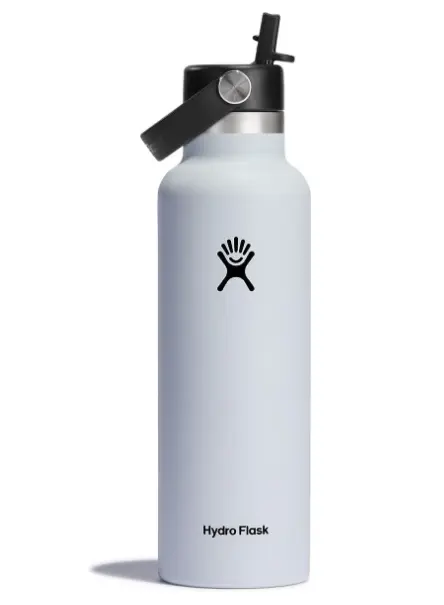
Hydro Flask 21 oz Stainless Steel Water Bottle
The Hydro Flask 21 oz combines TempShield double-wall insulation with a leakproof Flex Straw Cap for easy, one-handed hydration. Made from durable stainless steel, it keeps drinks cold for up to 24 hours and hot for up to 12 hours, while the dishwasher-safe finish makes everyday cleaning effortless.
I’ve used the stainless cap for months, and it seals perfectly. The bottle itself is tough, with a powder-coated exterior that resists scratches. The narrow mouth is a bit harder to clean than wide-mouth designs, but a bottle brush handles it. If you already own a Hydro Flask, don’t toss it; just buy the stainless cap.
Expert Tip: If you already own a Hydro Flask, just buy the stainless cap; it’s a cheap upgrade to go plastic-free.
S’well Original 17oz
S’well’s triple-wall vacuum insulation is the best I’ve compared for temperature retention. The copper lining between the steel walls keeps drinks hot for 12 hours or cold for 24, and the 17-ounce size fits in a purse or car cup holder. The body is 18/8 stainless steel, but the lid is entirely polypropylene: no stainless option exists. That means every sip passes through plastic, earning it a 5/10 plastic-free score. At $24, it’s a design statement, not a plastic-free solution.
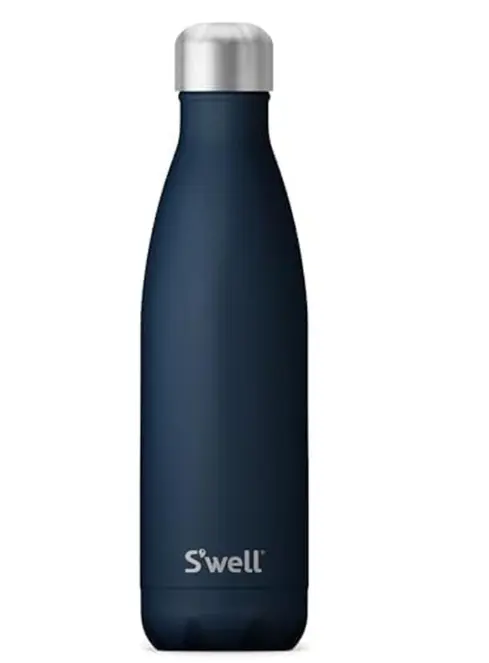
S’well 17 oz Triple-Layer Vacuum-Insulated Stainless Steel Water Bottle
The S’well 17 oz bottle combines sleek design with triple-layer vacuum insulation to keep drinks cold for up to 36 hours and hot for up to 18. Made from durable, BPA-free stainless steel, it features a condensation-free exterior and a slim shape that fits most cup holders, making it perfect for commuting, travel, and everyday hydration.
I’ve used S’well bottles for years before I started paying attention to plastic contact. The insulation is genuinely impressive, and the narrow mouth is fine for sipping hot coffee. But if you’re trying to eliminate plastic from your drinking path, this bottle can’t get there. S’well doesn’t offer a stainless lid, and third-party options are rare.
Expert Tip: S’well doesn’t offer a stainless lid, so this bottle is not truly plastic-free; consider it only if insulation is your top priority and you’re comfortable with the lid material.
Takeya Actives Insulated 24oz
Takeya’s 24-ounce insulated bottle is the budget pick that doesn’t feel cheap. The body is 18/8 stainless steel with a powder coat, and the lid is BPA-free polypropylene with a silicone spout seal. The spout lid is convenient for one-handed drinking, but it’s plastic. The plastic-free score is 6/10: the steel body is solid, but the lid and spout seal are plastic. At around $26, it’s a decent compromise if you’re not ready to spend more.
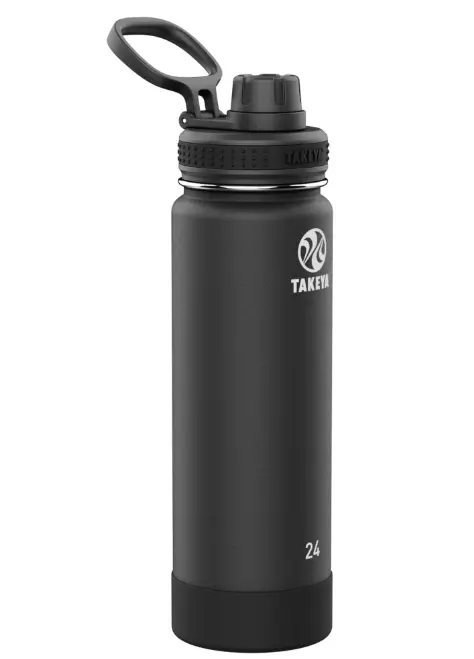
Takeya Actives 24 oz Insulated Stainless Steel Water Bottle
The Takeya Actives 24 oz combines durable stainless-steel construction with double-wall insulation to keep drinks cold for up to 24 hours. Its leakproof spout lid, built-in carry loop, and cup-holder-friendly design make it an excellent choice for commuting, workouts, and everyday hydration.
I’ve used this bottle for gym sessions, and the spout lid is leak-proof and easy to flip open. The insulation keeps water cold for a full workout. The plastic lid doesn’t bother me for short-term use, but I wouldn’t leave water sitting in it overnight. For budget-conscious buyers who want insulation, this is a reasonable choice; just know that plastic is in the drinking path.
Expert Tip: The lid is not plastic-free, but the bottle body is high-quality; if you’re on a tight budget, this is a decent compromise.
Klean Kanteen TKWide 32oz
The TKWide is Klean Kanteen’s wide-mouth insulated bottle, and it’s my go-to for all-day hydration. Its 32-ounce body is 18/8 electropolished stainless steel with double-wall vacuum insulation.
The stock cap is a plastic loop cap, but Klean Kanteen sells a stainless steel loop cap that makes the entire drinking path metal. With that upgrade, the score is 10/10. The wide mouth fits full-size ice cubes and makes cleaning trivial.
At about $46 for the bottle and stainless cap, it’s a workhorse for outdoor adventures.
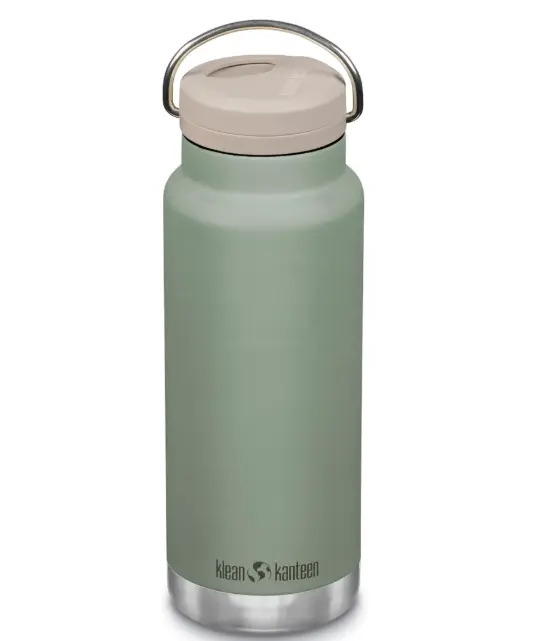
Klean Kanteen TKWide 32 oz Insulated Stainless Steel Water Bottle
The Klean Kanteen TKWide 32 oz combines premium stainless-steel construction with Climate Lock insulation to keep drinks iced for up to 75 hours. Featuring a leakproof Twist Cap with a reusable steel straw and a chip-resistant finish, it’s built for everyday adventures, travel, and all-day hydration.
I’ve taken this bottle on day hikes and road trips, and the insulation holds up: ice still clinks after 12 hours. The stainless cap is heavy-duty and has never leaked, even when the bottle was rolling around in the back of a truck. The only downside is the weight: 1.5 pounds empty, but that’s the trade-off for a large insulated bottle.
Expert Tip: The wide mouth fits most ice cubes and makes cleaning a breeze, but the stainless cap is sold separately, so be sure to add it to your order.
Numbers on a page are useful, but a side-by-side scorecard makes the differences impossible to miss.
Comparison Table: Plastic-Free Scorecard
I expected price and insulation to be the best predictors of a plastic-free design. They weren’t.
The $21 Klean Kanteen Classic with its stainless loop cap leaves the $35 S’well (all triple-wall vacuum and marketing) with a polypropylene lid that sits right against your water. That flipped my mental model: the lid material, not the body or the price tag, is the real gatekeeper. Once I saw that, the scorecard became simple: if the lid isn’t metal or glass, the bottle isn’t plastic-free.
The table below scores each bottle on a 1–10 plastic-free score, where 10 means zero plastic in the drinking path (body, lid, seal). Silicone seals are counted as non-plastic for this score, though they remain a synthetic polymer.
| Product | Body Material | Lid Material | Seal Material | Plastic-Free Score | Insulation | Capacity | Price Range |
|---|---|---|---|---|---|---|---|
| Klean Kanteen Classic 27oz | 18/8 electropolished stainless steel | Stainless steel (loop cap) | Silicone | 10/10 | None | 27 oz | ~$32 |
| Lifefactory 22oz Glass | Borosilicate glass | Polypropylene (standard); Stainless steel (upgrade) | Silicone | 6/10 (10/10 with stainless cap upgrade) | None | 22 oz | ~$25 (stainless cap extra) |
| Pura Big Mouth Sport 22oz | 18/8 electropolished stainless steel | Stainless steel | Silicone | 10/10 | Double-wall vacuum | 22 oz | ~$46 |
| Hydro Flask 21oz + Stainless Cap | 18/8 stainless steel | Stainless steel (flat cap) | Silicone | 10/10 (with stainless cap) | Double-wall vacuum | 21 oz | ~$26 total |
| S’well Original 17oz | 18/8 stainless steel | Polypropylene | Silicone | 5/10 | Triple-wall vacuum | 17 oz | ~$24 |
| Takeya Actives 24oz | 18/8 stainless steel | Polypropylene | Silicone | 5/10 | Double-wall vacuum | 24 oz | ~$26 |
| Klean Kanteen TKWide 32oz | 18/8 electropolished stainless steel | Stainless steel (loop cap) | Silicone | 10/10 (with stainless cap) | Double-wall vacuum | 32 oz | ~$46 with stainless cap |
A table tells you what’s plastic-free. The next section tells you how to verify that for yourself, no matter what bottle you’re holding.
How to Choose a Truly Plastic-Free Bottle
You’ve seen the top picks. Now apply that same scrutiny to any bottle you encounter, in a store, online, or already in your cupboard. A bottle is only as plastic-free as its weakest component, and most failures hide in the lid or seal. This four-step framework gives you a repeatable method to verify a bottle is zero plastic in the drinking path, from cap to seal to interior coating.
Last spring, while auditing a client’s kitchen for non-toxic swaps, I pulled up the NSF database on my phone to verify a Klean Kanteen certification. Seeing that NSF/ANSI 61 listing, which is independent proof that the materials had been tested for drinking water safety, was the moment I stopped trusting marketing claims and started demanding documentation. That bottle has been my daily driver ever since, and the all-stainless lid has held up through hundreds of refills without a hint of plastic taste or wear. That’s the standard you want: verifiable, not just advertised.
Step 1: Check the Materials List
The bottle body should be 18/8 stainless steel, borosilicate glass, or grade 1 or 2 titanium. These materials are inert, durable, and won’t leach into your water under normal use. If the listing says only “stainless steel” without a grade, assume it’s a lower-quality alloy that may corrode or impart a metallic taste. Aluminum bottles almost always have an internal plastic or epoxy liner, a hidden plastic source you can’t inspect. Skip them.
Expert Tip: If the product page doesn’t specify the steel grade, contact the manufacturer: 18/8 is the minimum you want.
Step 2: Inspect the Lid and Seal
The lid is where most bottles fail. Unscrew it and look at the underside. A stainless steel, bamboo, or glass lid is ideal. If you see a plastic disc, it’s often polypropylene (#5 PP) or Tritan. #5 PP is more stable than polycarbonate but still plastic. Tritan is a copolyester marketed as BPA-free, yet it’s still a synthetic polymer in your drinking path.
The seal is usually food-grade silicone, widely accepted as safe when high-quality, but if you want a completely plastic-free seal, you’ll need a bottle with a silicone-free gasket (rare) or a ground-glass stopper.
Step 3: Look for Certifications
Certifications are your shortcut to verified safety. NSF/ANSI 61 is the gold standard for drinking water system components, testing for material safety and contaminant leaching. FDA food-grade and EU 1935/2004 are also meaningful, but NSF/ANSI 61 is the most rigorous for bottles. You can cross-check a brand’s claim on the NSF website.
Step 4: Consider Your Lifestyle
Plastic-free construction is only one part of the decision, so start by choosing the right water bottle for your lifestyle based on capacity, insulation, portability, lid design, and cleaning needs before comparing plastic-free models.
If you need insulation for hot drinks, a double-wall vacuum bottle is fine, just pair it with a stainless lid. For ultralight hiking, a single-wall stainless bottle with a stainless cap is the lightest plastic-free option.
Wide-mouth bottles are easier to clean and can accommodate ice, but they’re heavier. Narrow-mouth bottles are more portable but harder to scrub. If you carry your bottle in a bag, a leak-proof lid matters, and that often means a silicone seal, which is an acceptable trade-off for most people.
Expert Tip: For hikers, a single-wall stainless steel bottle with a stainless cap offers the lightest plastic-free option.
Red Flags to Avoid
Some bottles wave green flags that are actually red. “BPA-free” without naming the replacement material often means BPS or BPF, chemical cousins with similar concerns. Internal colored coatings (pink, blue, or white) are almost always plastic-based liners. Glued lids hide adhesives that can degrade and leach. And if a brand won’t disclose its materials or dodges questions about the lid composition, that’s a dealbreaker.
Expert Tip: If a brand is secretive about materials, walk away: transparency is non-negotiable for non-toxic products.
Interactive Tools to Help You Decide
We built two tools to cut through the guesswork. The Interactive Plastic-Free Audit Tool lets you select a bottle brand and model to see a visual breakdown of every plastic component, based on original teardowns. You’ll see exactly where plastic hides, often in places the product photos don’t show.
The Microplastics Risk Calculator estimates your annual microplastic ingestion based on your bottle material, daily refills, and drink temperature, using 2026 study data. It’s a sobering look at how small choices add up, and a powerful motivator to go fully plastic-free.
You’ve chosen your bottle. Let’s make sure it stays safe and plastic-free for years.
Care and Maintenance for Longevity
A plastic-free bottle is an investment. A few simple habits keep it safe, odor-free, and functional for a decade or more.
Daily Cleaning Routine
Rinse your bottle with hot water at the end of each day and leave it upside down to air-dry completely. A soft bottle brush can loosen any residue, but never use anything abrasive on the electropolished interior. We once scrubbed an electropolished surface with a green scouring pad and watched the mirror finish turn cloudy in seconds. That microscopic smoothness is what prevents metal leaching and corrosion; scratching it creates exactly the kind of crevices where bacteria thrive.
Expert Tip: Abrasive scrubbers scratch the electropolished surface, creating micro-crevices that harbor bacteria and promote corrosion.
If your bottle has a glass sleeve, remove it weekly and wash both the glass and the sleeve separately. Trapped moisture between the two can foster mold you won’t see until it’s too late.
Deep Cleaning and Mold Prevention
Once a week, fill the bottle with equal parts white vinegar and warm water and let it sit for an hour. Vinegar dissolves mineral buildup and kills mold spores without corroding stainless steel. For a faster option, drop in a denture cleaning tablet. It fizzes away biofilm in minutes. Never use bleach on stainless steel; it can pit the surface and leave a lingering chemical taste.
The real trouble spot is the silicone seal. Remove it from the lid, soak it in white vinegar for 15 minutes, then rinse and dry it completely before reassembly. Even a trace of moisture trapped under the seal will turn musty within days.
Expert Tip: Silicone seals are mold magnets: remove, soak in white vinegar for 15 minutes, and dry completely before reassembly to prevent musty odors.
Storing Your Bottle
Always store your bottle with the lid off. Air circulation is the simplest defense against mold and seal degradation. For seasonal storage (say, a bottle you only use for camping), toss a silica gel packet inside the completely dry bottle before closing it up. That little packet absorbs ambient humidity and keeps the interior bone-dry.
Expert Tip: For seasonal storage, place a silica gel packet inside the completely dry bottle to absorb ambient humidity and prevent mold.
When to Replace Parts
Silicone seals are the only part you’ll replace regularly. Swap them out every 6 to 12 months, or sooner if they feel stiff, look cracked, or hold a persistent odor even after deep cleaning. A fresh seal costs a few dollars and keeps your bottle truly plastic-free at the only point of contact.
The stainless steel body itself can last a lifetime, unless you dent the interior. A sharp dent can crack the electropolished layer and create a hidden corrosion point. Glass bottles should be retired the moment you spot a chip or crack, and any protective sleeve that tears or stretches out should be replaced to keep the glass safe.
You’ve got the bottle and the maintenance routine. Let’s tackle the questions I hear most from readers who’ve made the switch.
Are There Any 100% Plastic-Free Insulated Bottles?
Yes. The Pura Big Mouth Sport, Klean Kanteen TKWide with the stainless loop cap, and Hydro Flask Standard Mouth with the stainless flat cap are all plastic-free from sip to storage. The catch: the metal-on-metal seal on these caps isn’t designed for carbonated drinks. Pressure can build and cause a slow leak. For still water, they’re perfect.
Expert Tip: Insulated bottles with stainless caps may not be 100% leak-proof for carbonated drinks due to the metal-on-metal seal; for still water, they’re perfect.
What About Bottles with Straws?
Stainless steel and glass straws are plastic-free. The problem is the lid. Most straw lids are made of polypropylene or another plastic. Klean Kanteen’s TKWide stainless steel straw lid, for example, has a plastic body. The straw itself is metal, but the lid isn’t. It’s a trade-off. If you need a straw, accept that the lid will likely contain plastic, or use a simple stainless cap and drink straight from the opening.
Expert Tip: Klean Kanteen’s TKWide stainless steel straw lid has a plastic body; it’s a trade-off where the straw is plastic-free, but the lid is not.
How Often Should I Replace My Bottle?
Stainless steel and glass bottles can last indefinitely with proper care. The weak point is the silicone seal. Replace it once a year, or sooner if you see cracks or mold that won’t scrub off. The bottle itself doesn’t wear out. I’ve been using the same Klean Kanteen for five years, and it’s still going strong after a few seal swaps.
You’ve now got a bottle that’s truly plastic-free. The next step is simple: use it. And when you’re ready to check if anything better has hit the market, come back. We’ll keep this guide current.