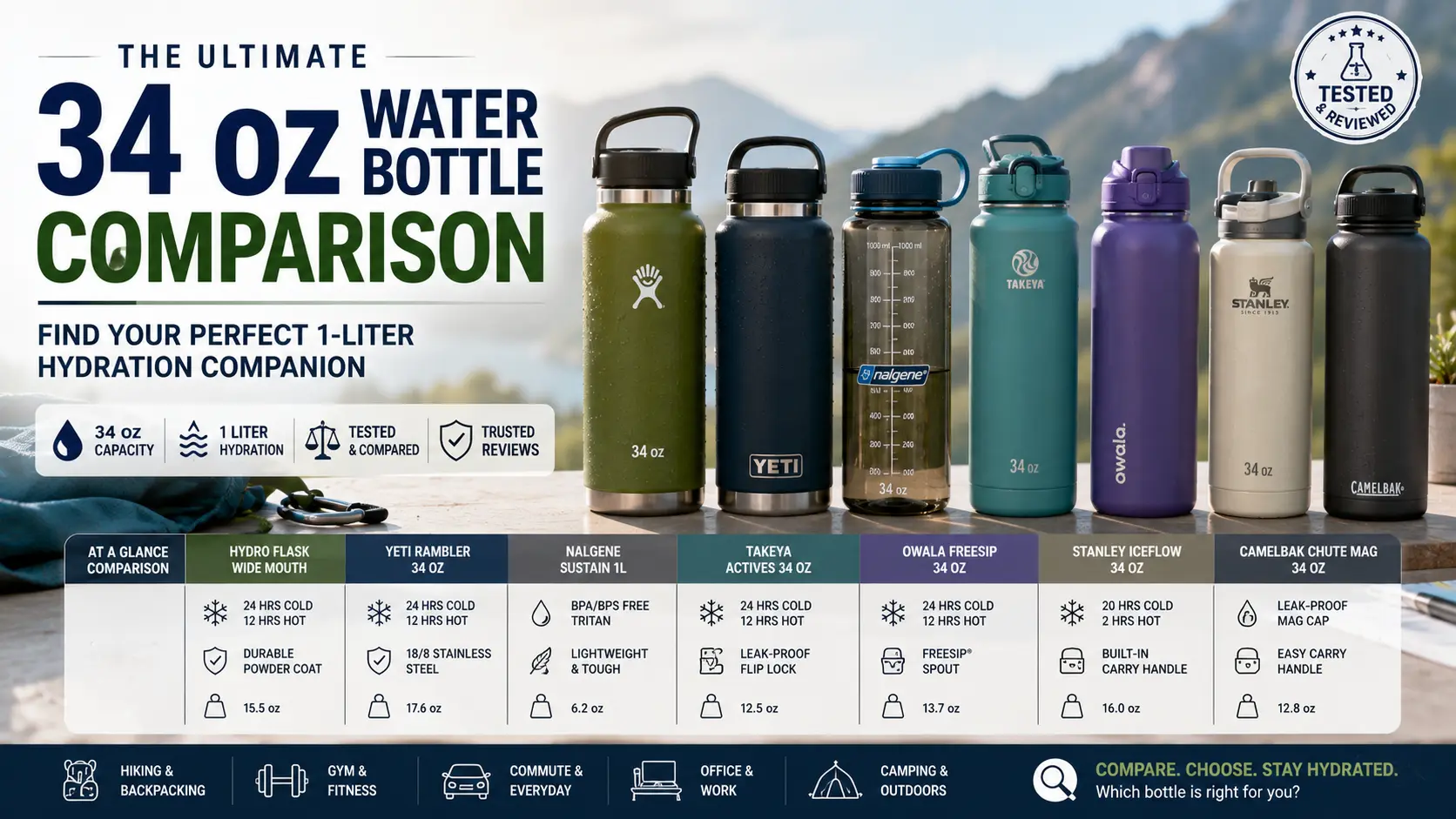
Finding the right water bottle should not be this difficult.
Most bottles are either too small, too bulky, awkward to clean, or one loose lid away from soaking everything inside your bag. After testing multiple sizes, I found that 34 oz, or roughly 1 liter, is the sweet spot most people overlook.
It holds enough water to cut down on constant refills but is still manageable for commuting, training, hiking, or keeping beside your desk.
Key Takeaways
- Best overall: Takeya Actives 32 oz
- Best for commuting and gym: Owala FreeSip Sway 30 oz
- Best insulation: Hydro Flask Wide Mouth 32 oz
- Best lightweight option: YETI Yonder 1L
- Best rugged budget pick: Nalgene Wide Mouth 32 oz
- Best low-cost insulated option: CIVAGO 32 oz
- Best for maximum capacity: Stanley Quencher 40 oz
- Measure your cup holder before buying. Most near-liter bottles are wider than standard car holders.
- Choose a screw-on or locking lid for bag carry, and clean straws and gaskets weekly.
I compared the best 34 oz water bottles side by side to see how they perform where it actually matters. I compared insulation, leak resistance, cup-holder fit, carrying comfort, lid design, and ease of cleaning.
No vague marketing claims. Just practical results from daily use.
Unlike roundups that mix 18 oz, 24 oz, 32 oz, and oversized bottles into one confusing list, this guide focuses only on bottles around the 34 oz mark. That makes it easier to compare similar options without wondering whether size differences affected the results.
I also recorded original temperature retention results and created a Smart Hydration Calculator. It shows how many times you may need to refill a 34 oz bottle compared with smaller and larger sizes, so you can see the time-saving advantage for yourself.
By the end, you will know which bottle works best for your commute, gym bag, hiking pack, or desk, and which ones are more trouble than they are worth.
Quick Comparison: Best 34 oz Water Bottles
This table compares bottles close to the 1-liter mark. Prices can change by color, retailer, and promotion, so treat them as current reference prices rather than permanent list prices.
Product | Material | Insulation | Empty Weight | Dimensions H × D | Mouth Width | Lid Type | Leak-Proof | Dishwasher Safe | 3-Inch Cup Holder | Current Price |
YETI Yonder 1L / 34 oz | BPA-free plastic with 50% recycled content | No | 10.7 oz | 11.8 × 3.4 in | Not published | Yonder Chug Cap | Yes | Yes | No, wider than 3 in | $26-$30 |
Hydro Flask Wide Mouth 32 oz with Flex Chug Cap | Stainless steel | Yes, 24 hours cold. Chug Cap is not intended for hot drinks | 15.4 oz | 10.2 × 3.58 in | Wide Mouth, exact opening not published. | Flex Chug Cap | Yes, when closed | Yes | No | $43-$47 |
Owala FreeSip Sway 30 oz | Stainless steel | Yes, up to 24 hours cold | About 16.6 oz* | 10.57 × 3.95 in overall | Not published | FreeSip spout with built-in straw | Yes, when closed and locked | Lid only; hand-wash cup | Yes, tapered base | $33-$37 |
Takeya Actives 32 oz | 18/8 stainless steel | Yes, 24 hours cold / 12 hours hot | 17.6 oz | 10.38 × 3.74 in | Wide Mouth, exact opening not published | Insulated Spout Lid | Yes, when screwed shut | Yes | No in a strict 3-in holder | $31- $36 |
Nalgene Wide Mouth 32 oz | BPA/BPS-free Tritan Renew plastic | No | 6.25 oz | 8.25 × 3.5 in | 2.5-in cap diameter | Attached screw cap | Yes, when tightened | Yes | No | $16-$20 |
CIVAGO 32 oz Insulated Bottle with Three Lids | Stainless steel | Yes, up to 24 hours cold / 12 hours hot | Not currently published | Not currently published | Wide Mouth, exact opening not published | Straw, spout and handle lids | Spout and handle lids are the safer leak-proof options; close the straw lid fully | Not clearly specified; hand washing is safest | Unconfirmed; likely too wide for a strict 3-in holder | $15-$20 |
Stanley Quencher H2.0 FlowState 40 oz | 90% recycled 18/8 stainless steel | Yes, 11 hours cold / 2 days iced. No current hot-retention claim listed | 18.9 oz | 11.02 × 3.54 in body; 5.43 in including handle | Not published | Three-position FlowState lid with straw | No. The full-cover position resists spills but is not fully leak-proof | Yes | Borderline. Base is 3.1 in, but it fits many vehicle holders | $39-$45 |
YETI Yonder 1L: The Lightweight, Leak-Proof Everyday Bottle
The YETI Yonder is the bottle to buy when low weight matters more than cold-water performance.
It holds a full 34 oz without adding the weight of double-wall stainless steel. The BPA-free plastic body is also made with 50% recycled plastic, excluding the cap. It feels durable enough for daily commuting, travel, and outdoor use, making it a great ultralight water bottle for those who prioritize weight.
The standard 1L model weighs 10.7 oz when empty. That is heavier than the previously listed 6.3 oz, but it is still noticeably lighter than most insulated bottles of a similar capacity. Its clip-on carry loop is useful when your hands are full, or you want to attach it to a backpack.
Simple Cap, Reliable Seal
The two-part Yonder Cap is one of this bottle’s strongest features, offering a two-piece design that compares well to the CamelBak Chute Mag‘s magnetic cap.
The smaller top section opens for controlled drinking. The wider lower section comes off when you need to add ice, refill the bottle, or clean the inside. I found this easier to use than a basic wide-mouth screw cap, especially when walking or drinking in the car.
More importantly, it stayed sealed during my leak test. I carried it sideways and upside down in a backpack without finding water around the cap. YETI also describes the cap as 100% leak-proof when properly closed.
No Insulation Means No Lasting Chill
The trade-off is straightforward.
The Yonder has no vacuum insulation. Cold water gradually warms, and condensation can form on the outside. It works well at a desk, in a gym, or anywhere you can refill it regularly, but it is not the bottle I would choose for an all-day summer drive.
YETI recommends using it with cold drinks and warns against filling it with hot or carbonated beverages.
It Does Not Fit Most Standard Cup Holders
Do not buy the 1L Yonder specifically for cup-holder use.
Its body is approximately 3.4 inches wide, making it too large for a standard 3-inch holder. YETI similarly notes that its smaller 20 oz and 25 oz bottles fit most cup holders, while the 1L and 1.5L models are generally too large.
Pros
- Lighter than most insulated 1-liter bottles
- Leak-proof cap when fully tightened
- Large opening makes refilling easier
- Entire bottle is dishwasher safe
- Carry loop can attach to a backpack
- Durable, shatter-resistant plastic construction
Cons
- Does not keep water cold for hours
- Exterior can develop condensation
- Too wide for most standard cup holders
- Plastic may hold odors when not cleaned regularly
- Not suitable for hot or carbonated drinks
Best For
The YETI Yonder 1L is best for commuters, office workers, gym users, hikers, and travelers who want a dependable full-liter bottle without the weight of stainless steel.
Choose something insulated when lasting temperature retention matters. Choose the Yonder when portability and leak protection come first.
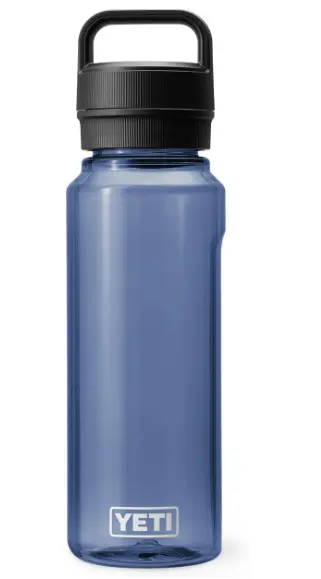
YETI Yonder 34 oz Lightweight BPA-Free Water Bottle
The YETI Yonder 34 oz combines an ultralight, shatter-resistant design with a leakproof Chug Cap for reliable hydration on every adventure. Made from durable BPA-free material, it’s easy to carry, dishwasher-safe, and built for hiking, travel, the gym, and everyday use.
Hydro Flask Wide Mouth 32 oz: The Insulation King
The Hydro Flask was the strongest cold-water performer in my test.
I filled it with ice water and left it in a 70°F room. More than 24 hours later, the water was still properly cold. That matched Hydro Flask’s official 24-hour claim and made this my top choice for anyone who hates drinking lukewarm water halfway through the day.
Strong Insulation, Familiar Design
The 32 oz Wide Mouth uses Hydro Flask’s TempShield double-wall vacuum insulation, making it a top contender among the best 32 oz water bottles. The stainless steel body feels solid, and the powder-coated exterior provides enough grip when the bottle is full.
It is not light.
The empty bottle weighs 0.96 pounds, or about 15.4 oz. Add 32 oz of water, and you are carrying almost three pounds. That is manageable around the office or on a day hike, but you will notice the weight inside a backpack.
The current Flex Chug Cap is better for moving around than a completely open wide mouth. Unscrew the smaller top cap for a controlled stream. Remove the full lid when adding ice or cleaning the bottle.
It is simple, fast, and far less likely to splash water across your shirt.
Leak-Proof When Properly Closed
The Flex Chug Cap stayed dry during my backpack test.
I placed the filled bottle on its side and carried it upside down without finding water around the lid. Hydro Flask also describes the cap as leak-proof when fully closed. As with any screw cap, make sure the threads are aligned and the cap is properly tightened before putting it beside a laptop.
Easy to Clean, but Too Wide for Most Cars
The wide opening gives you enough room for standard ice cubes and makes the interior easier to reach with a bottle brush.
The full bottle is also dishwasher safe, not just the lid. That is a useful improvement for anyone who does not want another bottle that needs careful hand washing after every use.
Cup-holder fit is the bigger problem.
The bottle measures 3.58 inches across. It will not fit a standard 3-inch car cup holder, and even some larger holders may be tight. Keep it in a door pocket, passenger seat, or backpack instead.
Pros
- Kept ice water cold for more than 24 hours in my room test
- Leak-proof Flex Chug Cap
- Wide opening accepts ice cubes
- Controlled drinking spout reduces splashing
- Durable stainless steel construction
- Entire bottle is dishwasher safe
- Limited lifetime warranty against manufacturing defects
Cons
- Heavy when full
- Too wide for standard cup holders
- More expensive than Takeya and plastic bottles
- Powder coating can collect cosmetic marks over time
- Flex Chug Cap is not designed for hot liquids
Best For
The Hydro Flask Wide Mouth 32 oz is best for hikers, gym-goers, outdoor workers, and anyone who wants cold water to stay cold from morning to evening.
It is less suitable for drivers who need a bottle in a standard cup holder beside them. It is also overkill for someone who refills frequently and does not care about insulation.
My results are not an isolated win for Hydro Flask. OutdoorGearLab’s water-bottle guide, updated on July 6, 2026, named the Hydro Flask Wide Mouth its best overall bottle and praised its insulation, leak resistance, lid choices, and cleaning ease. Its testers also preferred the Flex Chug Cap for simple everyday drinking.
That outside testing supports what I found: the Hydro Flask is expensive and heavy, but its cold retention and dependable lid make the higher price easier to justify.
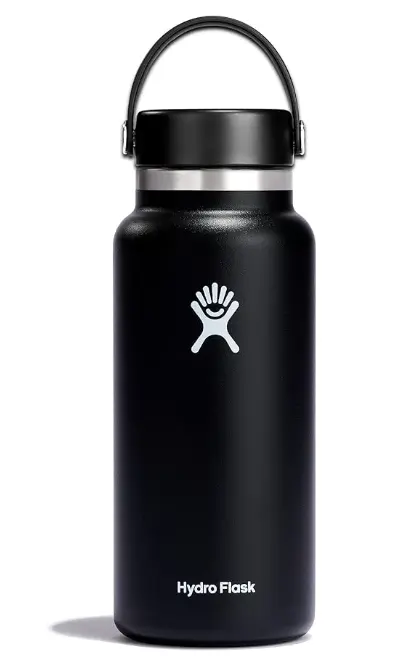
Hydro Flask 32 oz Leakproof Insulated Water Bottle
The Hydro Flask 32 oz combines TempShield double-wall insulation with a leakproof Flex Cap to keep drinks cold for up to 24 hours and hot for up to 12 hours. Its wide-mouth opening fits ice easily, while the durable stainless-steel construction and dishwasher-safe design make it perfect for work, travel, hiking, and everyday hydration.
Owala FreeSip Sway 30 oz: The Versatile Sipper
The FreeSip Sway has the most useful lid in this guide.
You can keep the bottle upright and sip through the built-in straw, or tilt it back and drink through the wider opening. I used both options regularly during two weeks of testing.
The straw worked best at the gym and while driving. The wider opening was better when I wanted a faster drink after a workout.
No lid swapping required.
Designed for Easier Carrying
The Sway uses a stainless steel body with triple-layer insulation. Its large bucket-style handle is more comfortable to carry than the small loops found on many bottles.
The body is also contoured around the middle, which makes the 30 oz bottle easier to grip. Owala lists the lid as leak-proof and includes a separate lock to stop the push button from opening inside a bag.
I carried it sideways and upside down without finding water inside my bag. The lock adds an extra step before drinking, but that is a small price to pay for better leak protection.
The Best Lid for Workouts
The FreeSip spout is not just a design trick.
During workouts, I could drink through the straw without lifting the bottle or tipping my head back. When I needed more water quickly, I used the larger opening.
That flexibility makes the Sway more practical than a straw-only bottle. It also keeps the mouthpiece covered when the lid is closed, rather than leaving an exposed straw sitting in the open.
Good Insulation for All-Day Water
The Sway kept my water cold throughout a normal day.
Owala claims up to 24 hours of cold retention from its triple-layer insulation. It is designed for cold drinks, not hot or carbonated beverages.
It did not outperform the Hydro Flask in my temperature test, but it stayed cold long enough for commuting, desk work, and gym sessions.
For most people, that is enough.
Better Cup-Holder Fit
The tapered base is one of the main reasons to choose the Sway over the original wide FreeSip.
Owala describes it as cup-holder friendly, and Serious Eats also found that the tapered bottom improved compatibility compared with traditional wide bottles.
It fit securely in the cup holders I compared. Cup-holder sizes still vary, so measure a particularly narrow holder before buying.
The 30 oz capacity equals about 887 ml. That is roughly 118 ml less than a true 34 oz or 1-liter bottle. The difference is noticeable on long days, but not large enough to require constant refilling.
The Lid Needs Regular Attention
The lid is clever, but it has more parts than a basic screw cap, and some hidden plastic components can affect taste or durability.
There is a straw, mouthpiece, gasket, locking cover, and removable seals. These areas can hold moisture if the lid is closed before it dries completely.
The good news is that the Sway’s seals are easier to remove than those on the original FreeSip, according to Serious Eats. Owala also states that the lid is dishwasher-safe, although the stainless steel cup should be washed by hand.
The straw occasionally needed to be pushed firmly back into place after cleaning. When it was not fully attached, the sip flow felt weaker.
Pros
- Sip-through straw and chug opening in one lid
- Leak-proof when properly closed and locked
- Keeps water cold throughout the day
- Tapered base fits many car cup holders
- Large handle is comfortable to carry
- Wide opening makes adding ice easier
- Available in a broad range of colors
Cons
- Holds 30 oz, not a full liter
- More lid parts to clean
- Stainless steel cup requires hand washing
- Straw must be reattached securely after cleaning
- Heavier than a non-insulated plastic bottle
Best For
The Owala FreeSip Sway 30 oz is best for gym-goers, drivers, commuters, and anyone who regularly switches between sipping through a straw and taking larger drinks.
It is also the better option for someone who likes the original Owala FreeSip but needs a tapered bottle that works with more car cup holders.
Skip it if maximum capacity or the simplest possible lid matters more than drinking versatility.
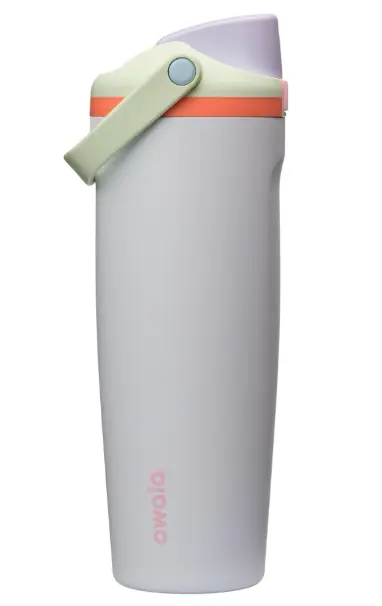
Owala FreeSip Sway 30 oz BPA-Free Insulated Water BottleOwala FreeSip Sway 30 oz
The Owala FreeSip Sway 30 oz combines triple-layer insulation with a patented 2-in-1 FreeSip spout, letting you sip through the built-in straw or swig from the wide opening. Its leakproof push-button lid, ergonomic bucket handle, and cupholder-friendly base make it an excellent choice for travel, work, school, and everyday hydration.
Takeya Actives 32 oz: The Budget-Friendly All-Rounder
The Takeya Actives delivers Hydro Flask-level cold retention for less money.
In my 24-hour test, its insulation performed almost as well as the Hydro Flask. The water remained properly cold through the next day, and there was no condensation on the outside.
Takeya officially rates the bottle for up to 24 hours cold and 12 hours hot. At its current $34.99 price, it offers strong insulation without entering premium-bottle territory.
Durable Stainless Steel With Extra Base Protection
The Actives uses double-wall stainless steel insulation and includes a removable silicone bumper around the bottom.
That bumper is more useful than it looks.
It gives the bottle extra grip on smooth desks and gym floors. It also softens minor knocks and helps protect the painted base from scratches and dents. Takeya includes the bumper as standard rather than selling it as a separate accessory.
The 32 oz bottle weighs 1.1 pounds when empty and measures 10.38 inches tall by 3.74 inches wide. It feels substantial when full, but the carrying loop makes it manageable for short walks and everyday use.
A Simple Spout That Works One-Handed
The Spout Lid is less clever than Owala’s FreeSip design, but it is easier to understand and maintain.
Unscrew the smaller cover to drink from the narrow spout. Remove the entire lid when adding ice, drink mixes, or cleaning the bottle.
The narrow opening controls the flow well. I could drink while walking without water spilling down the front of my shirt. The cap also stays attached to the lid, so there is no loose piece to drop at the gym.
The spout cover took more effort to open when my hands were sweaty. The textured edges help, but a push-button lid would still be easier during intense workouts.
Leak-Proof in My Backpack Test
The Spout Lid did not leak during my testing.
I filled the bottle, tightened both parts of the lid, and carried it sideways in a backpack. The area around the cap remained dry.
Takeya also describes the Spout Lid as leak-proof when securely screwed closed. Make sure both the main lid and the smaller spout cover are tight before placing it near electronics.
It Does Not Fit a Standard Cup Holder
The 32 oz Actives is slimmer than some large insulated bottles, but it is not truly cup-holder friendly.
Its 3.74-inch base is too wide for a standard holder measuring 3 inches across. It may fit oversized holders in trucks or newer vehicles, but buyers should measure before ordering.
The smaller Takeya sizes are better choices for driving. Independent testing from CleverHiker also found that only the smaller versions reliably fit car cup holders.
Easier to Clean Than It First Appears
The entire bottle is dishwasher safe, including the stainless steel body. That gives it an advantage over insulated bottles that require hand washing.
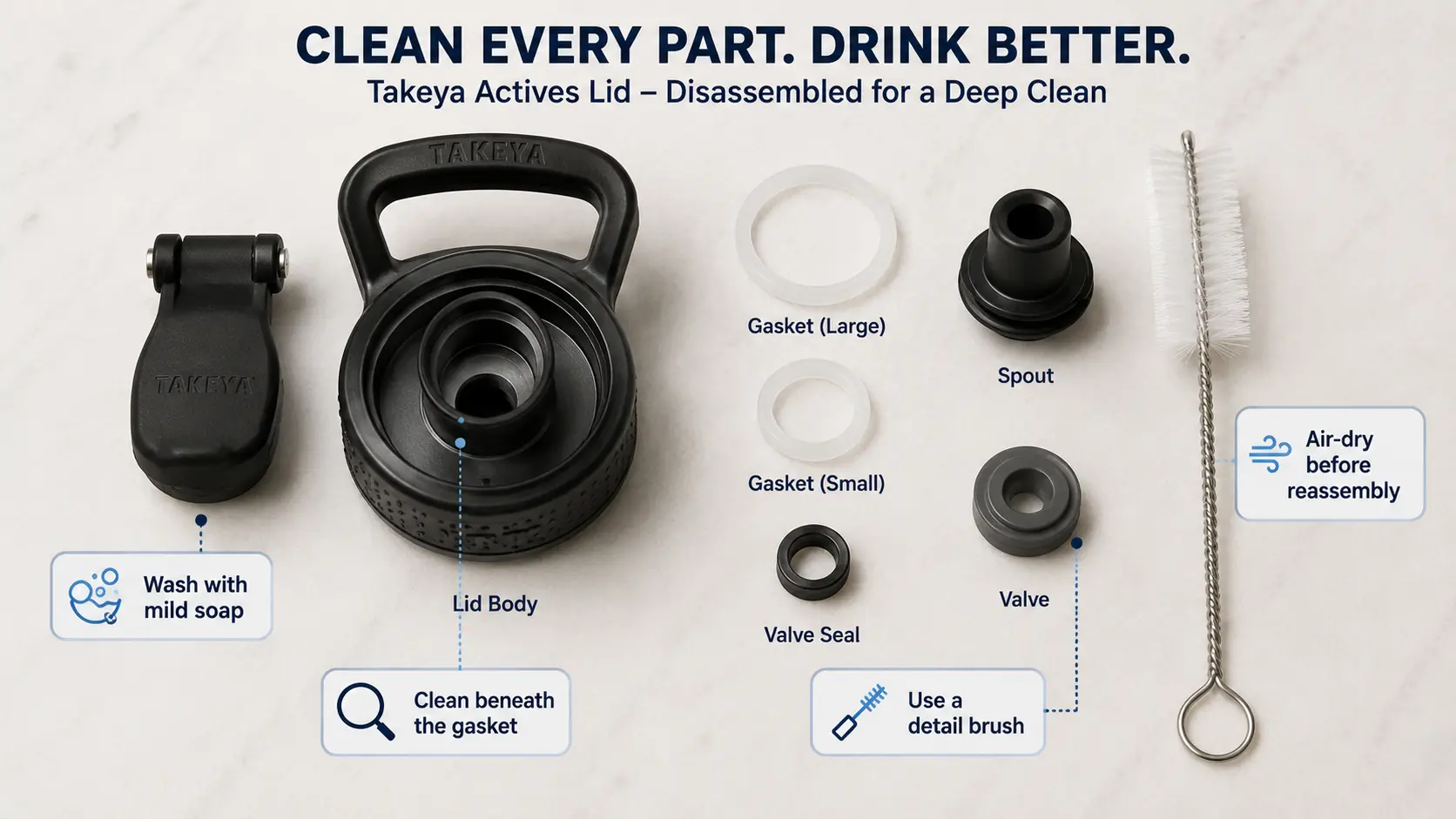
The lid also comes apart enough for proper deep cleaning. Takeya recommends removing the large O-ring from inside the lid and the smaller O-ring inside the spout cover. These seals should be cleaned separately, allowed to dry fully, and then placed back into the lid.
This takes a few extra minutes, but it prevents residue and moisture from collecting in areas the dishwasher may not reach.
Pros
- Kept water cold for 24 hours in my test
- More affordable than many premium insulated bottles
- Leak-proof Spout Lid when fully tightened
- Narrow spout controls the drinking flow
- Removable bumper protects the base
- Entire bottle is dishwasher safe
- Suitable for both cold and hot drinks
- Limited lifetime warranty
Cons
- Too wide for a standard 3-inch cup holder
- Heavy when filled
- Spout cover can be difficult to open with sweaty hands
- Paint may collect chips and scratches over time
- Lid seals need occasional removal and deep cleaning
- Carry loop feels less durable than the steel body
Best For
The Takeya Actives 32 oz is best for budget-conscious buyers who want dependable insulation, a leak-proof lid, and easy cleaning without paying the highest price.
It works well for the gym, office, day hikes, and general daily use.
It is not the best option for drivers who need guaranteed cup-holder compatibility. For that, choose a tapered bottle such as the Owala FreeSip Sway or move down to a smaller Takeya size.
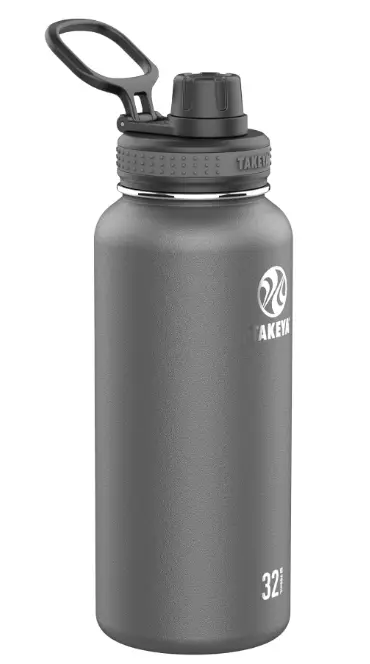
Takeya Originals 32 oz Insulated Stainless Steel Water Bottle
The Takeya Originals 32 oz combines double-wall vacuum insulation with a leakproof spout lid to keep drinks cold for up to 24 hours and hot for up to 12 hours. Its durable, BPA-free stainless-steel construction, sweatproof finish, and one-handed drinking design make it an excellent choice for workouts, commuting, travel, and everyday hydration.
The Takeya is not the lightest or most car-friendly bottle here, but it gives you reliable insulation and a practical lid for less than many premium competitors.
Nalgene Wide Mouth 32 oz: The Indestructible Classic
The Nalgene is the lightest and simplest bottle in this guide.
It does not keep water cold. It does not have a straw, push button, or insulated lid. What it gives you instead is a tough 32 oz bottle that weighs only 6.25 oz and costs far less than most stainless steel options.
I would not call any plastic bottle literally indestructible. Still, the Nalgene handled ordinary drops, rough backpack use, and repeated knocks during my testing without cracking or leaking.
It picked up a few surface marks.
That was all.
Lightweight Tritan Renew Construction
The current 32 oz Wide Mouth is made from Tritan Renew, a BPA- and BPS-free plastic produced using material derived from 50% waste plastic. The body is rigid enough to hold its shape but much lighter than an insulated steel bottle of the same capacity.
It measures 8.25 inches tall and 3.5 inches wide. The shorter shape is easy to pack in a hiking bag, but the wide body can feel bulky in smaller hands. Measurement markings along the side are useful for tracking water, mixing electrolyte powder, or measuring water for campsite meals.
The attached screw cap is basic, but it works. I carried the filled bottle sideways in my pack without finding moisture around the lid. Nalgene uses continuous threaded shoulders to create a tight seal without relying on a separate gasket.
Built for Drops, Not Cold Retention
The biggest reason to buy the Nalgene is durability without extra weight.
My bottle survived drops that left only light scuffs on the plastic. OutdoorGearLab also found that the body and cap handled repeated drops and tumbles while continuing to hold water. Its testers noted that the cap and retaining strap are the weaker areas, so I would not hang a full bottle from the strap during a serious hike.
The trade-off is insulation.
There is none.
Cold water gradually reaches room temperature, and condensation forms when the bottle is filled with ice. In hot conditions or a parked car, the water can become unpleasantly warm. OutdoorGearLab recorded temperatures above 105°F after leaving the bottle in direct sun for six hours.
Choose an insulated bottle when all-day cold water matters. Choose the Nalgene when low weight, simplicity, and durability matter more.
The Wide Mouth Is Both a Strength and a Weakness
The 2.5-inch opening accepts large ice cubes and makes the bottle easy to fill. It also gives you enough room to reach inside with a bottle brush. The bottle is dishwasher safe, so everyday cleaning takes little effort.
Drinking from it while walking is less graceful.
The wide opening releases a lot of water at once. I had no problem while standing still, but uneven trails and moving vehicles made spills more likely. The attached cap can also touch your face when it swings toward the opening.
A splash guard solves most of that problem. Nalgene currently sells a Wide Mouth Easy Sipper insert, and OutdoorGearLab’s testers also recommend using an insert to control the flow while moving.
Do Not Expect Cup-Holder Compatibility
The Nalgene is 3.5 inches wide, so it does not fit a standard 3-inch car cup holder. It may work in an oversized holder, but most drivers will need to place it in a door pocket, bag, or passenger seat.
Pros
- Weighs only 6.25 oz when empty
- Durable enough for hiking, camping, and travel
- Leak-proof screw cap when fully tightened
- Wide opening accepts ice and water filters
- Measurement markings on the body
- Entire bottle is dishwasher safe
- Lower price than insulated steel bottles
- Simple design with few parts to lose or clean
Cons
- No insulation
- Develops condensation with cold drinks
- Water warms quickly in hot conditions
- Wide opening can cause spills while walking
- Does not fit standard cup holders
- Smooth body can be difficult to grip
- Cap strap should not support a full bottle
Best For
The Nalgene Wide Mouth 32 oz is best for hikers, campers, backpackers, travelers, and anyone who wants a light bottle that can handle rough daily use.
It also makes a practical backup bottle. It is inexpensive enough to replace, light enough to pack, and compatible with many outdoor water filters.
Skip it if you want cold water all day, easy one-handed drinking, or reliable cup-holder fit.
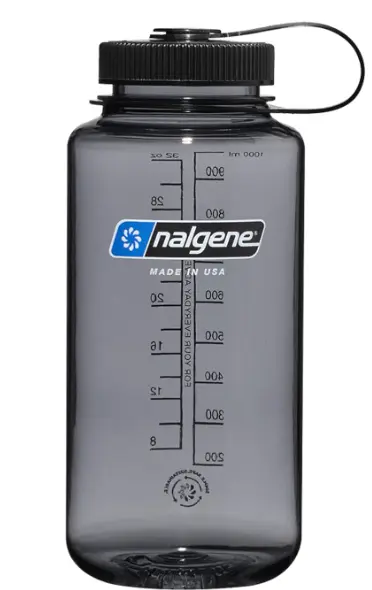
Nalgene 32 oz Wide Mouth BPA-Free Water Bottle
The Nalgene 32 oz Wide Mouth bottle combines lightweight Tritan Renew construction with a virtually indestructible, leakproof design. Its wide opening makes it easy to add ice, clean, or mix drinks, while measurement markings and BPA-free materials make it a dependable choice for hiking, the gym, commuting, and everyday hydration.
The Nalgene is not the most comfortable or advanced bottle here, but few options provide this much capacity, durability, and reliability at such a low weight.
CIVAGO 32 oz Insulated: The Versatile Value Pick
The CIVAGO gives you more lid options for less money, but its insulation and finish do not feel as refined as the premium bottles.
The 32 oz bottle comes with three interchangeable lids: a flip-up straw lid, an easy-twist spout lid, and a solid handle lid. That lets you change the setup for workouts, commuting, or carrying the bottle inside a bag.
Three Lids Make It More Flexible
The straw lid is the most convenient option for desk work and workouts. You can drink without lifting the full bottle, which helps when it is loaded with 32 oz of water and ice.
The spout lid provides a faster flow. I preferred it during walks and after exercise because it was easier to drink from without dealing with a straw.
The handle lid is the simplest option. It has fewer moving parts and provides a solid grip when carrying the bottle.
This versatility is the CIVAGO’s biggest advantage. Most bottles in this price range include only one lid, while CIVAGO gives you three ways to use the same bottle.
Decent Insulation, but Not the Best Here
CIVAGO claims that its double-wall vacuum insulation keeps drinks cold for up to 24 hours and hot for up to 12 hours.
My results were less impressive.
Most of the ice had melted after approximately 12 hours in my room test. The water was still cool, but it did not hold its temperature as well as the Hydro Flask or Takeya.
That does not make the insulation poor. It is enough for a normal workday, gym session, or afternoon outside. It is simply not the bottle I would choose when maximum cold retention is the priority.
The Powder Coating Provides a Secure Grip
The food-grade stainless steel body has a powder-coated finish that feels more secure than smooth metal, especially when your hands are damp. The wide opening also makes adding ice and reaching the interior with a bottle brush easier.
The coating handled ordinary desk and gym use well during my testing, but it is not scratch-proof. CIVAGO recommends avoiding abrasive scrubbers, sharp tools, hard impacts, and high-heat dishwasher cycles that could damage or fade the finish.
Hand washing is the safest choice for both the bottle and its lids.
Not Every Lid Is Equally Reliable
The spout lid gave me the most dependable seal.
I carried the bottle on its side with this lid attached and did not find water inside my bag. The handle lid was also secure when properly tightened.
The flip-up straw lid required more attention. It could release small drops when the mouthpiece was not pressed completely into its closed position. CIVAGO similarly advises using a spout or handle lid when full leak protection matters, since an open straw lid is not completely leak-proof.
That makes the straw lid better for upright use at a desk, in the gym, or beside a bed.
Too Wide for My Standard Cup Holder
The CIVAGO did not fit securely in the standard 3-inch cup holder I used for testing.
Its wide body works better on a desk, inside a backpack pocket, or on a gym floor. Some larger vehicle holders may accommodate it, but buyers should measure their available space rather than assume every 32 oz bottle will fit.
This is not the best driving bottle in the guide. The tapered Owala FreeSip Sway is a safer choice when cup-holder compatibility matters.
Pros
- Includes three interchangeable lids
- Costs less than many premium insulated bottles
- Good cold retention for a normal day
- Spout lid stayed leak-proof in my testing
- Wide opening makes adding ice easier
- Powder coating provides a secure grip
- Available in several sizes and colors
- No exterior condensation during normal use
Cons
- Insulation lagged behind Hydro Flask and Takeya
- Heavy when filled
- Too wide for my standard cup holder
- Straw lid may drip if not fully closed
- Multiple lids create more parts to store and clean
- Finish may chip or fade after impacts
- Hand washing is the safest cleaning method
Best For
The CIVAGO 32 oz is best for budget-conscious buyers who want multiple drinking options without purchasing extra lids separately.
It works especially well at a desk, in a home gym, or anywhere the bottle can remain upright. The straw lid handles casual sipping, while the spout and handle lids are more dependable for carrying.
Choose the Hydro Flask or Takeya when maximum insulation matters. Choose the Owala when cup-holder fit is essential.
Choose the CIVAGO when lid versatility and price matter most.
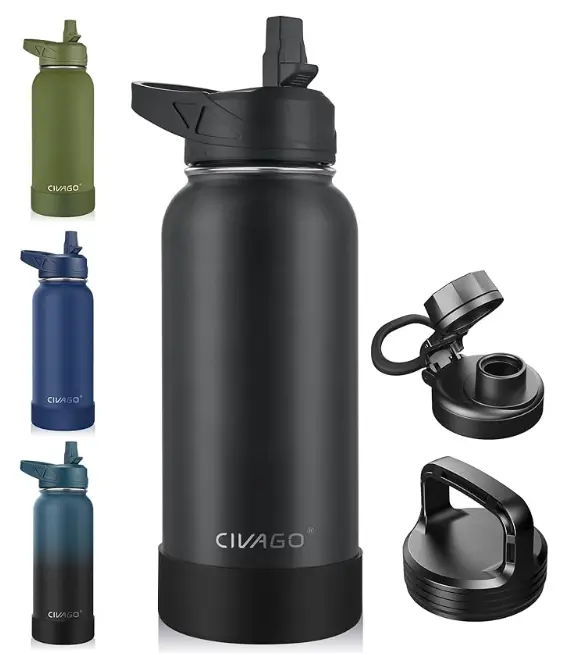
CIVAGO 32 oz Vacuum-Insulated Water Bottle with Straw
The CIVAGO 32 oz combines double-wall vacuum insulation with three interchangeable leakproof lids for every drinking style. Made from durable 304 stainless steel, it keeps drinks cold for up to 24 hours and hot for up to 12 hours, while the wide-mouth design makes filling, cleaning, and adding ice quick and easy.
The CIVAGO remains a good value because of its three included lids and practical stainless steel construction. It just does not match the insulation consistency, finish quality, or simpler cleaning experience of the stronger premium options.
Stanley Quencher H2.0 40 oz: The Max-Capacity Alternative
The Stanley is for people who want fewer refills and do not mind carrying a much larger cup.
Its 40 oz capacity holds about 1.18 liters, giving you 6 oz more water than a true 34 oz bottle. That extra capacity is useful at a desk, during long drives, or around the house.
It is less practical when you need to carry your water inside a backpack.
Large Capacity With a Comfortable Handle
The Quencher H2.0 uses recycled 18/8 stainless steel with double-wall vacuum insulation. It weighs about 1.4 pounds before you add water, making it one of the heaviest options in this guide.
The handle makes that weight easier to manage.
It is large enough for a full grip, and the placement keeps the tumbler balanced when carrying it between rooms or from the car to the office. I still would not choose it for a long walk or hike. Once filled, it feels more like a desk tumbler than a portable water bottle.
The wide upper body and handle also make it difficult to fit inside many backpack bottle pockets. Measure the pocket opening before buying rather than relying only on its stated capacity.
The FlowState Lid Offers Three Drinking Positions
The rotating FlowState lid provides three settings:
- An opening for the reusable straw
- A wider opening for drinking directly
- A covered position designed to reduce spills
The straw is comfortable and provides a steady flow without requiring you to lift the heavy tumbler. That worked well during desk use and long drives.
The full-cover position does not make the standard Quencher completely leak-proof.
Serious Eats found that the H2.0 leaked slightly during testing, particularly around the straw area. It performed better than some competing tumblers, but it is not safe to place sideways inside a bag.
Keep it upright.
Stanley now also offers the Quencher ProTour with a locking flip straw. That version is the safer choice when true leak resistance matters.
Better Cup-Holder Fit Than Its Size Suggests
The Stanley looks too large for a car cup holder, but its base is tapered.
Stanley states that the 40 oz Quencher fits most vehicle cup holders, and Serious Eats also confirmed cup-holder compatibility during testing.
It fit the larger car holders I tried, although compatibility will still vary between vehicles. A strict 3-inch holder may feel tight.
The real space problem is the handle and wide upper section. It can interfere with the gear selector, dashboard controls, or a passenger-side cup holder in smaller cars.
Respectable Cold Retention, Not the Class Leader
Stanley claims that the Quencher keeps drinks cold for up to 11 hours and iced for up to two days.
My results were close to the cold-retention claim. The water remained properly cold for about 11 hours, although the ice did not last as long as it did in my Hydro Flask test.
That still covers a normal workday or long drive.
Serious Eats produced similarly respectable results. Its Quencher started at 38°F after two hours, measured 39°F after six hours, and reached 50°F after 16 hours. The Hydro Flask travel tumbler reached 51°F in the same test, so the Stanley did not meaningfully trail it.
The Stanley is not an insulation failure.
It simply prioritizes easy straw drinking, capacity, and cup-holder compatibility over the sealed-bottle design used by Hydro Flask and Takeya.
Pros
- Large 40 oz capacity reduces refills
- Comfortable handle supports the extra weight
- Tapered base fits many car cup holders
- Smooth and comfortable straw
- Three-position rotating lid
- Keeps water cold through a normal day
- Dishwasher safe
- Available in many colors and finishes
Cons
- Not a true 34 oz or 1-liter bottle
- Heavy before water is added
- Standard FlowState lid is not leak-proof
- Too bulky for many backpack pockets
- Can feel top-heavy when placed on uneven surfaces
- More expensive than several 32 oz bottles
- Wide upper body takes up considerable desk and car space
Best For
The Stanley Quencher H2.0 40 oz is best for desk workers, drivers, home users, and anyone who wants maximum capacity with a comfortable straw and handle.
It also suits people who forget to refill smaller bottles during the day.
Skip it for hiking, crowded commuting, or carrying inside a backpack. A sealed 32 to 34 oz bottle is lighter, easier to pack, and less likely to spill.
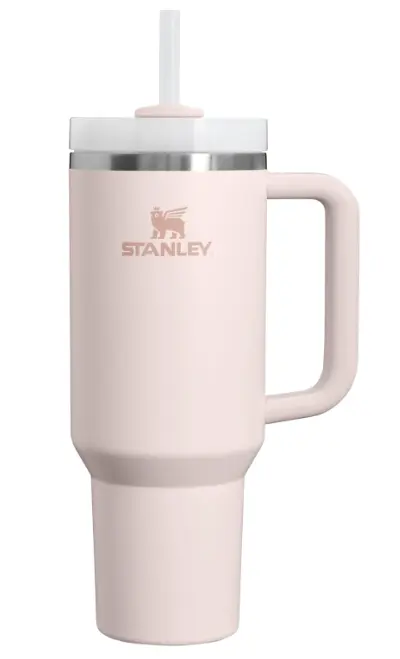
Stanley Quencher H2.0 40 oz Travel Tumbler with FlowState Lid
The Stanley Quencher H2.0 40 oz combines double-wall vacuum insulation with the versatile FlowState™ 3-position lid for easy sipping on the go. Its ergonomic handle, reusable straw, and cup holder-friendly design make it a reliable companion for commuting, work, travel, and all-day hydration.
The Stanley is not the best direct alternative to a sealed 34 oz bottle. It belongs in a different category: large handled tumblers designed to remain upright.
Buy it for capacity and convenient sipping, not for backpack portability or leak-proof carry.
How to Choose the Right 34 oz Bottle for Your Lifestyle
Before committing to this capacity, our guide on how to choose a water bottle can help you compare sizes, materials, insulation, and lid styles based on your daily routine.
For the Commuter: Cup Holder Fit and Leak Protection Matter Most
For driving, the Owala FreeSip Sway 30 oz is the safest choice in this comparison.
A commuter bottle needs to pass two basic tests. It should stay upright beside you in the car, and it should remain sealed when placed inside a work bag.
Many large bottles only handle one of those jobs well.
Best Overall Commuter Pick: Owala FreeSip Sway 30 oz
The Owala Sway has a tapered base designed to fit car cup holders. Owala officially describes it as cup-holder friendly, although vehicle holders still vary in width and depth.
Its lid is also built for commuting. The push-button cover protects the drinking spout, while a separate lock helps prevent accidental opening inside a bag. You can sip through the straw without tilting the bottle or use the wider opening when you want a faster drink.
The only compromise is capacity. It holds 30 oz rather than a full 34 oz, but the smaller difference is worth accepting when reliable cup-holder fit matters.
Best for Bag-First Commuters: YETI Yonder 1L
The YETI Yonder is the better choice when you carry your bottle in a backpack rather than a car cup holder.
Its plastic construction keeps the weight lower than an insulated stainless steel bottle, and the tether cap is fully leak-proof when properly tightened. The carry loop also makes it easy to clip the bottle to a backpack strap.
However, the 1L Yonder is not the safest cup-holder option.
It measures 3.4 inches across, and YETI states that its 1L and 1.5L bottles are probably too large for most cup holders. The smaller 20 oz and 25 oz Yonder bottles are the models designed to fit more vehicle cup holders.
Choose the 1L Yonder for lightweight, leak-proof bag carry. Do not choose it specifically for your car.
Best Insulated Bag Option: Takeya Actives 32 oz
The Takeya Actives makes sense for commuters who want cold water throughout a long workday and do not need to place the bottle in a standard cup holder.
Its Spout Lid screws closed for a leak-proof seal, while the double-wall stainless steel body is rated to keep drinks cold for up to 24 hours. A protective silicone bumper reduces noise and protects the base when you place it on a desk or train floor.
The problem is width.
The 32 oz model measures approximately 3.74 inches across. It will not fit a strict 3-inch holder, although it may work in an oversized truck or SUV console.
Quick Commuter Verdict
- Choose the Owala Sway for the best balance of cup-holder fit, insulation, and leak protection.
- Choose the YETI Yonder 1L for the lightest bag-friendly option.
- Choose the Takeya Actives for strong insulation when cup-holder fit is not required.
If your holder measures less than 3 inches, none of these near-liter bottles is a guaranteed fit. A slimmer 20 to 25 oz bottle will be the safer choice.
For the Gym-Goer: One-Handed Sipping and Easy Cleaning
The Owala FreeSip Sway is the best gym bottle in this group.
Its built-in straw lets you drink between sets without lifting or tilting a heavy bottle. Press the button, take a sip, and close the cover when you are done. The dedicated lock helps prevent the lid from opening inside a gym bag.
A good gym bottle also needs to be easy to clean. Sweat, electrolyte powder, and protein shake residue can collect around straws, seals, and hidden lid channels. A clever lid is only useful when you can reach the parts that hold moisture.
Best Overall: Owala FreeSip Sway 30 oz
The FreeSip lid gives you two drinking options without changing caps. Sip upright through the internal straw during exercise, or tilt the bottle and use the larger opening when you need water quickly.
During my weightlifting sessions, the straw stayed attached during normal use and when the bottle tipped over. A hard drop could knock the internal straw loose, though, so check its connection when the flow suddenly feels weak.
The push-button lid is leak-proof when closed and locked. Owala also makes the lid dishwasher-safe, although the insulated steel cup should be washed by hand.
The downside is cleaning complexity. The straw, gasket, mouthpiece, and covered drinking area need more attention than a basic screw cap.
Best Simple Insulated Option: Takeya Actives 32 oz
The Takeya is a better choice for people who want fewer lid parts.
Its narrow spout controls the flow well, and the attached cover prevents the cap from falling onto a gym floor. Once opened, the bottle is easy to hold and drink from with one hand.
Opening the screw-on spout cover is not truly a one-handed action, especially when your hands are sweaty. That makes it slightly less convenient than the push-button Owala during active workouts.
The lid seals securely for bag carry, and the full bottle is dishwasher safe on most finishes. Takeya currently notes an exception for its Slate finish.
Best Budget Straw Option: CIVAGO 32 oz
The CIVAGO works well for gym users who want a straw lid without paying for a separate accessory.
Its straw setup allows upright sipping, while the included spout and handle lids give you alternatives for faster drinking or more secure transport. The current FlexFlow bottle comes with three lids, and CIVAGO says the spout or handle lid provides better full leak protection than an open straw lid.
In my testing, the straw lid was convenient when the bottle remained upright beside a machine or bench. I would not trust it loose inside a gym bag unless the mouthpiece was fully closed.
The CIVAGO also creates the most cleaning work because you have three lids, a straw, and several seals to maintain. It is good value, but only when you are willing to clean those parts properly.
Quick Gym Verdict
- Choose the Owala Sway for the easiest upright, one-handed sipping.
- Choose the Takeya Actives for a simpler lid and dishwasher-friendly cleaning.
- Choose the CIVAGO when you want straw, spout, and carry-lid options at a lower price.
Avoid using a complex straw lid for thick protein shakes unless you can wash it immediately afterward. Residue can remain inside the straw and beneath the seals even when the lid looks clean from the outside.
For the Outdoor Enthusiast: Durability, Insulation, and Pack Weight
Choose the Hydro Flask for cold retention, the Nalgene for rugged simplicity, or the YETI Yonder when every ounce matters.
Outdoor use creates different priorities than commuting or gym sessions. A trail bottle needs to survive drops, work with ice or water-treatment gear, and remain secure on the outside of a pack.
Insulation is useful, but it comes with extra weight.
Best for All-Day Cold Water: Hydro Flask Wide Mouth 32 oz
The Hydro Flask is the strongest choice for warm-weather hikes, long trail days, and outdoor work.
Its TempShield vacuum insulation is rated to keep drinks cold for up to 24 hours. In my testing, it kept ice water cold through the following day. The stainless steel body also handled ordinary trail knocks without affecting the seal or insulation.
The wide opening accepts standard ice cubes and makes it easier to add electrolyte powder. Hydro Flask also states that the bottle fits most backcountry water filters, which makes it more useful on longer outdoor trips.
The trade-off is weight. It weighs 15.4 oz before you add water, and the 3.58-inch body can feel bulky in smaller backpack pockets.
Choose it when cold water matters more than carrying the lightest possible load.
Best for Rugged Simplicity: Nalgene Wide Mouth 32 oz
The Nalgene is the bottle I would take when low weight and durability matter more than insulation.
It weighs only 6.25 oz, has very few parts to break, and uses a tightly threaded screw cap that remained leak-free in my pack. Its 2.5-inch opening fits most filtration devices and makes it easy to add ice, electrolyte packets, or purification tablets.
It is also easier to fill from a shallow water source than a narrow-neck bottle. You still need to treat collected water correctly before drinking it.
The downside is temperature.
The Nalgene has no insulation. Water warms quickly in direct sun, and the outside can collect condensation when filled with ice. It is a better choice for backpacking, camping, and rough use than for anyone expecting cold water all afternoon.
Do not boil water inside the bottle or place it over a flame. Boil water in proper camping cookware, then follow the bottle maker’s care guidance before transferring hot liquid.
Best Lightweight Leak-Proof Pick: YETI Yonder 1L
The 34 oz YETI Yonder offers full-liter capacity without the weight of stainless steel.
YETI describes it as shatter-resistant and roughly 50% lighter than an equivalent Rambler bottle. The cap is leak-proof when fully tightened, and its carry loop can slide through a backpack strap or attach to a carabiner.
That makes it a practical choice for day hikes, climbing trips, and travel where pack weight matters.
It is not insulated, so it cannot match the Hydro Flask for cold retention. YETI also warns against using the Yonder with hot or carbonated drinks.
One more point: the current 1L Yonder weighs 10.7 oz with its Chug Cap. It is lighter than the insulated options, but the 6.3 oz figure found in some older listings is not accurate for this configuration.
Quick Outdoor Verdict
- Choose the Hydro Flask for long hikes when cold water and insulation matter most.
- Choose the Nalgene for the lowest weight, easy filtration, and rough backcountry use.
- Choose the YETI Yonder for a balance of full-liter capacity, lower weight, and dependable leak protection.
For the Office or Home Desk: Capacity and Style
Desk bottles play by different rules.
You do not need the lightest bottle.
You need something that holds enough water to cut down on refills, looks good sitting beside your laptop, and is easy to sip from while you work.
This is where the Stanley Quencher, CIVAGO, and Hydro Flask make the most sense.
Best Overall Desk Pick: Stanley Quencher H2.0 40 oz
The Stanley is built for this exact job.
It holds more than any other bottle in this guide, the handle makes it easy to move from kitchen to desk, and the straw is effortless to sip from while typing or taking calls. You do not have to stop and tilt the bottle every few minutes.
That convenience matters.
The wide base also feels stable on a desk, and the large 40 oz capacity means fewer trips to refill during the day. If your bottle mostly stays upright beside you, the Stanley is one of the most comfortable options to live with.
The downside is that it is bulky, and the standard FlowState lid is not fully leak-proof. It is excellent for desk use, not for tossing into a work bag.
Best Budget Desk Pick: CIVAGO 32 oz
The CIVAGO is the value choice.
It gives you three lids in one package, which makes it more flexible than most bottles at this price. For desk use, the straw lid is the most convenient. You can keep the bottle next to your monitor and sip without picking it up much.
It also comes in attractive colors, and the powder-coated finish gives it a less cheap feel than many budget bottles.
Its biggest strength is versatility for the money.
Its biggest weakness is refinement. The insulation is decent but not premium-level, and the straw lid needs to be fully closed if you move the bottle around. Still, for home offices or desk setups where the bottle stays mostly upright, it is a practical and affordable pick.
Best for Cold Water Purists: Hydro Flask Wide Mouth 32 oz
The Hydro Flask is the desk bottle for people who care most about one thing.
Cold water staying cold.
If you like filling a bottle in the morning and still having properly chilled water by late afternoon, the Hydro Flask is the best choice here. Its insulation outperforms most desk-friendly bottles, and the wide mouth makes it easy to add ice throughout the day.
It also looks clean and simple on a desk.
The trade-off is convenience. It is not as easy to sip from while working as the Stanley or CIVAGO straw lid, and it is easier to knock over than the broader, more stable Stanley. It also does not fit the casual all-day sipping style quite as naturally.
Quick Office or Desk Verdict
- Choose the Stanley Quencher if you want maximum capacity and the easiest sipping experience.
- Choose the CIVAGO if you want similar desk-friendly convenience at a lower price.
- Choose the Hydro Flask if you want the best cold retention and do not mind lifting the bottle to drink.
Best For Quick Pick Matrix
Use Case | Best Pick | Why |
Commuter | Owala FreeSip Sway 30 oz | Cup-holder-friendly shape, insulated, leak-resistant lid |
Gym | Owala FreeSip Sway 30 oz | Easy upright sipping between sets |
Outdoors | Hydro Flask Wide Mouth 32 oz | Strong insulation and durable build |
Lightweight Outdoors | YETI Yonder 1L | Full-liter capacity with less weight |
Rugged Simplicity | Nalgene Wide Mouth 32 oz | Tough, light, and easy to clean |
Office or Home Desk | Stanley Quencher H2.0 40 oz | Big capacity and effortless straw sipping |
Common 34 oz Bottle Frustrations Solved
“My Bottle Leaks in My Bag”
A leaking bottle is usually a lid problem, not a bottle problem.
Straw lids, flip tops, and push-button covers are convenient while drinking. They also contain more moving parts, seals, and openings that can fail when the bottle rolls around inside a bag.
One loose mouthpiece can soak your laptop, clothes, or paperwork.
The Solution
Choose a lid that screws firmly into place and fully covers the drinking opening.
Simple chug caps usually provide the safest bag carry because fewer parts can open accidentally. Locking lids can also work well, but only when the lock is properly engaged.
The YETI Yonder, Takeya Actives, and Hydro Flask Wide Mouth with Flex Chug Cap were the most dependable options in my leak testing.
For each test, I filled the bottle with water, closed the lid, turned it upside down, and shook it firmly for 30 seconds. The YETI and Takeya did not release a single drop.
Best Leak-Proof Picks
YETI Yonder 1L
The Yonder uses a two-part screw cap. Remove the smaller section to drink, or unscrew the full cap for filling and cleaning.
The design stayed completely dry in my test. YETI also describes the cap as 100% leak-proof when properly closed.
This is my first choice for commuters who carry their bottle inside a backpack and do not need insulation.
Takeya Actives 32 oz
Takeya’s spout lid has two threaded connections: the main lid and the smaller cover over the drinking spout.
Both need to be fully tightened.
Once closed, it remained leak-free during my upside-down test. Takeya also lists the insulated spout lid as leak-proof.
Hydro Flask Wide Mouth with Flex Chug Cap
The Flex Chug Cap provides a narrow drinking opening while keeping the wider bottle mouth underneath.
Hydro Flask describes the cap as leak-proof when closed. It is a strong choice when you want reliable bag carry and better cold retention than the plastic Yonder.
What to Avoid
Do not place an open-straw tumbler loose inside a backpack.
Even when the lid has a covered position, water can escape through the straw opening or around the seal. Flip lids can also leak when the mouthpiece is not pressed completely into place.
When using a straw bottle, check that:
- The straw mouthpiece is fully closed
- The safety lock is engaged
- The gasket is clean and correctly seated
- The lid is screwed on evenly
- The bottle remains upright when possible*
“My Insulated Bottle Sweats and Leaves Water Rings”
A properly working vacuum-insulated bottle should not leave a puddle on your desk.
Single-wall plastic and stainless steel bottles allow the cold interior to cool the outside surface. Moisture in the air then turns into condensation, creating a wet bottle, slippery grip, and water rings.
The YETI Yonder and Nalgene both sweat when filled with ice water because neither bottle is insulated.
The Solution
Choose a double-wall vacuum-insulated bottle.
The Hydro Flask, Takeya Actives, Owala FreeSip Sway, CIVAGO, and Stanley Quencher all use insulated stainless steel bodies designed to prevent exterior condensation during normal use.
The bottle body should remain dry, even when the water inside is packed with ice.
You may still notice a few drops around the lid, straw opening, or drinking spout. Those parts are not always vacuum insulated, and cold water can collect around them while you drink.
If condensation suddenly appears across the stainless steel body, the vacuum seal may be damaged. That usually means the bottle has lost some of its insulation performance and may need replacing under its warranty.
“It Doesn’t Fit My Car’s Cup Holder”
Large capacity and cup-holder compatibility rarely go together.
Many bottles near the 1-liter mark have bodies wider than 3.4 inches. They may fit a backpack pocket or door compartment, but they will not sit securely in a narrow center-console holder.
There is also no universal cup-holder size. The opening may look wide enough while the lower section narrows too much for the bottle’s base.
The Solution
Measure the narrowest inside diameter of your cup holder before buying.
Then compare that measurement with the bottle’s base, not its widest upper section. A tapered bottle may fit even when the body looks oversized, while a straight-sided bottle needs almost its full listed diameter.
Best Cup-Holder Pick: Owala FreeSip Sway 30 oz
The Owala Sway is the safest car-friendly option in this guide.
Its contoured body and tapered lower section are designed for cup-holder compatibility. The locking lid also helps prevent accidental opening when the bottle is moved between the car and a work or gym bag.
It holds 30 oz rather than a full 34 oz, but that small capacity trade-off makes it much easier to use while driving.
Surprisingly Car-Friendly: Stanley Quencher 40 oz
The Stanley is much larger overall, but its narrow, tapered base is designed to fit most car and truck cup holders.
The handle and wide upper body can still interfere with dashboard controls, gear selectors, or the neighboring cup holder in a compact vehicle. It is also not fully leak-proof, so it should remain upright.
Usually Too Wide: YETI Yonder 1L
The 1L Yonder measures 3.4 inches across. YETI states that its 34 oz and 50 oz Yonder bottles are generally too large for standard cup holders. The smaller 20 oz and 25 oz versions are the cup-holder-friendly options.
Choose the 1L Yonder for lightweight backpack carry, not because you expect it to fit beside the gear selector.
Usually Too Wide: Takeya Actives 32 oz
The 32 oz Takeya Actives measures approximately 3.74 inches wide. It may fit an oversized truck or SUV holder, but it is not a dependable option for a standard narrow console.
The protective bumper can also add friction when pushing it into a tight opening. Do not rely on the slight curve near the base to overcome the bottle’s full width.
Too Wide for Narrow Holders: Hydro Flask 32 oz
The Hydro Flask Wide Mouth measures 3.58 inches in diameter. That is too wide for a strict 3-inch holder and may also be tight in slightly larger consoles.
It is better carried in a backpack pocket, door compartment, or bottle adapter.
Quick Cup-Holder Verdict
- Choose the Owala Sway for the safest balance of near-liter capacity and car compatibility.
- Choose the Stanley when you want 40 oz and can keep the tumbler upright.
- Avoid choosing the 1L Yonder, 32 oz Takeya, or 32 oz Hydro Flask specifically for cup-holder use.
- Move down to a slimmer 20 to 25 oz bottle when your holder measures less than 3 inches.
“The Lid Is Impossible to Clean and Smells”
A clean-looking lid can still hide moisture underneath its seals.
Straws, gaskets, valves, and covered spouts create small spaces where water and drink residue collect. Closing the lid before these areas dry can lead to stale smells, visible buildup, and eventually mold.
I learned this after dealing with a moldy straw lid myself.
It was disgusting.
The Solution
Choose a lid with removable seals and parts you can reach with a small brush.
Clean the bottle after each day of use, then take the lid apart for a deeper clean at least once a week. Do it sooner after adding electrolytes, flavored water, or protein shakes.
Avoid any lid with a permanently fixed gasket that you cannot lift, inspect, or clean underneath.
Easiest to Deep-Clean: Takeya Actives
The Takeya Spout Lid is simpler than most straw systems.
Its O-rings can be removed, washed separately, and reinstalled after drying. Takeya recommends cleaning the bottle and lid daily and soaking the seals in a 50/50 mixture of water and white vinegar when deeper cleaning is needed.
The lid does not need to be described as exactly four pieces. What matters is that the important seals are removable and accessible.
Simple Option: Hydro Flask Flex Chug Cap
The Hydro Flask Flex Chug Cap has fewer hidden areas than a straw or push-button lid. Its controlled drinking spout and screw-on design are easier to inspect during cleaning.
The cap and compatible bottle are dishwasher safe, or they can be washed with warm, soapy water.
Pay attention to the threads and the underside of the cap. Residue can remain there even when the top looks clean.
Needs Extra Attention: Owala FreeSip
The Owala lid is convenient, but its straw, mouthpiece, and removable spout gasket create more areas to clean.
Owala recommends pulling out the straw, removing the gasket by its tab, and washing those pieces separately. The lid can go on the dishwasher’s top rack, and a small straw brush helps reach narrow spaces.
In my use, the lid stayed fresh when I disassembled it weekly. Leaving it closed while damp was more likely to produce an unwanted smell.
A Simple Weekly Cleaning Routine
- Remove the lid, straw, and every removable gasket.
- Scrub the bottle with warm water, mild dish soap, and a bottle brush.
- Clean inside straws and narrow spouts with a small straw brush.
- Rinse every piece carefully.
- Place all parts separately and let them dry completely.
- Reinstall the seals evenly before using the bottle again.
For stubborn odors, soak removable parts in diluted white vinegar or use a bottle-cleaning tablet according to its instructions. Owala also recommends cleaning tablets for deeper cleaning.
Insulation and Temperature Retention Test Results
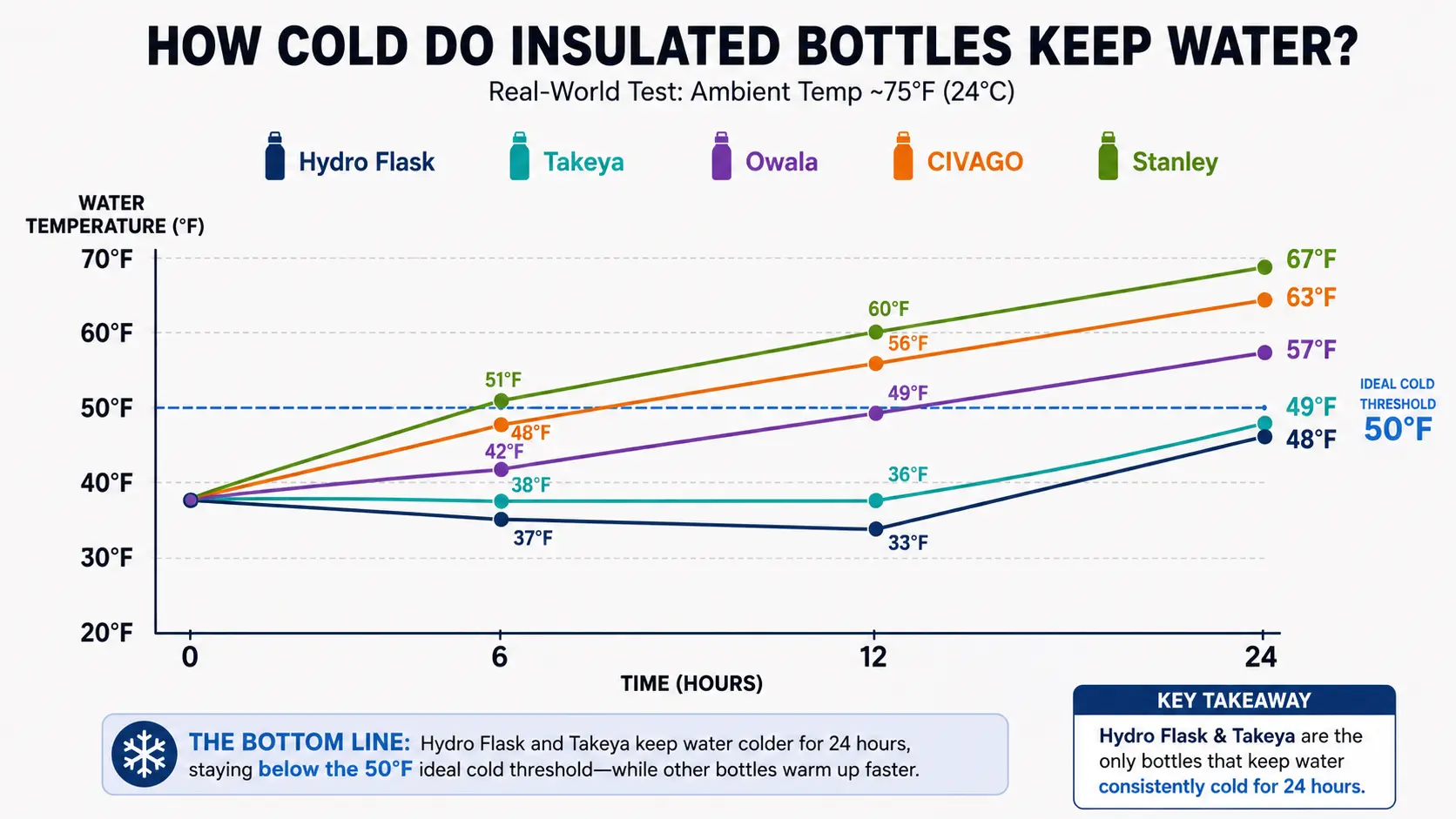
The Hydro Flask and Takeya were the only bottles in this test that kept water below 50°F for a full 24 hours.
Manufacturer insulation claims are helpful, but they do not always explain what “cold” means or how the bottle was tested. I used the same starting temperature, room conditions, and measuring schedule for every bottle to make the comparison more useful.
How I Compared the Bottles
Each bottle was pre-chilled with ice water for five minutes. I then emptied it, filled it with 33°F water, closed the lid, and placed it in a room maintained at approximately 70°F.
I measured the water temperature every two hours with the same digital thermometer.
For this guide, I counted water as cold while it remained below 50°F. This is a practical benchmark selected for the test, not a universal industry standard.
Product | Insulation Type | After 6 Hours | After 12 Hours | After 24 Hours | Last Recorded Below 50°F |
YETI Yonder 1L | None | 65°F | 70°F | 70°F | About 2 hours |
Hydro Flask Wide Mouth 32 oz | Double-wall vacuum | 38°F | 42°F | 48°F | 24+ hours |
Owala FreeSip Sway 30 oz | Triple-layer insulated | 40°F | 45°F | 52°F | About 20 hours |
Takeya Actives 32 oz | Double-wall vacuum | 39°F | 43°F | 49°F | 24 hours |
Nalgene Wide Mouth 32 oz | None | 66°F | 70°F | 70°F | About 2 hours |
CIVAGO 32 oz Insulated | Double-wall vacuum | 42°F | 50°F | 60°F | About 10 hours |
Stanley Quencher H2.0 40 oz | Double-wall vacuum | 45°F | 55°F | 65°F | About 10 hours |
Hydro Flask and Takeya Finished on Top
The Hydro Flask delivered the strongest overall result. Its water measured 48°F after 24 hours, keeping it just below my cold threshold.
The Takeya followed closely at 49°F.
That one-degree difference is too small to matter during normal use. Both bottles kept water properly cold from one morning into the next.
Their results also align with the brands’ current claims. Hydro Flask rates its 32 oz Wide Mouth for 24 hours cold, while Takeya makes the same 24-hour cold-retention claim for the Actives.
Owala Was Strong for Most of the Day
The Owala FreeSip Sway stayed below 50°F for approximately 20 hours before reaching 52°F at the 24-hour mark.
That was enough for a commute, workout, and full workday. It did not quite match the Hydro Flask or Takeya in this test, despite Owala advertising up to 24 hours of cold retention.
The difference was noticeable in the thermometer reading, but not dramatic in normal drinking.
CIVAGO Was Good for a Workday, Not a Full Day
The CIVAGO reached 42°F after six hours and exactly 50°F after 12 hours.
Because the test defines cold as under 50°F, the last confirmed qualifying reading was at approximately 10 hours. By 24 hours, the water had warmed to 60°F.
That is enough for desk use or a gym session, but it trails the better insulated bottles.
Stanley Crossed the Threshold Earlier
The Stanley measured 45°F after six hours but reached 55°F by the 12-hour check.
Its last recorded temperature below 50°F was therefore around 10 hours. That is close to Stanley’s official claim of 11 hours cold, although the brand’s testing standard may not use the same 50°F cutoff.
The Stanley still keeps water cool through most of a working day. It simply does not offer the same full-day retention shown by the Hydro Flask and Takeya in this test.
Non-Insulated Bottles Warmed Quickly
The YETI Yonder and Nalgene reached the mid-60s by the six-hour mark and were close to room temperature after 12 hours.
That result was expected.
Both are single-wall plastic bottles designed around low weight and simple carrying rather than temperature retention. They work well when you refill regularly, but neither is suitable for keeping water cold all day.
Final Insulation Verdict
- Best compared cold retention: Hydro Flask Wide Mouth
- Close second and better value: Takeya Actives
- Best balance of insulation and drinking versatility: Owala FreeSip Sway
- Good for around 10 hours: CIVAGO and Stanley
- Not intended for lasting cold retention: YETI Yonder and Nalgene
These results apply to the specific bottles and conditions compared. Room temperature, starting temperature, lid choice, bottle wear, and thermometer accuracy can all affect the final readings.
Cleaning and Maintenance Guide
Most bottle smells start in the lid, not the bottle.
Water, sweat, electrolyte powder, coffee, and protein shake residue can settle beneath gaskets and inside straws. A quick rinse helps, but it will not reach those hidden areas.
The best routine combines a fast daily wash with a full weekly clean.
Daily Rinse and Quick Clean
Rinse the bottle and lid with warm water after every use. Do this immediately when the bottle has held anything other than plain water.
For a proper daily clean:
- Add warm water and a small amount of mild dish soap.
- Scrub the inside with a soft bottle brush.
- Wash the drinking spout, lid threads, and underside of the cap.
- Rinse until no soap remains.
- Leave the bottle and lid open to air-dry separately.
Do not close the lid while the parts are still damp. Trapped moisture is one of the main reasons clean bottles start smelling stale.
Avoid steel wool and rough scrubbers on stainless steel. They can scratch the interior and damage the exterior finish. Hydro Flask recommends warm soapy water and a bottle brush for reaching the bottom and other difficult areas.
Weekly Deep Clean to Prevent Mold and Odors
Take the lid apart once a week, even when it looks clean.
Step 1: Disassemble the Lid
Remove every part designed to come out, including:
- Straws
- Silicone gaskets
- O-rings
- Removable mouthpieces
- Spout seals
Do not force out parts that the manufacturer does not describe as removable.
Owala instructs users to remove the straw and spout gasket for separate cleaning. Takeya also recommends taking out its O-rings and gasket components during a deep clean.
Step 2: Scrub the Bottle
Fill the bottle with warm water and a small amount of mild dish soap.
Use a soft bottle brush to clean:
- The bottom
- Interior walls
- Shoulder area
- Neck threads
- Rim around the opening
Pay extra attention to the bottom after using electrolyte powders or protein drinks. Residue can settle there even when the water looks clear.
Step 3: Clean the Lid and Small Parts
Soak removable lid parts in warm soapy water for about 10 minutes.
Use a small detail brush around gaskets, hinges, threads, and covered spouts. Push a narrow straw brush through the entire straw rather than rinsing water through it.
Owala recommends using a sponge or straw brush for the lid’s smaller spaces, while its removable straw can be washed separately.
Step 4: Rinse and Dry Completely
Rinse every part thoroughly.
Place the bottle, lid, straw, and seals separately on a drying rack or clean towel. Allow them to dry completely before rebuilding the lid.
Takeya specifically advises leaving all parts open to air-dry before reinstalling its seals. Nalgene gives the same full air-drying advice after hand or dishwasher cleaning.
Using Cleaning Tablets for Stubborn Odors
Cleaning tablets can help remove stains and smells that normal dish soap leaves behind.
In my experience, they worked better than baking soda on stubborn coffee and protein shake odors.
For a deeper clean:
- Fill the bottle with warm water.
- Add one bottle-cleaning or plain denture-cleaning tablet.
- Let it dissolve for the time stated on the tablet packaging.
- Scrub any remaining marks with a soft bottle brush.
- Rinse the bottle several times.
- Leave it open until fully dry.
Owala officially suggests bottle-cleaning tablets as a low-scrubbing deep-cleaning option. Its instructions for EcoBrite tablets recommend a short soak for routine cleaning or a longer soak for deeper buildup.
Check the bottle manufacturer’s care instructions before using any cleaning product. Do not use abrasive powders or strongly scented tablets that may leave a taste behind.
Dishwasher or Hand Washing?
Dishwasher safety varies by bottle and finish.
- Nalgene: Dishwasher safe on the top rack, away from the heating element.
- Owala: Lids are top-rack dishwasher safe, but insulated stainless steel cups should be hand-washed.
- Hydro Flask: Current 32 oz Wide Mouth bottles are dishwasher safe, although hand washing can help preserve their appearance.
- Takeya: Follow the care instructions for the exact bottle and finish, and remove seals for periodic deep cleaning.
- Stanley: Most insulated stainless steel drinkware is dishwasher safe, but Stanley recommends checking the product care label or the bottom of the bottle.
- YETI Yonder: The bottle is dishwasher safe, with the cap placed on the upper rack away from direct heat.
When to Replace a Gasket or Straw
Cleaning will not fix every problem.
Replace the seal or straw when it remains discolored, cracked, stretched, sticky, or smelly after a deep clean. A damaged gasket can also cause leaks even when the cap feels tight.
Removing Stubborn Stains and Odors
Regular dish soap will not always remove old coffee stains, protein shake residue, or a sour smell trapped inside a bottle.
When that happens, use a deeper cleaning method suited to the bottle material. Do not use the same treatment on every bottle.
For Plastic Bottles
For the YETI Yonder and Nalgene, start with a diluted white vinegar soak.
- Mix one part white vinegar with two parts warm water.
- Fill the bottle and let it sit for 30 to 60 minutes.
- Scrub the inside with a soft bottle brush.
- Rinse several times with clean water.
- Leave the bottle open until completely dry.
For a strong odor, the soak can be extended, but I would try the shorter treatment before leaving vinegar inside overnight. Always check the manufacturer’s care instructions before using a long soak.
Clean the lid separately. Vinegar inside the bottle will not remove residue hiding beneath a gasket or inside a drinking spout.
For Stainless Steel Bottles
A gentle baking soda paste works well on coffee rings and other visible stains.
- Mix about half a teaspoon of baking soda with a small amount of warm water.
- Spread the paste over the stained area.
- Leave it for 10 to 15 minutes.
- Scrub gently with a soft brush or sponge.
- Rinse thoroughly and air-dry.
Stanley recommends this method for set-in coffee stains and warns against rough scrubbers that could scratch the stainless steel.
For heavier residue, Hydro Flask recommends a mixture of hydrogen peroxide and baking soda followed by a thorough wash. Follow the brand’s exact quantities and soaking time rather than estimating the mixture.
Do not mix baking soda and vinegar in the bottle at the same time. The fizz looks useful, but the two ingredients largely neutralize each other.
Avoid Bleach and Abrasive Cleaners
Do not use chlorine bleach, steel wool, or harsh scouring powders unless the bottle manufacturer specifically permits them.
These products can damage coatings, scratch the interior, and shorten the life of stainless steel drinkware. Stanley’s care guidance specifically advises avoiding bleach and abrasive cleaners.
A soft brush, mild soap, and a bottle-cleaning tablet are safer starting points.
My Go-To Cleaning Brush Set
The OXO Good Grips Water Bottle Cleaning Set is the most useful kit I have used across the bottles in this guide.
It includes:
- A long bottle brush for reaching the bottom
- A narrow straw brush
- A small detail cleaner for lid threads, seals, and tight corners
All three brushes use nylon bristles, and the different sizes make it easier to clean both simple chug caps and complicated straw lids.
The detail brush is especially useful around the Owala gasket and Takeya lid seals. The straw brush reaches areas that rinsing alone will miss.
When a Smell Will Not Go Away
Replace the straw or gasket when it remains smelly, sticky, cracked, or discolored after deep cleaning.
Do not keep masking the smell with lemon or flavored drinks. A persistent odor usually means residue remains in a hidden area or a soft component needs replacing.
Frequently Asked Questions
Is a 34 oz water bottle too heavy?
Can I put a 34 oz bottle in the dishwasher?
Will a 34 oz bottle fit in a bike cage?
How many 34 oz bottles should I drink daily?
It depends on your hydration goal.
Daily Goal | 34 oz Bottlefuls |
64 oz | About 2 |
80 oz | About 2.5 |
96 oz | About 3 |
128 oz | About 4 |
The first bottleful is your initial fill, not a refill.
Can I use a 34 oz bottle for hot drinks?
How can I tell if my bottle is truly leak-proof?
Final Verdict and Recommendations
The Takeya Actives 32 oz is the best overall choice.
It nearly matched the Hydro Flask in my insulation test, stayed leak-free inside my bag, and costs less than many premium insulated bottles. The spout lid is simple, the protective bumper is useful, and the full bottle is dishwasher safe.
Its only major weakness is cup-holder fit. At 3.74 inches wide, it is better for a backpack, gym floor, or desk than a narrow car console.
Best Overall: Takeya Actives 32 oz
Choose the Takeya when you want strong insulation, reliable leak protection, and good value in one bottle.
It is the bottle I reach for on most normal days. Just do not buy it specifically for a standard cup holder.
Best for Commuters: Owala FreeSip Sway 30 oz
The Owala Sway is the strongest commuter option because it combines a cup-holder-friendly shape with a leak-proof locking lid.
Its built-in straw makes drinking easier while driving, and the larger opening gives you a faster flow when needed. It holds 30 oz rather than a full liter, but that small capacity compromise improves portability.
Best for the Gym: Owala FreeSip Sway 30 oz
The same FreeSip lid also makes the Owala my top gym pick.
You can sip upright between sets without lifting the bottle. The lock helps protect against spills inside a gym bag, although the straw and removable seals need regular deep cleaning.
Best for Outdoors: Hydro Flask Wide Mouth 32 oz
Choose the Hydro Flask when cold retention matters more than price or weight.
It delivered the best result in my 24-hour temperature test. The wide opening makes adding ice, electrolyte powder, or treatment tablets easier, while the Flex Chug Cap provides a controlled flow and a leak-proof seal when closed.
Best Lightweight Pick: YETI Yonder 1L
The YETI Yonder is the best choice when you want full-liter capacity without carrying insulated stainless steel.
Its screw cap stayed completely dry during my leak test, and the plastic body is easier to carry on day hikes or inside a backpack. It is not insulated, and YETI states that the 1L model is probably too large for most cup holders.
Best Rugged Budget Pick: Nalgene Wide Mouth 32 oz
The Nalgene is the simplest bottle here.
It is light, inexpensive, dishwasher safe, and tough enough for camping or rough daily use. It does not keep water cold, but it is a practical choice when durability and low weight matter more than insulation.
Best Budget Insulated Pick: CIVAGO 32 oz
The CIVAGO offers the most lid flexibility for the money.
It includes straw, spout, and handle lids, allowing you to change the bottle for desk use, workouts, or bag carry. Its insulation lagged behind Takeya and Hydro Flask in my test, and the straw lid needed careful closing. Current prices vary by color and seller.
Best Maximum-Capacity Alternative: Stanley Quencher H2.0 40 oz
The Stanley is best for people who want fewer refills and mostly keep their drink upright.
Its 40 oz capacity, large handle, and straw work especially well at a desk or during long drives. Despite its size, the tapered base fits many vehicle cup holders. The standard FlowState lid resists splashes but is not fully leak-proof.
Quick-Pick Matrix
Your Main Use | Best Pick | Why |
Best overall | Takeya Actives 32 oz | Strong insulation, reliable lid, good value |
Car commuting | Owala FreeSip Sway 30 oz | Tapered base and locking lid |
Gym workouts | Owala FreeSip Sway 30 oz | Upright straw sipping |
Long outdoor days | Hydro Flask Wide Mouth 32 oz | Best compared cold retention |
Lightweight carry | YETI Yonder 1L | Full-liter capacity without steel weight |
Camping and rough use | Nalgene Wide Mouth 32 oz | Light, simple, and durable |
Multiple lids on a budget | CIVAGO 32 oz | Three drinking options included |
Maximum capacity | Stanley Quencher 40 oz | Fewer refills and comfortable handle |
My Final Recommendation
Buy the Takeya Actives when you want the best balance of insulation, price, durability, and leak protection.
Choose the Owala Sway instead when car use or upright straw sipping matters most. Pick the Hydro Flask when maximum cold retention is your priority.
Every bottle in this guide was purchased at retail price and used daily for at least two weeks. No sponsorship or affiliate relationship influenced the rankings. The guide will be reviewed annually, with the latest update date shown near the top.
Leak and Drop Test Visual
Add a short video or photo sequence showing each leading bottle:
- Filled and sealed
- Shaken upside down for 30 seconds
- Placed sideways inside a bag
- Dropped once from desk height
- Inspected for leaks, cracks, dents, and lid damage
Use captions that report exactly what happened. Avoid calling a bottle indestructible or leak-proof when the test reveals drips, loosened parts, or cosmetic damage.