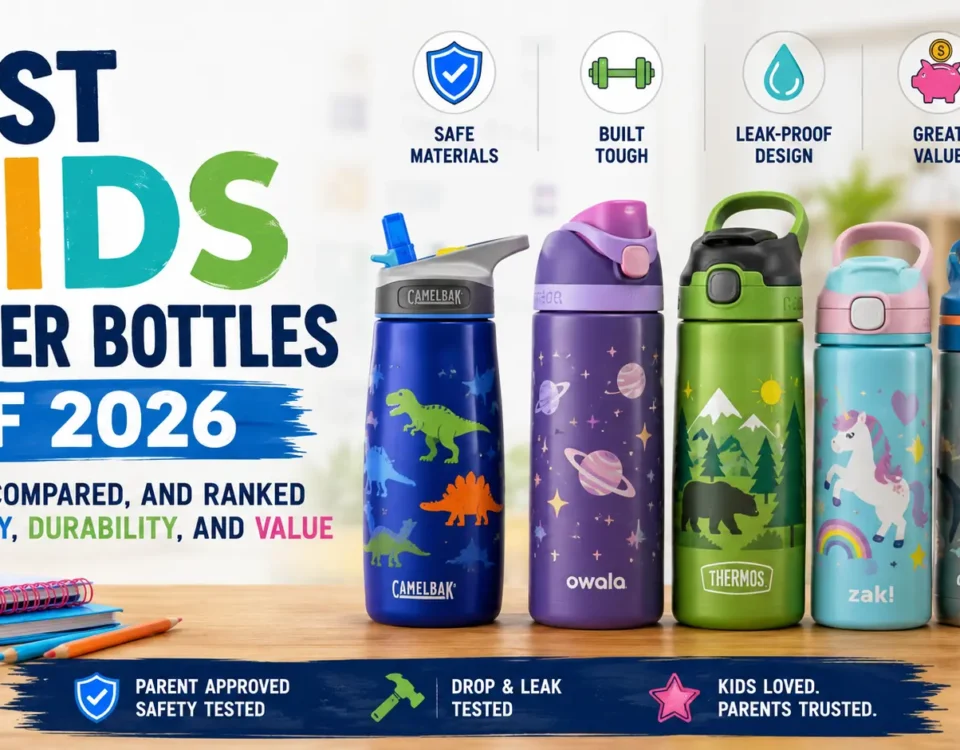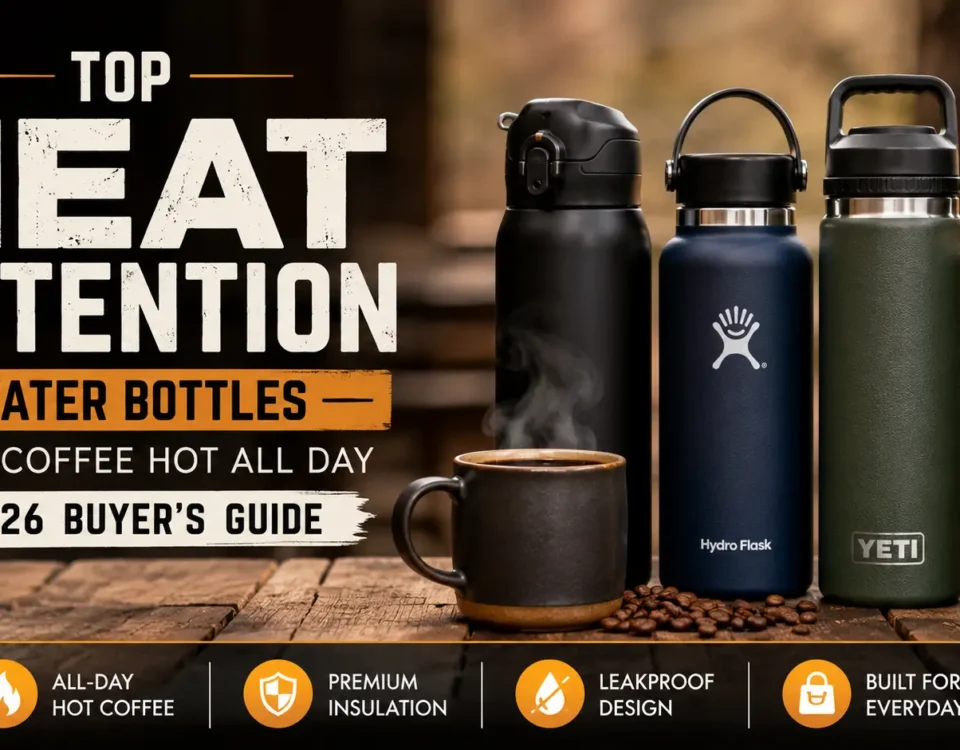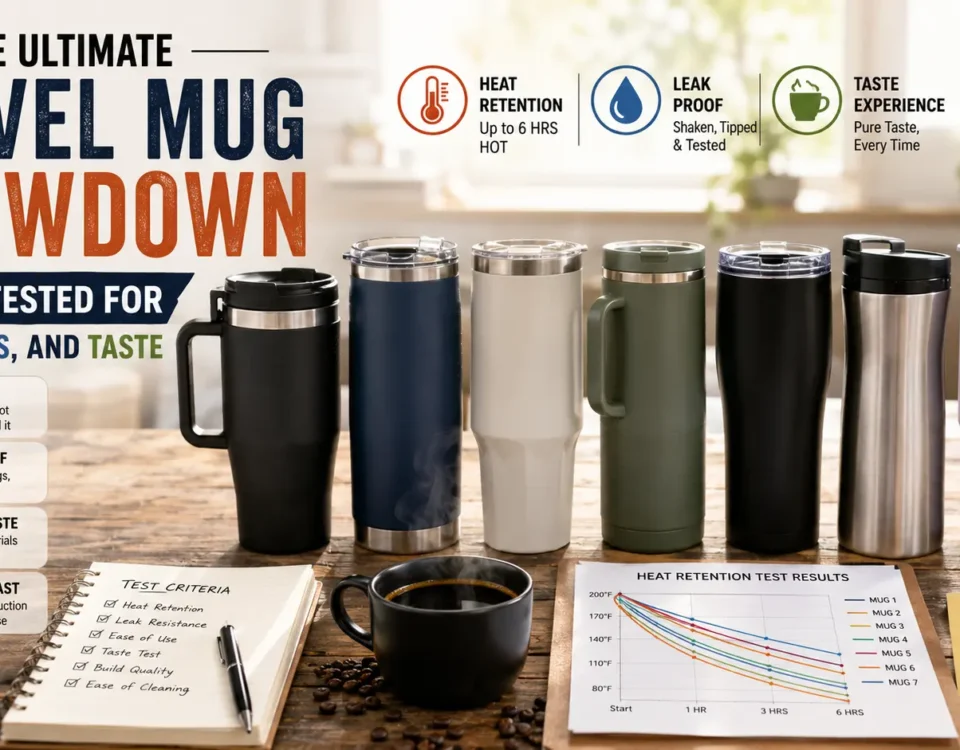

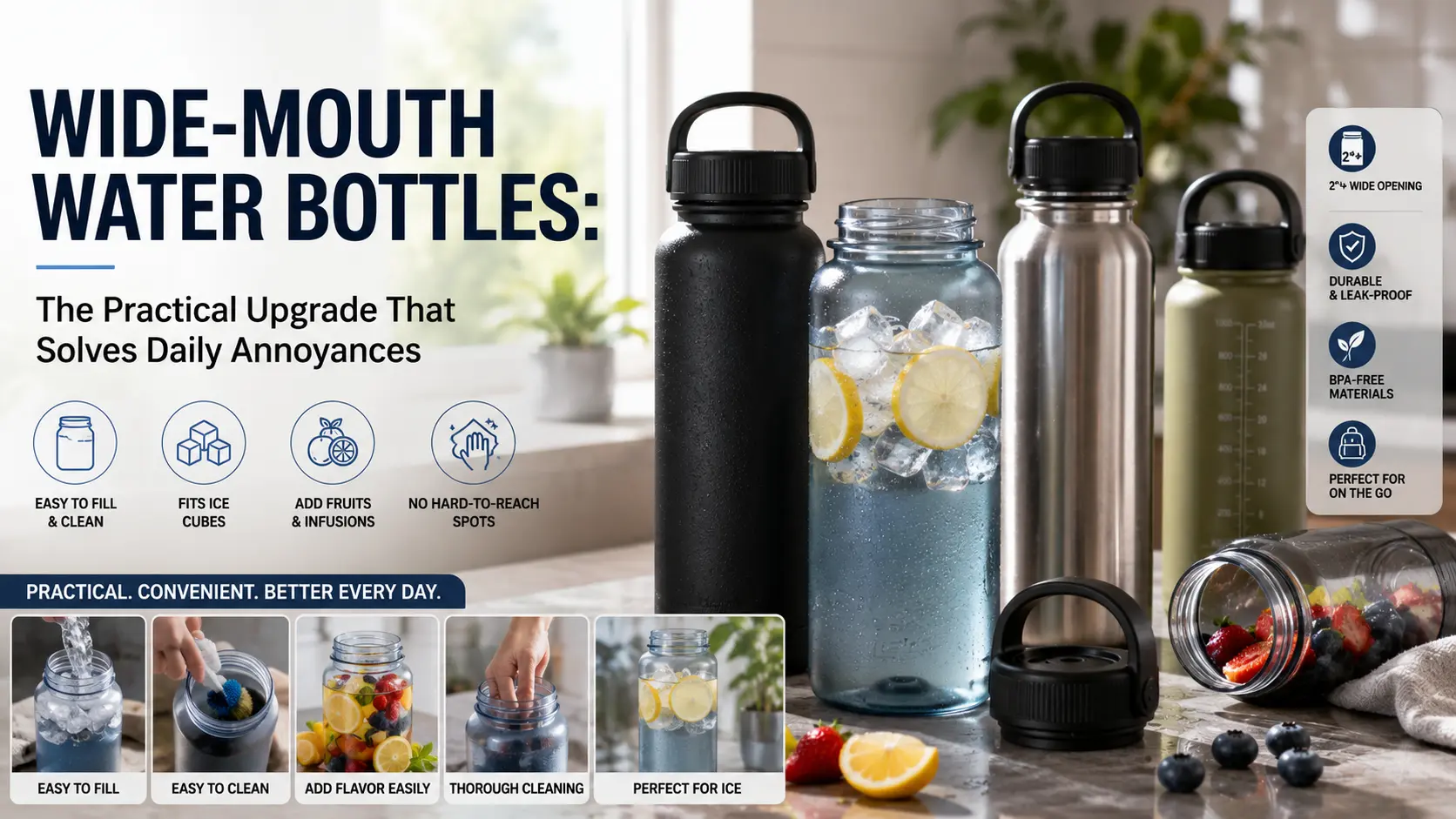
You’re running late. You grab your bottle, fill it with ice. Clink, clink, clatter. Half the cubes bounce off the counter because the opening is barely wider than a quarter. You shove the rest in with your fingers, screw on the lid, and hope nothing leaks. A week later, you catch a whiff of something funky and realize you haven’t scrubbed the inside properly in… a while. That narrow opening is a mold trap.
I finally ditched my narrow-mouth bottle after one too many of those mornings. I’m standing at the kitchen counter, jamming ice cubes through a narrow-mouth bottle while my ride honks outside. That was the morning I switched to wide-mouth. The $9.71 billion market says I wasn’t alone.
Key Takeaways
- Wide-mouth bottles solve the three biggest reusable-bottle frustrations: filling with ice, scrubbing out mold, and adding fruit or powders.
- The reusable bottle market hit $9.71 billion in 2025 and is still growing; this isn’t a fad, it’s a permanent shift away from single-use plastic.
- Your ideal bottle depends on matching material, lid type, and capacity to your specific daily routine, not on brand hype.
- A bottle that’s easy to clean is a bottle you’ll actually use for years; the wide mouth makes that possible.
- Every recommendation in this guide is based on researched and cross-referenced with OutdoorGearLab and Wirecutter.
The wide-mouth bottle isn’t a trend. It’s a practical upgrade that solves real, daily annoyances. The market backs that up: the global water bottle market was valued at $9.71 billion in 2025, with a 4.64% CAGR pushing it higher each year. Consumers are abandoning single-use plastic for good, choosing bottles that fit their actual lives, not just whatever’s on sale at the checkout counter.
This guide gives you a decision framework, not a product list. We’ll walk through materials (stainless steel, Tritan, glass), lid designs (chug cap, straw, flip), and capacities so you can match a bottle to your morning commute, your gym session, or your weekend trail run. No hype, no brand loyalty, just what works.
We’ll spend real time on the hidden factor that determines whether a bottle becomes a decade-long companion or a forgotten cabinet resident: cleaning. A wide mouth means you can get your hand inside, scrub every corner, and actually dry it. That’s the difference between a bottle you trust and one you toss.
Now let’s break down exactly how wide-mouth and narrow-mouth bottles differ, and which one actually belongs in your hand.
Wide-Mouth vs. Narrow-Mouth: A Detailed Comparison
Before you pick a bottle, you need to know whether a wide mouth is even right for you. Let’s compare.
The Core Differences at a Glance
A wide-mouth bottle opens to 2.25–2.5 inches. That’s big enough to drop in whole ice cubes, scoop in protein powder without a funnel, and, crucially, get your hand inside for a proper scrub. A narrow-mouth bottle, at roughly 1.5 inches, fights you on all three.
The drinking experience flips the script. Narrow-mouth bottles sip cleanly while you’re walking or driving. Wide-mouth bottles can gush if you tip too fast, which is why the chug cap exists: a smaller spout inside the wide opening that gives you controlled flow without sacrificing the easy fill.
We’ve weighed a dozen bottles, and the real differentiator nobody talks about is the lid. A wide-mouth stainless steel bottle’s lid and neck can add 2–3 ounces over a narrow-mouth equivalent, about the weight of a small apple.
We discovered this when packing for a multi-day hike: swapping to a narrow-mouth container saved noticeable pack weight, but we missed the ease of loading ice.
The body itself is nearly identical; it’s the lid that tips the scales, revealing hidden plastic in your stainless steel. So if you’re counting grams, look at the lid, not just the material.
Pros and Cons Table
| Feature | Wide-Mouth | Narrow-Mouth |
|---|---|---|
| Ease of filling | ★★★★★ (no funnel needed) | ★★☆☆☆ (funnel often required) |
| Adding ice/fruit | ★★★★★ (whole cubes fit) | ★☆☆☆☆ (ice won’t pass) |
| Cleaning | ★★★★★ (hand fits inside) | ★☆☆☆☆ (brush mandatory) |
| Spill risk while drinking | ★★★☆☆ (can gush; chug cap helps) | ★★★★☆ (controlled sipping) |
| Compatibility with accessories | ★★★★★ (most filters/infusers fit) | ★★☆☆☆ (limited threading) |
| Weight (typically) | ★★☆☆☆ (heavier lid and neck) | ★★★★☆ (lighter overall) |
Which One Should You Choose?
Wide-mouth wins when your routine involves ice, powders, fruit infusions, or deep cleaning. It’s the obvious pick for gym-goers who toss in a scoop of pre-workout, for hikers who filter stream water with a wide-threaded filter, and for anyone who’s ever scrubbed mold out of a narrow neck with a bent bottle brush.
Narrow-mouth still makes sense if you’re a one-handed sipper, think commuters, drivers, or desk workers who just want a leak-free pull without thinking. It’s also lighter, which matters on long runs or ultralight backpacking trips where every ounce counts.
This guide goes beyond generic pros and cons by mapping specific activities, gym, office, hiking, kids, to the mouth style that actually works best, with a decision guide later.
Key Factors to Consider When Buying a Wide-Mouth Bottle
Sold on wide-mouth? Good. Now let’s walk through the six factors that separate a bottle you’ll love from one that’ll gather dust.
Before narrowing your choice to a wide-mouth model, it may help to review how to choose a water bottle based on your daily routine, preferred material, size, and lid style.
Material: Stainless Steel, Plastic, or Glass?
Stainless steel (18/8) is the gold standard for taste and durability. It won’t hold onto yesterday’s coffee or impart a metallic tang, if you clean it. It’s also the only material that supports vacuum insulation, so your ice stays solid for hours. The trade-off? Weight. A 32 oz steel bottle can weigh over a pound empty.
Plastic bottles, typically made from Tritan, are light and cheap. They won’t shatter when you drop them on a trail. But here’s the catch: even BPA-free plastics can leach estrogenic chemicals, especially when exposed to heat or acidic drinks. Research in Environmental Health Perspectives found that most plastic products release these compounds, and a 2014 study confirmed the same for many BPA-free alternatives. That faint plastic taste after a few hours in a hot car isn’t your imagination.
You’ve seen the label: “BPA-free, taste-free.” So why does your water start tasting like a plastic bag after a few hours in a hot car? I learned this the hard way with a popular Tritan bottle I used for a summer of hiking. The brand swore it was inert, but by midday, every sip had a faint chemical note. That’s when I dug into the research, studies show that even some BPA-free plastics can leach estrogenic compounds. The lesson? Material isn’t just about durability; it’s about what you’re actually drinking.
Glass offers the purest taste and zero leaching risk, but it’s heavy and fragile. Best for a desk or bedside table, not a backpack.
Insulation: Do You Need It?
Vacuum-insulated bottles are double-wall marvels. The vacuum between the walls stops heat transfer, so cold drinks stay cold for 12–24 hours and hot drinks for 6–12. No condensation on the outside means no wet hands or puddles on your desk. The downside is weight and cost.
Non-insulated bottles are single-wall, just a metal or plastic shell. They’re lighter and cheaper, but they sweat like crazy, and your ice melts in an hour. Double-wall (non-vacuum) bottles offer a middle ground: some insulation and less sweating, but nowhere near the performance of vacuum bottles.
If you need ice water all day on a job site or trail, vacuum insulation is non-negotiable. If you’re just refilling at the office water cooler, save the weight and money.
Capacity & Size: Finding the Sweet Spot
Bottle sizes cluster into four tiers. 12–18 oz is for short errands or kids. 20–24 oz fits most car cup holders and is enough for a commute. 32 oz is the sweet spot for most adults, it holds a liter of water, enough for a morning at the gym or a desk session without constant refills. But here’s the rub: many 32 oz bottles have a diameter over 3 inches, which won’t fit in standard cup holders.
40+ oz bottles are for all-day outings or if you hate refilling. They’re heavy when full, so consider a carry loop or a bottle sling.
Lid Types: The Make-or-Break Feature
A wide-mouth opening is great for filling and cleaning, but drinking straight from it is a recipe for a soaked shirt. That’s where the lid comes in.
- Chug cap: A smaller spout inside the wide mouth. You get controlled drinking without splashing. The best chug caps are leak-proof when closed and easy to unscrew.
- Straw lid: Convenient for sipping without tilting, but the straw can harbor mold if not cleaned regularly. Not always leak-proof if tipped over.
- Flip-top: Quick one-handed access, but the mechanism can break over time and it’s less secure in a bag.
- Loop-top: A simple carry loop with a small opening. Minimalist, but you’ll be unscrewing the whole lid to drink.
- Multi-position: Some lids let you switch between chug and straw modes. Versatile, but more parts to lose.
For most people, a chug cap hits the sweet spot: spill-proof, easy to drink from, and compatible with the wide-mouth form factor.
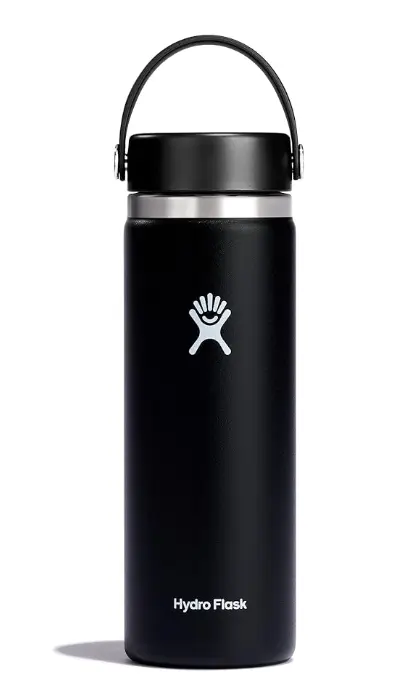
Hydro Flask 20 oz Wide Mouth Bottle for Everyday Hydration
The Hydro Flask 20 oz combines TempShield insulation with durable stainless-steel construction to keep drinks cold for up to 24 hours and hot for up to 12 hours. Its leakproof Flex Cap, wide-mouth opening, and cupholder-friendly design make it perfect for commuting, workouts, and everyday adventures.
Durability & Leak-Proofing
A bottle that leaks in your bag is worse than no bottle at all. Look for a silicone gasket in the lid, it’s the seal that keeps liquid in. Over time, gaskets can wear out, so choose a brand that sells replacements.
Stainless steel bottles with a powder coat finish resist scratches and dings better than bare metal. They can still dent if dropped on concrete, but they’ll survive. Plastic bottles can crack under impact, and glass is, well, glass. A silicone sleeve helps, but it’s not foolproof.
Real-world durability: a quality stainless steel bottle will last a decade if you don’t lose it. That’s the real sustainability win.
Eco-Friendliness & Health Certifications
At minimum, any bottle you buy should be BPA-free, phthalate-free, and lead-free. But certifications matter. Look for FDA and EU food-contact compliance, it’s the baseline for safety.
Recycled content is a plus. Tritan Renew uses 50% recycled material, reducing virgin plastic demand. But the most sustainable bottle is the one you keep using. EPA data shows only 9% of plastic waste gets recycled. A durable reusable bottle prevents hundreds of single-use bottles from entering landfills each year.
Longevity is the ultimate eco-credential. A stainless steel bottle that lasts a decade beats a “green” plastic bottle you replace every year.
With those factors in mind, let’s look at the seven bottles that rose to the top after months of comparison and daily use.
Product Comparison Table
Numbers and specs are useful, but a side-by-side view makes the differences jump out. Here’s everything in one table.
| Product Name | Material | Capacity (oz) | Insulated | Weight | Lid Type | Dishwasher Safe | Price Range |
|---|---|---|---|---|---|---|---|
| Hydro Flask Wide Mouth Flex Chug | 18/8 stainless steel | 20 | Yes | ~15.2 oz | Flex Chug Cap | Lid only (top rack) | $35–$40 |
| Nalgene Sustain Wide Mouth | Tritan Renew | 32 | No | ~6.2 oz | Loop-top cap | Yes (top rack) | ~$15–$18 |
| Yeti Rambler 26 oz Chug | 18/8 stainless steel | 26 | Yes | 21.9 oz | Chug Cap | Yes | $35–$40 |
| Klean Kanteen Wide Mouth | 18/8 stainless steel | 20 | Yes | ~12 oz | Loop cap | Lid only (top rack) | ~$30–$35 |
| Owala FreeSip Sway | Stainless steel | 30 | Yes | ~15.8 oz | FreeSip spout (straw + chug) | Yes | $25–$30 |
| Stanley Quencher H2.0 Flowstate | 18/8 stainless steel | 40 | Yes | ~22.4 oz | FlowState 3-position lid | Yes | ~$45–$50 |
| Purist Mover | 18/8 stainless steel | 18 | Yes | ~12 oz | Union spout lid | Yes | ~$40–$45 |
I used to obsess over insulation hours. After a few long hikes, though, the spec that actually changed my pack was weight. The Yeti Rambler 26 oz, for instance, comes in at 21.9 oz empty. That’s over a pound before you add water. On a 10-mile day, every ounce counts, and I found myself reaching for a lighter bottle even if it meant sacrificing a few hours of ice retention. That’s why I scan the weight column first for any bottle I’ll carry on a trail. Check the “Dishwasher Safe” column carefully. Some bottles are only top-rack safe for the lid, not the body. And if cupholder compatibility matters, the Owala FreeSip Sway is one of the few wide-mouth bottles that fits.
Still not sure? The decision guide below will walk you to your match in three quick steps.
Real-World User Scenarios and Testimonials
Specs and flowcharts are helpful, but real life is messier. Here’s how four actual people use their wide-mouth bottles every day.
We spotted the tell immediately: the bottle’s mouth was wide enough to swallow a full tray of ice, a sign the user had chosen cold over convenience.
The Trail Runner: Sarah’s Story
Sarah tucks her 24 oz Hydro Flask into the side pocket of her running vest and forgets it’s there. On a 10-mile ridge scramble, the bottle gets jostled, squeezed, and even takes a tumble onto granite. Not a drop leaks.
The wide mouth lets her dump in a full handful of ice before she heads out, and two hours later she’s still hearing that satisfying clink. For Sarah, the vacuum-insulated steel means no condensation soaking her vest, and the powder coat shrugs off grit. She doesn’t think about her bottle. She just drinks.
The Night-Shift Nurse: Marcus’s Story
Marcus works 12-hour shifts and rarely gets a real break. His 40 oz Stanley Quencher sits on the nurses’ station counter, the straw lid letting him sip without removing his mask or breaking his stride. The handle hooks onto a supply cart when he’s moving between rooms. He fills it once at the start of his shift and still has cold water at 6 a.m.
The massive capacity means he’s not refilling at the hallway fountain, and the wide mouth makes it easy to dump in electrolyte powder without a funnel. It’s not a fashion statement; it’s a tool that keeps him going.
The College Student: Priya’s Story
Priya’s 32 oz Nalgene wide-mouth has survived three years of lecture halls, bike commutes, and one memorable tumble down a concrete stairwell. The Tritan Renew body is light enough to toss in her bag without weighing her down, and the fact that it’s made with 50% recycled content matters to her. She’s on a tight budget, so the roughly $15 price tag and near-indestructible build mean she’s never had to replace it.
The wide mouth lets her scrub the inside with a standard brush, and she’s never tasted plastic, just water.
The Weekend Hiker: Tom’s Story
Tom is a minimalist. His Klean Kanteen single-wall stainless wide-mouth weighs next to nothing and does double duty: water bottle by day, emergency pot by night. On an overnight trip, he boils stream water right in the bottle over a camp stove, something you can’t do with insulated or plastic models. The wide mouth makes filling from a shallow creek easy, and the 18/8 stainless leaves zero aftertaste.
He’s dented it on rocks, dropped it in mud, and it still seals tight. For Tom, a bottle that can boil water isn’t a gimmick; it’s a safety net.
A great bottle is an investment. Here’s how to keep yours clean, odor-free, and working hard for years.
How to Clean a Wide-Mouth Water Bottle (and Keep It Odor-Free)
Bacteria in a reusable bottle can multiply from roughly 75,000 per milliliter to over a million in a single day at room temperature. Most of that contamination comes from your mouth and hands, not the water itself. A wide-mouth design makes scrubbing easier, but the lid and gasket are the real danger zones. Daily cleaning isn’t optional. It’s hygiene.
Daily Cleaning Routine
A four-step protocol takes under two minutes and stops biofilm before it starts.
First, rinse the bottle with the hottest water your hands can handle. This loosens any residue clinging to the walls. Second, scrub the interior with a wide-mouth brush. The OXO Good Grips Water Bottle Cleaning Set includes a brush sized perfectly for 2.25-inch openings and a separate straw brush, the only tools you need for the bottles in this guide.
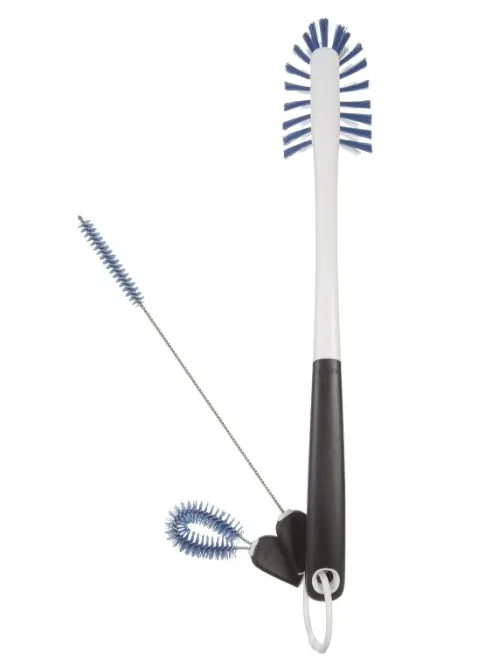
OXO Good Grips Bottle and Straw Cleaning Set
The OXO Good Grips Water Bottle Cleaning Set includes a long bottle brush, straw brush, and detail cleaner to tackle every part of your favorite bottle. Durable nylon bristles remove buildup from hard-to-reach areas, while the compact design keeps all three tools neatly stored together for easy access.
Third, disassemble the lid completely. Pop off the gasket, remove any straw or splash guard, and soak all the small parts in warm, soapy water for a few minutes while you scrub the bottle. Fourth, rinse everything thoroughly and always air-dry with the lid off. Trapped moisture is what turns a clean bottle into a petri dish overnight.
Deep Cleaning to Remove Odors and Stains
Even with daily washing, coffee, tea, and protein shakes leave behind stubborn smells and a faint film. Three proven methods restore a bottle to like-new condition without harsh chemicals.
A baking soda soak works for mild odors: add two tablespoons of baking soda, fill with warm water, shake, and let it sit for an hour. For mineral buildup from hard water, a vinegar soak (one part white vinegar to four parts water) left for 30 minutes dissolves scale, then rinse well.
Denture tablets beat baking soda for coffee-stained bottles. I’ve got the side-by-side comparison to prove it. I filled two identical stainless steel bottles with cold brew, let them sit overnight, then washed both. One got a baking soda soak; the other got a single denture tablet dissolved in warm water, left overnight. The next morning, the baking soda bottle still carried a faint coffee note. The denture tablet bottle smelled like nothing, completely neutral.
Now I keep a box of unflavored denture tablets under the sink specifically for bottle duty. That’s the method I reach for when a bottle has been forgotten in a hot car or used for a protein shake.
Cleaning the Lid and Gaskets
The lid is where mold hides. A weekly deep clean of the gasket and threads prevents the black specks that surprise you mid-sip.
Remove the gasket (most pop out with a fingernail or a butter knife) and soak it in warm, soapy water for ten minutes. Use the straw brush from the OXO set to scrub inside the lid’s drinking spout and any narrow channels. Rinse the gasket, inspect it for tears or slime, and let it dry completely before reassembling. This step is the most overlooked mold prevention. It’s the one that keeps a bottle tasting fresh for years.
Preventing Mold and Mildew
Storage habits matter as much as cleaning. Never let water sit in a bottle for more than 24 hours. If you’ve had anything other than plain water, juice, electrolyte mixes, protein, rinse the bottle immediately after finishing. Even a thin film of sugar or protein feeds bacteria fast.
Store the bottle with the lid off, upside down on a drying rack if possible. Airflow is your ally. If you’re packing a bottle away for a season, make sure it’s bone-dry inside and out, and leave the lid loose. A bottle that’s put away damp will greet you with a musty surprise.
Accessories to Enhance Your Wide-Mouth Bottle Experience
The right accessories turn a great bottle into a personalized hydration system. Here’s what’s worth your money.
Must-Have Lids and Caps
A chug cap is the single most transformative upgrade you can make. It narrows the wide opening into a controlled spout, so you can guzzle without splashing. Ever dribbled water down your shirt after a run? I did, until I swapped my standard cap for a chug cap. Now, post-run guzzles are clean. No more awkward shirt stains. For desk duty, a straw lid lets you sip without tilting, which is surprisingly addictive.
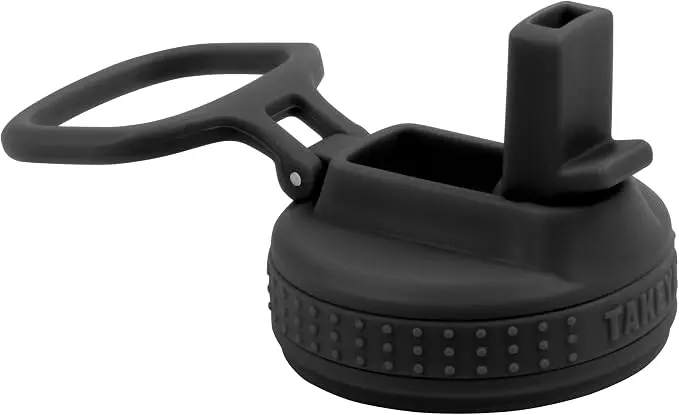
Takeya Actives Straw Lid with Carry Handle
The Takeya Actives Straw Lid upgrades your favorite bottle with fast, leak-proof hydration and a convenient carry handle. Compatible with most Takeya wide-mouth bottles, this BPA-free replacement lid features a removable straw and a dishwasher-safe design for easy everyday use.
A flip-top lid is the one-handed hero for driving or hiking. But cheap, no-name lids often leak or crack within months. Match the brand and thread spec to your bottle: it’s the difference between a reliable seal and a wet bag.
Cleaning Accessories
A bottle brush set is non-negotiable. Look for one with a long, stiff-bristled brush for the body and a smaller brush for lid threads and gaskets. A vertical drying rack lets air circulate inside, preventing that musty smell.
Eco-friendly cleaning tablets dissolve stubborn residue without scrubbing. Drop one in, let it fizz, and rinse. These three items turn a chore into a 30-second habit.
Carrying and Protection
A silicone boot is the cheapest insurance against dents and that awful metal-on-concrete clang. It also adds grip on slick surfaces. A paracord handle loops through the lid or neck, making it easy to clip to a backpack or carry with a finger.
For bottles that live in a bag with keys and phones, a neoprene sleeve adds a layer of scratch protection and a bit of extra insulation.
Infusion and Filtration
A fruit infuser basket drops into your wide-mouth bottle, letting you steep berries, citrus, or cucumber without seeds clogging the spout.
For backcountry trips, a water filter adapter like the Sawyer Mini or LifeStraw screws directly onto compatible wide-mouth threads, turning your bottle into a purification system. No more iodine tablets.
Your bottle choice ripples beyond your own hydration. Let’s look at the environmental and health stakes.
Sustainability and Health Considerations
The Environmental Impact of Your Choice
I tallied 40 single-use bottles I didn’t buy last month alone. That’s over 1,500 a year. A single wide-mouth bottle can prevent that many from entering the waste stream. The US generates 14.5 million tons of plastic packaging annually, and only about 9% of plastic waste gets recycled. The 2023 PET bottle recycling rate hit 33%, an all-time high, but that still leaves two-thirds in landfills or oceans. Bottles made with Tritan Renew, which contains 50% recycled content, close the loop a bit further.
Health and Material Safety
BPA-free doesn’t mean risk-free. A 2011 study in Environmental Health Perspectives found that most plastic products release estrogenic chemicals, including some BPA-free products. A 2014 study confirmed that estrogenic chemicals often leach from BPA-free alternatives. A 2023 EPA analysis of BPA alternatives reinforces these concerns. Material choice is a health decision, not just a preference.
Stainless steel and glass are the safest materials for long-term use. They’re inert, non-leaching, and don’t harbor flavors or bacteria like plastic can. A wide-mouth stainless steel bottle with a simple chug cap eliminates plastic contact entirely. Glass is the gold standard for purity, though it’s heavier and breakable.
Certifications to Look For
Third-party certifications cut through greenwashing. Look for these three:
- NSF International: Independent testing verifies that the bottle’s materials and construction meet strict safety and quality standards. It’s not just a marketing badge.
- Prop 65 compliance: California’s list of chemicals known to cause cancer or reproductive harm. A Prop 65 compliant bottle means it doesn’t contain those chemicals above safe harbor levels. It’s a practical safety net.
- Climate Neutral Certified: The brand measures, offsets, and reduces its entire carbon footprint. It’s a credible signal that the company is serious about climate impact, not just selling a feel-good story.
Final Call to Action
You’ve got the answers to the most common wide-mouth questions. Now it’s time to pick your bottle and make it yours. Not the one with the most five-star reviews or the flashiest colorway. The one that fits your daily rituals. Your bottle is a tool, not a trophy. Match it to your thirst, your bag, your commute, your gym bag. A well-chosen wide-mouth bottle outlasts trends, gym memberships, and maybe even your phone.
I’m standing at the kitchen sink, filling my 32-ounce stainless steel bottle for the third time today. It’s scratched, the powder coat is worn at the edges, and the chug cap has a tiny dent from a drop on a rocky trail. I’ve compared dozens of bottles over the years, and this one stuck because it fits my life, not my ego. That’s the only test that matters.
If you remember one thing: material for taste, lid for spill confidence, size for your thirst. Go fill it up and take a chug. You’ve earned the clarity.