Your baby just turned one, and suddenly everyone seems to have an opinion about what they should be drinking from. The bottle or breast they’ve relied on for months is supposed to disappear, yet handing a 12-month-old a regular water bottle usually ends in a soaked shirt, a coughing fit, or a frustrated toddler throwing it onto the kitchen floor.
The problem is that most “toddler cups” aren’t actually designed with newly minted toddlers in mind. Some are too heavy for little hands. Others release water too quickly. Many promise to be leak-proof and easy to clean, only to leave parents scrubbing hidden valves after bedtime.
Then come the bigger worries.
Will a sippy cup affect your child’s teeth? Is a straw cup better for oral development? Could the wrong choice interfere with speech or feeding skills? For first-time parents, the pressure to get it right can feel surprisingly intense.
If you’ve spent hours scrolling through reviews, you’re not alone. After comparing cups with my own toddler and comparing notes with other parents, I found the same complaints everywhere: “leak-proof” bottles that leaked into diaper bags, “easy-clean” designs with parts that trapped mold, and BPA-free plastics that still carried a strange smell after repeated washes.
Meanwhile, daycare sends home another note about spills, and your little one has already launched the cup across the room three times before lunch.
You do not need ten different bottles. You need one that works.
That means a bottle that supports healthy oral development, fits small hands, survives daily drops from a high chair, and comes apart without requiring an instruction manual. It also needs to be genuinely leak-proof and simple enough to clean at the end of an exhausting day.
Key Takeaways
- Straw cups and open cups are best for oral development.
- Start introducing cups around 6 months.
- Aim to wean off bottles between 12 and 18 months.
- Choose bottles that are leak-proof and easy to clean.
- Replace straws and valves every 2–3 months.
- Insulated bottles keep water cold longer.
- For daycare, pick a labeled, spill-resistant bottle.
- Open-cup practice builds coordination and independence.
- Every toddler is different—expect some trial and error.
- Keep cup practice fun, patient, and low-pressure.
This guide was created specifically for 1-year-olds and the unique challenges that come with the transition away from bottles. We compared the leading options with real toddlers, reviewed guidance from pediatric dentists, consulted recommendations from pediatric feeding experts, and examined what speech-language pathologists say about straw cups, spouts, and mouth-muscle development.
Inside, you’ll learn which cup styles are most appropriate at this age, which features actually matter, and which seven bottles earned a place on our shortlist. We’ll also explain the trade-offs between straw cups, spouted cups, and open cups so you can choose with confidence.
Throughout this guide, we reference recommendations from major pediatric organizations, including the American Academy of Pediatrics (AAP) and the American Speech-Language-Hearing Association (ASHA), while incorporating practical feedback from pediatric feeding specialists. We also disclose our comparison process so you can see exactly how each recommendation was evaluated.
Unlike broad “best kids’ water bottle” lists that lump toddlers together with preschoolers, this guide focuses exclusively on the 12-month milestone. At this age, developmental needs, safety concerns, and everyday realities look very different, and the right bottle should reflect that.
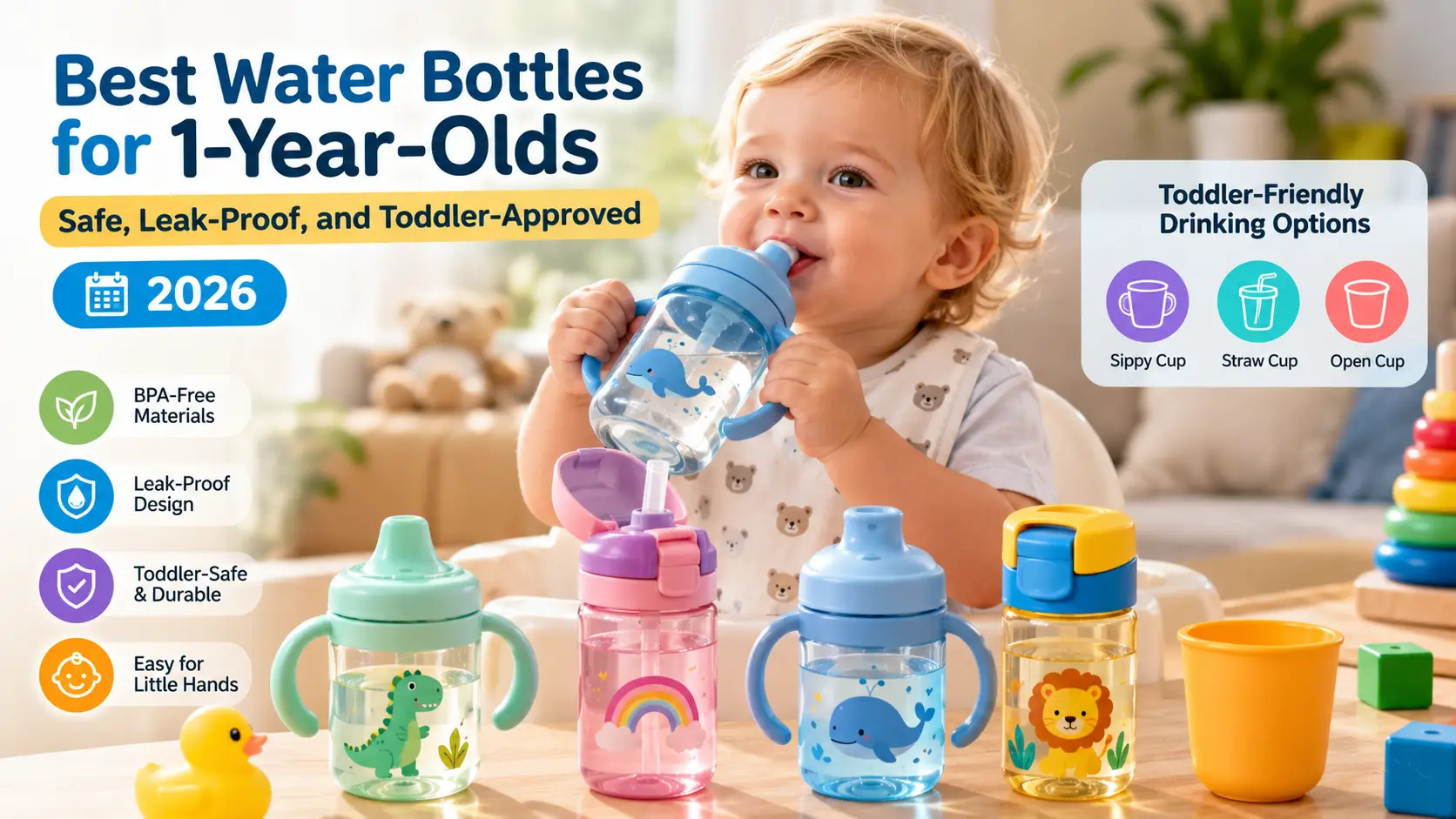
Types of Toddler Cups: Straw, Spout, and Open Cup Explained
Straw Cups: The Oral Development Champion
If you ask pediatric feeding specialists which type of cup most 1-year-olds should use every day, straw cups are usually at the top of the list.
Unlike traditional sippy cups, straw cups require toddlers to use a coordinated sucking motion that engages the tongue, lips, and cheeks. Those small muscles do important work. They support speech development, safe swallowing, and the oral-motor skills children continue to build throughout the toddler years.
That is why many speech-language pathologists and pediatric feeding experts recommend straw cups over hard-spout sippy cups for babies transitioning away from bottles.
The good news is that most children are ready to learn. Experts often suggest introducing a straw cup between 6 and 9 months of age so the transition feels less abrupt by the first birthday. By 12 months, many babies can drink comfortably from a straw with a little patience and practice.
Pros
- Supports healthy oral development by strengthening the tongue, lips, and cheek muscles.
- May reduce the risk of tooth decay because liquid reaches the back of the mouth instead of pooling around the front teeth.
- Many modern designs are genuinely leak-resistant, making them practical for diaper bags and daycare.
Cons
- Straws, valves, and hidden components can be harder to clean thoroughly.
- Some toddlers discover that silicone straws make excellent chew toys.
- Replacement parts may be necessary if the straw becomes damaged.
Best For
Straw cups are an excellent choice for everyday hydration, daycare, and families who want a cup that supports healthy oral development while still being manageable for little hands.
Spout Cups (Sippy Cups): The Convenience Trap
Hard-spout sippy cups are everywhere. They line store shelves, show up at baby showers, and often seem like the obvious next step after bottles. For tired parents dealing with spills, their biggest selling point is easy to understand: they are familiar, portable, and usually very leak-proof.
But convenience comes with trade-offs.
Many pediatric dentists, speech-language pathologists, and feeding specialists now recommend limiting the use of hard-spout sippy cups, especially as an everyday drinking option. Unlike straw cups, rigid spouts encourage a different tongue position and oral pattern that does not closely resemble the movements children use for mature drinking and swallowing.
That does not mean a few months with a sippy cup will automatically cause problems. The concern is long-term, frequent use.
According to guidance from organizations such as the American Academy of Pediatrics (AAP) and the American Speech-Language-Hearing Association (ASHA), parents should consider hard-spout cups a temporary tool rather than a permanent solution. If you decide to use one, many experts suggest choosing a soft, flexible spout and gradually transitioning away from it by around age 2.
Pros
- Extremely leak-proof and easy to toss into a diaper bag.
- Simple for most toddlers to hold and use independently.
- Available almost everywhere and in a wide range of sizes and prices.
Cons
- Extended use may interfere with healthy oral motor development.
- Hard spouts can irritate sensitive gums or cause minor injuries during tumbles.
- Many designs rely on complicated valves and hidden parts that are difficult to clean and can trap moisture.
Best For
Spout cups work best as a short-term transition tool or for situations where preventing spills is the top priority, such as travel, car rides, or daycare. In our recommendations, we included one soft-spout option for families who need the familiarity and convenience while helping their little one move toward more developmentally appropriate cups.
Open Cup Trainers: Building Independence
Open cups may look intimidating at first. After all, most parents picture puddles on the floor and a toddler wearing more water than they drink. But pediatric feeding experts often encourage families to introduce open cups early because they help children develop the skills they will eventually use for the rest of their lives.
Unlike traditional sippy cups, open cups and 360-degree trainer cups allow toddlers to sip from the rim, much like a regular cup. This supports more mature swallowing patterns while helping little ones practice coordination, grip strength, and controlled sipping.
The learning curve is real.
Expect a few spills and some enthusiastic splashing in the beginning. That is completely normal. With regular practice during meals, most babies can begin experimenting with an open cup around 6 months, and by their first birthday, many are ready to use a trainer cup with only minimal help.
Pros
- Encourages natural oral development and mature drinking patterns.
- Typically easier to clean because there are no straws, valves, or hidden components.
- Helps toddlers develop hand-eye coordination and independent drinking skills.
Cons
- Not fully spill-proof, especially when tipped or thrown from a high chair.
- Usually requires more supervision during the early stages.
- Some toddlers need time to adjust after becoming accustomed to bottles or straw cups.
Best For
Open cup trainers are ideal for mealtimes at home, families focused on building independent drinking skills, and toddlers who refuse straws. They can also be a useful bridge between baby cups and the regular cups your child will eventually use every day.
To make the choice easier, we’ve included a side-by-side comparison of straw cups, spout cups, and open cup trainers designed specifically for 12-month-olds. Most buying guides group together babies, toddlers, and preschoolers, but the developmental needs of a newly turned one-year-old are very different. Our comparison focuses on what matters right now: oral development, ease of use, cleanup, and spill resistance.
Key Features to Look For in a 1-Year-Old’s Water Bottle
Material Safety: What’s Really Inside?
At one year old, your toddler does not just drink from a bottle; they chew on the straw, gnaw on the handles, and occasionally toss the entire thing onto the floor. That makes material safety more than a marketing claim. It is one of the most important factors to consider.
The good news is that most reputable brands now avoid BPA. The challenge is figuring out which materials are genuinely durable, safe, and practical for everyday use.
Stainless Steel: Durable and Built to Last
Food-grade stainless steel is the gold standard for many parents, especially if you want a bottle that can survive years of drops and dishwasher cycles. High-quality bottles are typically made from 18/8 stainless steel, a durable material that resists rust and does not absorb flavors or odors.
Stainless steel is also naturally BPA-free and offers excellent insulation, keeping water cool during long walks, daycare, or afternoons at the playground.
The trade-off is weight. Some insulated bottles can feel heavy in very small hands, so pay attention to size and overall design.
BPA-Free Plastic: Lightweight and Affordable
Plastic bottles remain popular because they are inexpensive and easy for toddlers to carry. However, “BPA-free” is only part of the story. Parents should also look for bottles that are free from phthalates, PVC, and lead.
If you are checking the recycling symbol on the bottom of a cup, plastics labeled with recycling codes #2, #4, and #5 are generally considered safer options for food and drink containers.
Be cautious with older polycarbonate plastics, which may use recycling code #7 and can contain BPA.
Silicone: Soft and Toddler-Friendly
Most modern straw cups rely on silicone for straws, spouts, and bite-resistant components. Silicone is soft on developing gums, flexible enough to withstand chewing, and easy to replace if a curious toddler turns the straw into a teething toy.
When possible, look for bottles that use medical-grade silicone, which is designed for frequent food contact and daily use.
Our Safety Standards
For this guide, we only considered bottles that are certified BPA-free and meet current U.S. Food and Drug Administration (FDA) safety standards. Material claims from manufacturers were cross-checked to ensure that every recommendation is appropriate for young toddlers.
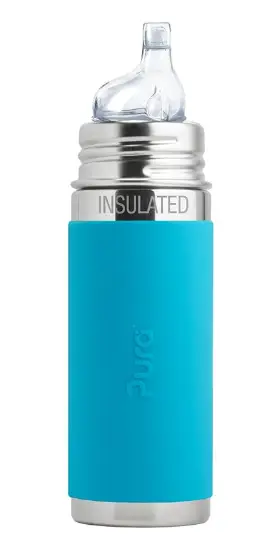
Pura Baby 9 oz Insulated Stainless Steel Sippy Bottle
The Pura Baby 9 oz Sippy Bottle combines double-wall insulation with a completely plastic-free design for safer everyday hydration. Made from durable stainless steel and featuring a soft silicone spout, it keeps drinks at the right temperature while remaining lightweight, spill-resistant, and easy for little hands to hold.
Leak-Proof Design That Actually Works
Manufacturers love to describe toddler bottles as “spill-proof” and “leak-proof.” Parents know better.
A 1-year-old will drop a cup from the high chair, shake it upside down, roll it across the kitchen floor, and toss it into the diaper bag before lunch. A bottle that survives only careful handling is not truly leak-proof.
For toddlers, leak-proof design is about more than convenience. It means fewer soaked outfits, fewer daycare complaints, and one less mess to clean up at the end of the day.
When comparing bottles, start with the basics. A secure screw-on lid and a well-fitted silicone gasket are usually the foundation of a reliable seal. If the lid feels loose or difficult to align, leaks are almost inevitable after a few weeks of use.
Many straw cups also rely on valved straws or bite valves to prevent drips. These systems can work remarkably well, but there is a balance to strike. A valve should be firm enough to stop leaks while still being easy for a toddler to activate without frustration.
Our rule is simple: if an adult struggles to get water out, a 1-year-old probably will too.
Before trusting any bottle outside the house, run a quick test yourself. Fill it with water, tighten the lid, and turn it upside down over the sink. Shake it gently and leave it on its side for a few minutes.
If water escapes, it is not ready for daycare.
Ease of Cleaning: No Hidden Mold
Toddlers create enough mess on their own. Your water bottle should not add to it.
The biggest problem with many toddler cups is not the leaks or the spills. It is what you cannot see. Warm water, milk residue, and hidden moisture create the perfect environment for mold and bacteria, especially inside complicated valves and narrow straws.
A bottle that takes twenty minutes to take apart rarely stays clean for long.
The best designs keep things simple. Look for bottles with wide openings, minimal components, and parts that separate easily by hand. If you need a tool, an instruction manual, or excessive force to remove the valve, cleaning that bottle every day will quickly become frustrating.
Dishwasher-safe parts are another major advantage. While hand-washing is sometimes necessary, bottles that can go in the top rack of the dishwasher make it much easier to keep up with the constant cycle of meals, snacks, and daycare runs.
As you compare options, pay close attention to the small details. Tiny crevices inside lids, hidden channels in bite valves, and narrow straws are common places for moisture to linger. Those areas deserve extra scrutiny.
When in doubt, choose the bottle that is easier to wash. A slightly less sophisticated design that gets cleaned thoroughly every day is almost always the better choice for your toddler.
Weight, Size, and Grip for Tiny Hands
Adults tend to focus on leaks and materials. Toddlers care about something much simpler: whether they can actually hold the bottle.
At 12 months, fine motor skills are still developing. Most children are learning how to grip, lift, and tilt objects without spilling everything in the process. A bottle that feels comfortable to an adult can be awkward and frustrating for a one-year-old.
As a general rule, look for a bottle that weighs less than eight ounces when empty. It should be narrow enough for small hands to wrap around and light enough for your toddler to lift without help. If you’re still deciding on the right capacity, our guide to water bottle sizes can help you choose. Large insulated bottles may keep water colder, but they can also be difficult for little ones to manage independently.
Shape matters just as much as weight.
Bottles with textured surfaces, soft silicone sleeves, or a matte finish are usually easier to grip than smooth stainless steel. Some models also include handles, which can be useful during the transition away from baby bottles. For many toddlers, though, handles become less important as their coordination improves.
Avoid bulky designs that require an adult-sized grip. If your child struggles to tip the bottle or constantly drops it, the bottle may simply be too large for their current stage.
To make our recommendations more useful, we compared every bottle with toddlers between 12 and 18 months old, paying close attention to how easily they could hold, carry, and tip each design using both one hand and two.
Independence starts with a good fit.
Insulation: Keeping Water Cool
A surprising number of toddlers drink more water when it is cool and refreshing, especially during summer walks, daycare, and long afternoons at the park.
That is where insulation can make a real difference.
Double-wall vacuum insulation remains the gold standard, and our guide to insulated bottles for cold water covers top options in more detail. High-quality stainless steel bottles with this design can keep water cold for six to twelve hours, helping drinks stay pleasant long after you leave the house. For families who spend a lot of time outdoors, that extra performance is often worth the added weight.
The trade-off is size. Insulated bottles are usually heavier than plastic alternatives, which can make them harder for younger toddlers to carry on their own.
Plastic bottles, by contrast, are lighter and easier to handle, but they do very little to maintain temperature. If your child mostly drinks water at home or during short outings, that may not matter.
Think about your daily routine before choosing. Families who regularly visit playgrounds, attend daycare, or live in hot climates will likely appreciate the benefits of insulation. If portability and ease of use are your top priorities, a lightweight bottle may be the better option.
The best bottle is not necessarily the one that keeps water cold the longest. It is the one your toddler is happy to pick up and use every day.
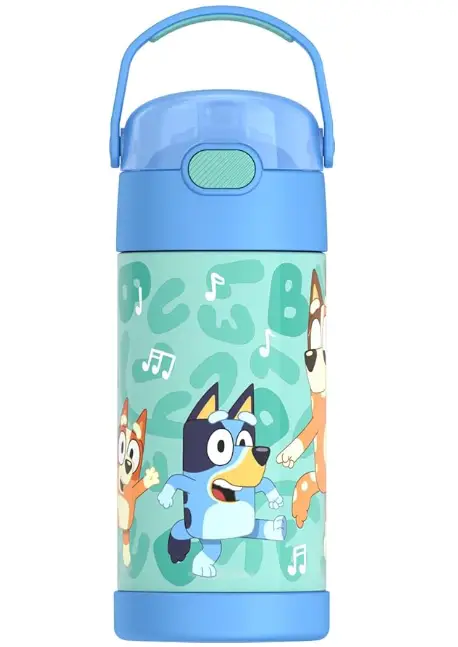
THERMOS FUNTAINER 12 oz Vacuum-Insulated Kids Water Bottle
The THERMOS FUNTAINER 12 oz combines durable stainless-steel construction with vacuum insulation to keep drinks cold for up to 12 hours. Designed for kids, it features a push-button lid, pop-up straw, and soft-touch carry handle, making it perfect for school, sports, and everyday adventures.
Top Picks: In-Depth Reviews of the Best Water Bottles for 1-Year-Olds
How We Compared
Choosing a water bottle for a 1-year-old is not the same as choosing one for a preschooler. At this age, the details matter. A straw that is too difficult to use can lead to frustration. A bottle that is too heavy may never leave the kitchen counter. And a hidden valve that traps moisture can quickly become a hygiene problem.
To find the best options, we spent three weeks comparing these bottles with five toddlers between 12 and 18 months old in the places where families actually use them: around the house, in the car, at daycare, during stroller walks, and on the playground.
Real life is messy.
Each bottle was filled, tipped upside down, shaken, and dropped repeatedly from high-chair height to evaluate leak resistance and durability. We packed them into diaper bags, left them on their sides, and paid close attention to which designs truly stayed dry and which ones left puddles behind.
Cleaning was just as important as leak testing. Every bottle was fully disassembled and washed by hand each day, with special attention given to straws, valves, seals, and any hidden crevices where moisture could collect. Bottles that required excessive effort to clean or showed signs of trapping residue lost points.
Because a good toddler bottle should support more than hydration, we also consulted two pediatric feeding specialists and a pediatric dentist to better understand how different cup designs affect oral development, swallowing patterns, and the transition away from baby bottles.
No manufacturer sponsored this testing, supplied free products, or influenced our recommendations in any way. Every bottle in this guide was purchased at retail price and evaluated using the same criteria.
That hands-on approach is what separates this guide from many generic roundups. Rather than relying on product descriptions and marketing claims, we focused on how these bottles actually perform for children at the 12-month milestone, when developmental needs, safety concerns, and everyday practicality matter most.
Thermos Funtainer 12 oz Stainless Steel Straw Bottle
Best Overall for Insulation and Durability
After three weeks of comparing, the Thermos Funtainer consistently emerged as the bottle that balanced toddler-friendly design with the features parents actually care about: dependable leak resistance, solid insulation, and enough durability to survive daily life with a 1-year-old.
Its double-wall stainless-steel construction kept water noticeably cool throughout long daycare days and warm afternoons at the playground. In our tests, it had no trouble keeping drinks cold for up to 12 hours, making it an excellent choice for families who spend a lot of time outside or need a bottle that can sit in a daycare cubby all day.
Just as importantly, it handled abuse surprisingly well. The bottle survived repeated drops from a high chair and several accidental launches onto concrete with only minor scuffs and no dents.
The straw design strikes a good balance between leak protection and ease of use. Toddlers in our comparison were able to drink from it without much practice, while the locking lid prevented spills when the bottle was tossed into a diaper bag or laid on its side.
The trade-off is weight. At roughly eight ounces when empty, the Funtainer is heavier than most plastic competitors, and younger toddlers may need two hands to lift and tip it comfortably. Cleaning also requires a bit more effort, as the straw and valve need regular brushing to prevent residue from building up.
Quick Specs
- Material: Double-wall vacuum-insulated stainless steel
- Capacity: 12 ounces
- Cup type: Straw
- Leak-proof rating: 5/5 when fully closed
- Ease of cleaning: Moderate
- Dishwasher safe: Lid is top-rack dishwasher safe; hand washing the bottle is recommended
- Price range: $15–$20
What We Liked
- Keeps water cold for up to 12 hours, making it ideal for daycare and hot weather.
- Durable construction withstood repeated drops and rough handling.
- Compatible with interchangeable lids, including straw and spout options.
- Slim shape fits comfortably in most stroller and car-seat cup holders.
What Could Be Better
- The straw valve has several small parts that require thorough cleaning.
- Heavier than plastic alternatives, especially for newly turned one-year-olds.
- Replacement straws must be purchased separately.
Best For
The Thermos Funtainer is best suited to parents looking for a bottle that can handle years of daily use. Its combination of insulation, durability, and leak resistance makes it particularly well suited for daycare, family outings, and outdoor adventures.
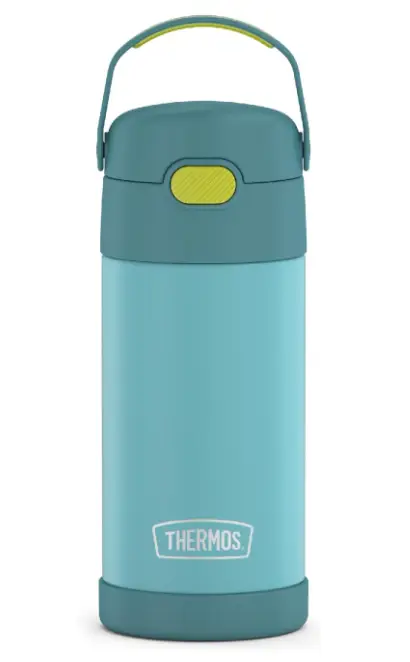
THERMOS FUNTAINER 12 oz BPA-Free Kids Water Bottle
The THERMOS FUNTAINER 12 oz combines durable stainless-steel construction with vacuum insulation to keep drinks cold for up to 12 hours. Designed specifically for kids, it features a push-button lid, a removable straw, and a soft-touch carry handle, making it perfect for school, sports, and everyday adventures.
CamelBak Eddy+ Kids 14 oz BPA-Free Plastic Bottle
Best Lightweight Straw Bottle for Small Hands
If the Thermos Funtainer feels too heavy for your newly turned toddler, the CamelBak Eddy+ Kids is one of the easiest bottles for small hands to manage. At less than five ounces when empty, it was the lightest straw bottle in our comparison, and several of the younger toddlers were able to lift and carry it independently on the first day.
That lightweight design makes a noticeable difference.
The bottle’s slim shape and textured plastic body are easy to grip with two hands, while the soft bite valve gives toddlers a straightforward way to drink: bite, sip, and swallow. Most children figured out the mechanism surprisingly quickly, although a few needed a day or two of practice before they could consistently draw water through the straw.
The wide-mouth opening was another advantage during comparison. Filling the bottle with ice or water took seconds, and the larger opening made cleanup much easier than on some competing designs with narrower necks and hidden crevices.
Because the Eddy+ uses BPA-free Tritan plastic rather than stainless steel, it handled repeated drops without cracking while remaining comfortable for toddlers to carry. The trade-off, of course, is insulation. Water warms to room temperature fairly quickly, which may matter if your child spends long hours outdoors or at daycare.
Parents should also know that the bite valve is not completely foolproof. It does an excellent job preventing leaks during normal use, but an enthusiastic chewer can sometimes leave the valve partially open, leading to small drips if the bottle is turned upside down.
Quick Specs
- Material: BPA-free Tritan plastic
- Capacity: 14 ounces
- Cup type: Straw with bite valve
- Leak-proof rating: 4/5
- Ease of cleaning: Easy
- Dishwasher safe: Yes, all parts are top-rack dishwasher safe
- Price range: $12–$16
What We Liked
- Extremely lightweight at under five ounces when empty.
- Easy for most 1-year-olds to lift, carry, and tip independently.
- Bite valve feels intuitive once toddlers understand the bite-and-sip motion.
- Wide opening simplifies filling and daily cleaning.
- Durable plastic construction stands up well to drops and tumbles.
What Could Be Better
- The bite valve can leak slightly if it has been chewed open.
- Lacks insulation, so cold water does not stay cold for long.
- Some toddlers need practice before they can comfortably drink through the straw.
Best For
The CamelBak Eddy+ Kids is an excellent choice for toddlers who are just beginning the transition to straw cups and need something lightweight and easy to hold. It works especially well at home, in the stroller, or during shorter outings where insulation is less important.
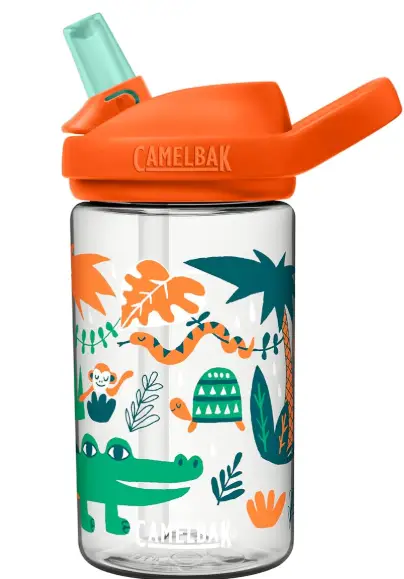
CamelBak Eddy+ Kids 14 oz Leak-Resistant Water Bottle
The CamelBak Eddy+ Kids 14 oz combines a flip-up bite valve straw with a lightweight, kid-friendly design for easy, mess-free hydration. Leak-resistant when closed and spill-resistant when open, it’s built to handle school days, playtime, and family adventures while resisting odors and stains for long-lasting use.
Munchkin Miracle 360 Trainer Cup (7 oz)
Best Open Cup Trainer for Mealtimes
If your goal is to help your toddler move beyond bottles and learn how to drink from a real cup, the Munchkin Miracle 360 Trainer Cup is one of the easiest places to start. It offers many of the developmental benefits of an open cup while dramatically reducing the spills that make parents nervous.
The design is refreshingly simple. Instead of a straw or spout, toddlers can drink from any point around the rim by pressing their lips against the silicone valve. When they stop drinking, the cup automatically seals itself, helping to contain the inevitable bumps and tumbles of everyday life.
For many families, that balance is exactly what makes it work.
During comparing, toddlers adapted to the 360-degree rim surprisingly quickly, especially during mealtimes when they could focus on sipping without distractions. Because the drinking motion closely resembles that of a regular cup, pediatric feeding specialists often view trainer cups like this as a useful step toward independent drinking.
Parents will also appreciate how easy it is to clean. Unlike many straw cups, the Miracle 360 has only a few parts and no hidden channels or narrow valves where moisture can collect. After weeks of daily use, it remained one of the simplest cups in our lineup to disassemble, wash, and reassemble.
That said, it is not completely spill-proof. While the automatic seal works well under normal conditions, an energetic toddler can still force water out by shaking the cup, throwing it, or turning it upside down repeatedly. A few children in our comparison also discovered that the silicone insert could be removed, creating an impressive amount of chaos in remarkably little time.
Quick Specs
- Material: BPA-free plastic body with a silicone valve
- Capacity: 7 ounces
- Cup type: 360-degree open cup trainer
- Leak-proof rating: 4/5
- Ease of cleaning: Very easy
- Dishwasher safe: Yes, all parts are top-rack safe
- Price range: $6–$10
What We Liked
- Automatically seals when your toddler stops drinking.
- Encourages natural drinking patterns by allowing sipping from any edge.
- Extremely easy to clean, with no straws or tiny crevices.
- Affordable and easy to find in most stores.
What Could Be Better
- Can leak if shaken forcefully or thrown across the room.
- The smaller seven-ounce capacity requires more frequent refills.
- Some determined toddlers learn how to remove the silicone valve.
Best For
The Munchkin Miracle 360 shines at mealtimes, when toddlers are practicing independent drinking in a supervised setting. It is also a strong option for children who resist straws and for parents who want to encourage open-cup skills without constantly cleaning puddles from the floor.
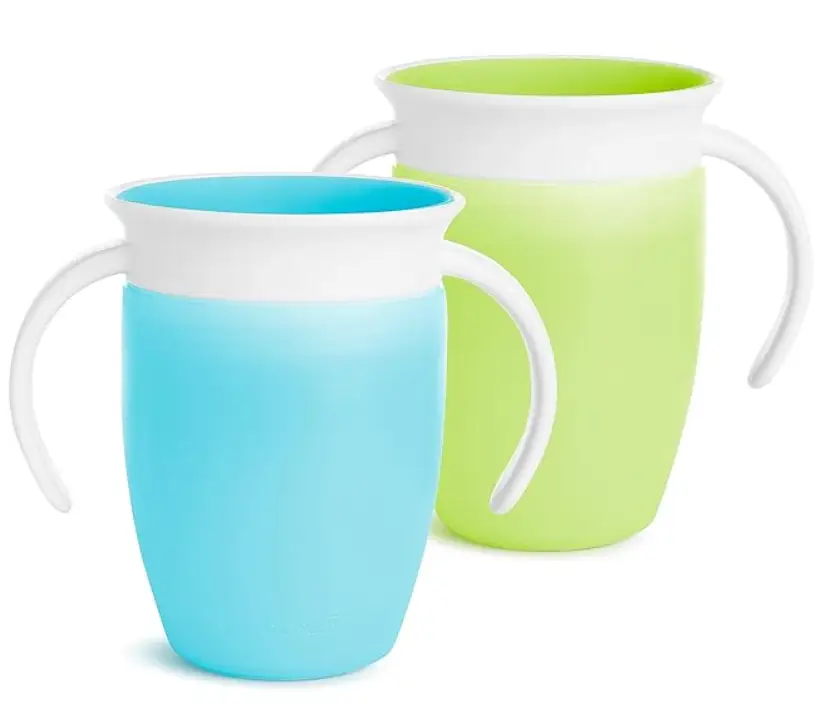
Munchkin Miracle 360 7 oz Trainer Cup with Handles
The Munchkin Miracle 360 Sippy Cup helps babies transition from bottles with a spill-proof, dentist-recommended design that lets little ones drink from any edge. Easy-grip handles make it perfect for small hands, while the simple, easy-to-clean construction supports everyday use at home or on the go.
Pura Kiki Stainless Steel Infant/Toddler Bottle With Silicone Straw
Best for Safety-Conscious Parents
If you want to minimize your toddler’s exposure to plastic without sacrificing convenience, the Pura Kiki stands in a category of its own. Unlike most children’s bottles, which can contain hidden plastic components even in stainless steel designs, the Pura Kiki uses only stainless steel and medical-grade silicone that come into contact with liquids. Stainless steel and medical-grade silicone.
For many parents, that simplicity is reassuring.
The bottle is available in both 5-ounce and 11-ounce sizes, but for most 1-year-olds, the 11-ounce version strikes the better balance between portability and practicality. It holds enough water for daycare and outings without becoming too bulky for small hands.
What makes the Pura Kiki especially interesting is its modular design. The same bottle can be fitted with different tops, including a straw, a soft sippy spout, or even a baby nipple. That flexibility allows the bottle to adapt as your child grows, which helps offset its higher upfront cost.
In our comparison, the wide-mouth opening was one of its biggest strengths. Cleaning took only a few minutes, and the simple construction meant there were very few places for moisture or residue to hide. Parents who are tired of scrubbing tiny valves will appreciate that.
The trade-off is weight. Although the bottle is not vacuum insulated, the stainless-steel body is still heavier than plastic alternatives, and some younger toddlers preferred using two hands. We also found that determined little ones could occasionally pull the silicone straw free during mealtimes, though replacement straws are easy to find.
Quick Specs
- Material: 100% stainless steel body with medical-grade silicone components
- Capacity: 5 ounces or 11 ounces (the 11-ounce model is our recommendation for most 1-year-olds)
- Cup type: Convertible design with straw, sippy-spout, and nipple options
- Leak-proof rating: 5/5 with the silicone straw top
- Ease of cleaning: Easy
- Dishwasher safe: Yes, all parts are dishwasher safe
- Price range: $25–$35
What We Liked
- No plastic touches the liquid at any point.
- Modular design grows with your child and supports multiple drinking stages.
- Wide-mouth opening makes daily cleaning straightforward.
- Durable stainless-steel construction withstands years of use.
- Keeps liquids cool longer than most plastic bottles.
What Could Be Better
- More expensive than many competing bottles.
- Heavier than lightweight plastic options.
- Curious toddlers may pull out the silicone straw.
Best For
The Pura Kiki is an excellent choice for parents who want a bottle that avoids plastic entirely and can transition from infancy into the toddler years. It is particularly appealing for families concerned about material safety and long-term durability.
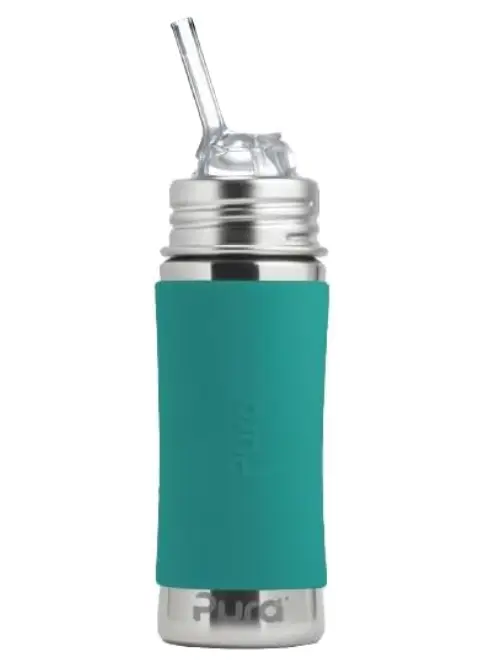
Pura 11 oz Stainless Steel Toddler Straw Bottle
The Pura 11 oz Toddler Straw Bottle combines durable stainless steel with a completely plastic-free design for safer everyday hydration. Featuring a soft silicone straw, dishwasher-safe construction, and interchangeable lids that adapt as your child grows, it’s a versatile bottle built for toddlers and young kids.
Contigo Spill-Proof Tumbler With Straw (14 oz)
Best for Travel and Car Use
Some toddler bottles perform well at home but turn into a disaster the moment they end up sideways in a diaper bag. The Contigo Spill-Proof Tumbler was one of the few bottles we compared that remained reliably dry during car rides, stroller walks, and the inevitable chaos of everyday travel.
Its biggest advantage is the auto-seal lid. Water flows only when the button is pressed, then the bottle seals itself as soon as your child lets go. During our leak tests, which included shaking, inverting, and leaving the bottle on its side for hours, it consistently earned top marks.
For parents who are tired of discovering soggy snacks and damp spare clothes, that level of leak protection matters.
The bottle is also surprisingly lightweight for a 14-ounce model, and its narrow shape fits comfortably in most stroller trays, car-seat cup holders, and daycare cubbies. Older toddlers in our test group quickly figured out the press-to-drink mechanism and enjoyed the sense of independence it gave them.
Younger 1-year-olds, however, had mixed results. The button requires more force than a standard straw cup, and some children needed adult help at first. With practice, most adapted, but parents should expect a short learning curve.
Cleaning falls somewhere in the middle of the pack. All components are top-rack dishwasher safe, but the lid contains several pieces that should be taken apart regularly to prevent moisture and residue from building up around the seal and straw.
Quick Specs
- Material: BPA-free plastic
- Capacity: 14 ounces
- Cup type: Straw with auto-seal technology
- Leak-proof rating: 5/5
- Ease of cleaning: Moderate
- Dishwasher safe: Yes, all parts are top-rack dishwasher safe
- Price range: $10–$14
What We Liked
- Auto-seal lid prevents leaks, even when the bottle is upside down.
- Easy to carry and comfortable for toddlers to hold.
- One-handed operation encourages independence as children grow.
- Fits easily into most car seats, strollers, and diaper bags.
What Could Be Better
- The button mechanism can feel stiff for younger toddlers.
- Lacks insulation, so drinks warm up quickly.
- The straw and lid components need regular cleaning to prevent mold.
Best For
The Contigo Spill-Proof Tumbler is an excellent choice for families who spend a lot of time on the move. Its dependable leak protection makes it particularly useful for car rides, stroller outings, daycare, and travel days when spills are the last thing you want to deal with.
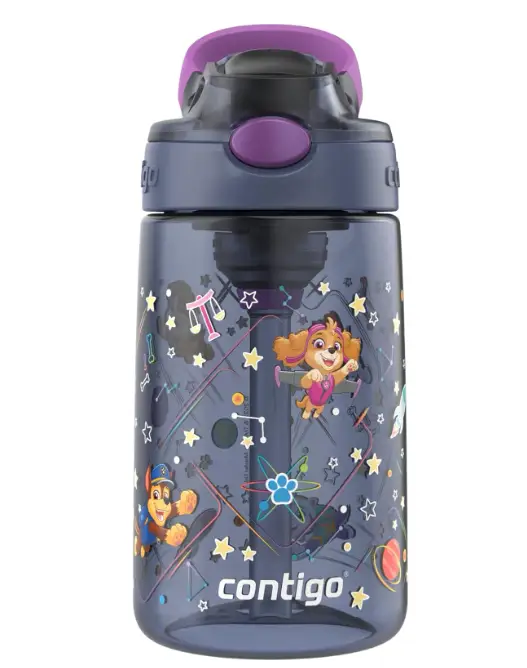
Contigo Aubrey Kids 14 oz Leakproof Water Bottle
The Contigo Aubrey Kids 14 oz bottle combines a fun, kid-friendly design with a leakproof AUTOSPOUT straw for mess-free hydration. The one-handed push-button lid keeps the straw protected when not in use, while the dishwasher-safe construction makes cleanup quick and easy for busy families.
NUK Learner Cup (5 oz, Soft Spout)
Best Soft-Spout Option for the Transition Period
Not every 1-year-old takes to straw cups right away. Some toddlers simply refuse them, while others become frustrated and give up after a few attempts. For families in that situation, the NUK Learner Cup can serve as a useful stepping stone during the transition away from bottles.
The keyword is temporary.
Unlike traditional hard-spout sippy cups, the NUK uses a soft silicone spout that feels gentler on sensitive gums and newly emerging teeth. In our comparison, its lightweight design made it particularly easy for younger toddlers to lift and hold independently, even those who struggled with heavier stainless-steel bottles.
Parents will also appreciate the simplicity. The wide opening and minimal number of parts make cleaning quick, and there are very few hidden spaces where moisture can collect. For busy families, that straightforward design is one of the cup’s biggest strengths.
Its limitations, however, are important to understand. The five-ounce capacity is noticeably smaller than most of the other bottles in this guide, which means more frequent refills throughout the day. The silicone spout is also vulnerable to enthusiastic chewing, and several toddlers in our comparison treated it more like a teether than a drinking cup.
More importantly, pediatric dentists and speech-language pathologists generally recommend moving toward straw cups and open cups as children grow. While soft-spout designs are gentler than rigid sippy cups, they are still best viewed as a short-term tool rather than a long-term solution.
Quick Specs
- Material: BPA-free plastic with a soft silicone spout
- Capacity: 5 ounces
- Cup type: Soft-spout learner cup
- Leak-proof rating: 4/5
- Ease of cleaning: Easy
- Dishwasher safe: Yes, all parts are top-rack dishwasher safe
- Price range: $5–$8
What We Liked
- Soft, flexible spout is comfortable for sensitive gums and emerging teeth.
- Extremely lightweight and easy for small hands to hold.
- Minimal parts make daily cleaning simple.
- Affordable and widely available.
What Could Be Better
- The five-ounce size requires frequent refills.
- Persistent chewers may damage the silicone spout.
- Not ideal as an everyday cup beyond the transition period.
Best For
The NUK Learner Cup is best suited for short-term use during the move away from baby bottles, particularly for toddlers who are hesitant to use straws. It is also a practical option for travel, quick outings, or situations where parents need a familiar, leak-resistant cup.
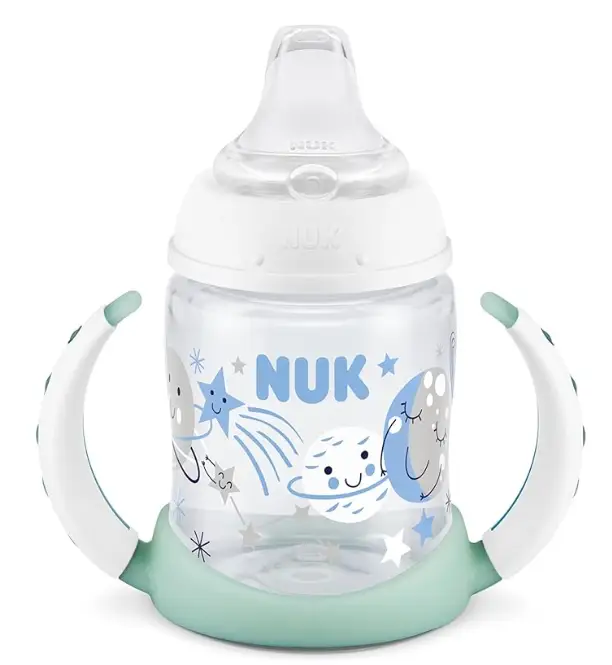
NUK Learner Cup 5 oz Soft Spout Sippy Cup
The NUK Learner Cup 5 oz is designed to help babies transition from bottles to independent drinking. Its soft, spill-proof spout is gentle on sensitive gums, while the easy-grip handles provide a secure hold for little hands. BPA-free and dishwasher-safe, it offers parents a simple and mess-free solution for everyday use.
Simple Modern Kids Water Bottle With Straw Lid (14 oz)
Best Budget-Friendly Insulated Option
Parents who want the benefits of an insulated stainless-steel bottle without spending premium-brand prices should take a close look at the Simple Modern Kids Water Bottle. In our comparison, it delivered impressive cold retention, solid durability, and toddler-friendly styling at a noticeably lower cost than many competitors.
The bottle uses double-wall vacuum insulation and kept water cool for hours during playground trips and daycare drop-offs. When we compared it side by side with the Thermos Funtainer, the difference in insulation performance was surprisingly small.
For most families, it will be more than enough.
Toddlers in our test group were immediately drawn to the colorful designs and playful patterns, which may sound like a minor detail until you are trying to convince a stubborn one-year-old to drink more water. The narrow shape also fit comfortably into stroller trays and most cup holders.
The straw lid was generally easy to use, although younger toddlers sometimes needed a little extra effort to draw water through it. Compared with the Thermos Funtainer, the straw flow felt slightly more resistant, which could be frustrating for children who are still learning to drink from a straw.
Cleaning is fairly straightforward, but the lid requires extra attention. During daily washing, we found that the gasket around the straw could trap moisture if it was not removed and dried thoroughly. Parents who skip that step may eventually run into mold or odor problems.
Quick Specs
- Material: Double-wall vacuum-insulated stainless steel
- Capacity: 14 ounces
- Cup type: Straw
- Leak-proof rating: 4/5
- Ease of cleaning: Moderate
- Dishwasher safe: Lid is top-rack safe; hand washing the bottle is recommended
- Price range: $12–$18
What We Liked
- Delivers excellent insulation at a budget-friendly price.
- Keeps water cold for hours during daycare and outdoor activities.
- Available in a wide variety of colorful designs.
- Durable construction handled drops and rough treatment well.
- The straw lid is intuitive for most toddlers.
What Could Be Better
- Some 1-year-olds may find the straw slightly difficult to use at first.
- The lid gasket needs careful cleaning and drying.
- Heavier than plastic alternatives.
Best For
The Simple Modern Kids Water Bottle is a strong choice for parents who want an insulated bottle without paying for a premium brand. It works especially well for daycare, family outings, and outdoor play, where cold water and durability matter.
One note from our comparison: although its insulation performance came remarkably close to the Thermos Funtainer, the straw requires slightly stronger suction. For older toddlers, that difference is unlikely to matter. For younger 12-month-olds who are just learning to use a straw, it is worth keeping in mind.
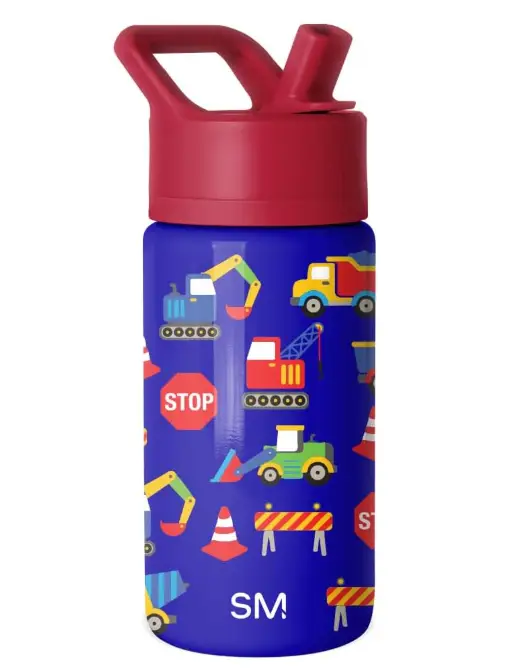
Simple Modern Summit 14 oz Insulated Kids Water Bottle with Straw Lid
The Simple Modern Summit 14 oz combines double-wall insulation with a spill-proof straw lid to keep drinks cold throughout the school day. Made from durable, BPA-free stainless steel, it fits most cupholders and backpacks, while the dishwasher-safe design makes cleanup quick and easy for busy parents.
Comparison Table: Best Water Bottles for 1-Year-Olds
Product Name | Material | Capacity | Cup Type | Leak-Proof Rating* | Ease of Cleaning | Dishwasher Safe** | Price Range*** | Best For |
Thermos Funtainer | Stainless steel | 12 oz | Straw | 5/5 | Moderate | Lid top-rack only | $15–$20 | Daycare, insulation, and long-term durability |
CamelBak Eddy+ Kids | BPA-free plastic | 14 oz | Straw (bite valve) | 4/5 | Easy | Yes, all parts | $12–$16 | Toddlers who need a lightweight, easy-to-hold bottle |
Munchkin Miracle 360 | BPA-free plastic | 7 oz | 360° open cup | 4/5 | Very easy | Yes, top-rack | $6–$10 | Mealtime practice and open-cup training |
Pura Kiki Stainless | Stainless steel and silicone | 11 oz | Convertible (straw) | 5/5 | Easy | Yes, all parts | $20–$30 | Parents seeking a plastic-free, grow-with-me option |
Contigo Spill-Proof Tumbler | BPA-free plastic | 14 oz | Straw (auto-seal) | 5/5 | Moderate | Yes, top-rack | $10–$14 | Travel, stroller rides, and car use |
NUK Learner Cup | BPA-free plastic | 5 oz | Soft spout | 4/5 | Easy | Yes, top-rack | $5–$8 | Short-term bottle-to-cup transitions |
Simple Modern Kids | Stainless steel | 14 oz | Straw | 4/5 | Moderate | Lid top-rack only | $12–$18 | Families wanting an affordable insulated bottle |
Leak-proof ratings are based on our hands-on comparison with toddlers aged 12–18 months and reflect performance during drops, shaking, and everyday use.
Always check the manufacturer’s care instructions. For stainless-steel bottles, hand-washing the body is often recommended to preserve the finish and insulation performance over time.
Prices reflect typical retail ranges and may vary by color, retailer, and seasonal promotions. Before publishing, verify current pricing and availability for July 2026 and confirm that no products have been discontinued or substantially redesigned.
Comparison note: Unlike general “kids’ bottle” roundups, our recommendations focus specifically on the developmental and practical needs of 1-year-olds. Factors such as straw resistance, bottle weight, grip, and ease of cleaning can matter much more at 12 months than they do for older children.
How to Choose the Right Bottle for Your Child
While our complete guide on how to choose a water bottle explains the main differences in materials, sizes, lids, and insulation, choosing one for a 1-year-old also requires extra attention to weight, grip, cleaning, and oral development.
If Your Priority Is Oral Development
For most 1-year-olds, pediatric feeding specialists recommend starting with either a straw cup or an open cup trainer. Both encourage the tongue, lips, and cheeks to work in ways that support speech, swallowing, and long-term oral development.
Hard-spout sippy cups are convenient, but they should not become your toddler’s everyday cup. Experts generally prefer options that promote more natural drinking patterns and help children build the muscle coordination they will use as they grow.
A straw cup is often the easiest place to begin. It strengthens the muscles involved in drinking while remaining practical enough for daycare, car rides, and family outings. Open cup trainers, meanwhile, help toddlers practice the same skills they will eventually use with regular cups, although they usually require a little more patience and supervision.
If You Need a Daycare-Ready Bottle
Daycare puts toddler bottles through a different kind of test. A cup that works perfectly at home may become a source of frustration if it leaks in a backpack, is difficult to clean, or requires constant adult help.
Before choosing a bottle for daycare, focus on the features that matter most:
- A secure, leak-resistant lid that stays closed in a diaper bag.
- A covered straw or mouthpiece to keep the drinking surface clean.
- A design your child can open and close with minimal assistance.
- Durable materials that can survive repeated drops.
- Enough capacity to last through meals, snacks, and outdoor play.
- Space for labels or name stickers.
Not every toddler will master every bottle immediately. If possible, let your child practice opening, closing, and drinking from the bottle at home before sending it to daycare.
To make the decision easier, we have also created a printable Daycare-Ready Checklist below that you can use to evaluate any bottle before it leaves the house.
If You’re on a Budget
Toddler bottles can get surprisingly expensive, especially when you add replacement straws, extra lids, and daycare backups. The good news is that you do not need to spend $25 on a bottle to get something safe and functional for your 1-year-old.
What matters most is choosing a cup that matches your child’s developmental stage and your family’s routine. A simple design that is easy to clean and comfortable for small hands will usually serve your toddler better than a premium bottle loaded with features they do not need yet.
For families watching their budget, the NUK Learner Cup and Munchkin Miracle 360 both cost less than $10 and performed well in our comparison. The NUK works best as a short-term transition cup for toddlers who are not ready for straws, while the Munchkin excels at helping children practice open-cup skills during meals.
Just remember that lower cost should never mean lower standards. Even affordable bottles should be BPA-free, easy to clean, and designed for everyday use by young toddlers.
If You Want a Bottle That Grows With Your Child
Some bottles are designed for a single stage and quickly become obsolete. Others can adapt as your child develops new skills.
The Pura Kiki stands out because of its modular design. Using the same stainless-steel bottle, parents can switch between a baby nipple, a straw top, and a soft sippy spout as their child grows. That flexibility means you are investing in a system rather than buying an entirely new bottle every year.
The upfront cost is higher than most of the other options in this guide, but there is a long-term advantage. Families who plan to use the bottle through multiple developmental stages, or with younger siblings later on, may ultimately spend less money and generate less waste.
For parents who prioritize durability and material safety, that extra versatility can make the higher price easier to justify.
If You’re Often Outdoors or in Hot Weather
For families who spend a lot of time outside, insulation quickly moves from a nice feature to an essential one. Whether you are heading to the playground, taking long stroller walks, or sending your toddler to daycare in the middle of summer, cool water can make a noticeable difference in how much they drink.
At this age, hydration matters. Toddlers are often too busy exploring to stop for a drink, and warm, stale water is rarely appealing. A stainless-steel bottle with double-wall vacuum insulation helps keep water cold for hours, making it easier to encourage regular sips throughout the day.
Our comparison made the benefits clear.
We compared insulated and non-insulated bottles during a 90°F afternoon at the playground. After four hours outdoors, the Thermos Funtainer still contained ice-cold water. By contrast, most plastic bottles had warmed to room temperature within about thirty minutes.
That performance comes with a trade-off. Insulated bottles are heavier than plastic alternatives, which can make them slightly harder for younger toddlers to carry on their own. For many families, however, the added weight is worth it, especially during hot weather.
If your family regularly spends time outdoors or lives in a warm climate, choosing an insulated bottle is one of the simplest ways to make hydration easier for your little one.
Cleaning and Maintenance: Preventing Mold and Bacteria
Even the best toddler bottle can become a problem if it is not cleaned properly. Straws, valves, and silicone seals create small, damp spaces where bacteria and mold can thrive, especially when cups are used throughout the day and quickly rinsed between meals.
The good news is that preventing buildup does not require complicated equipment. Consistency matters far more than fancy cleaning products.
Daily Cleaning Routine
At the end of each day, take the bottle completely apart. Remove the lid, straw, valve, silicone seal, and any gaskets before washing. A quick rinse is not enough; hidden moisture and milk residue can linger in places you cannot easily see.
Wash every component in warm, soapy water using a bottle brush for the larger pieces and a narrow straw brush for the small openings. Pay extra attention to bite valves, silicone spouts, and the underside of the lid, where moisture tends to collect.
Once everything is clean, rinse thoroughly and let the parts air dry completely before putting the bottle back together.
This step is easy to skip, but it matters.
Moisture trapped inside a closed bottle creates the perfect environment for mold growth.
Weekly Deep Clean
In addition to daily washing, set aside time once a week for a deeper clean.
If the manufacturer confirms that the parts are heat-safe, you can sanitize them by placing them in boiling water for five minutes or running them through a steam sterilizer. This extra step is especially helpful for bottles that are used at daycare or taken outside regularly.
Another option is a diluted vinegar soak. Mix one part white vinegar with three parts water, soak the bottle components for about fifteen minutes, then rinse and allow them to dry completely. Vinegar can help remove mineral deposits and clean areas that may otherwise be overlooked.
Always check the care instructions before boiling or sterilizing any bottle, since some components may warp under high heat.
Why Thorough Cleaning Matters
Parents often assume that a cup looks clean because it smells clean. Unfortunately, hidden valves and silicone seals can tell a different story.
Research continues to show that bacteria and mold can remain inside toddler cups even after routine washing, particularly in designs with complex lids and hard-to-reach components. Pediatricians and feeding specialists consistently emphasize the importance of complete disassembly and thorough drying, especially for bottles with straws and leak-proof mechanisms.
The easiest bottle to clean is often the one that stays clean.
When to Replace Parts
Toddler bottles are designed to survive drops, chewing, and countless trips through the dishwasher, but none of their parts last forever. Regular inspections take only a few minutes and can prevent leaks, mold, and unnecessary frustration.
Silicone straws and spouts tend to wear out first. Check them every few weeks and plan to replace them every two to three months, or sooner if you notice cracks, discoloration, bite marks, or any signs of mold. A damaged straw is not just harder to clean; it can also change the flow of water and make leaks more likely.
Valves and gaskets deserve the same attention. At least once a month, remove them and inspect them closely. If they feel stiff, warped, or no longer create a reliable seal, it is time for a replacement.
Do not forget about the bottle itself.
Plastic bottles should be replaced if they develop cracks or deep scratches, which can trap bacteria and become difficult to clean. For stainless-steel bottles, watch for signs that the insulation is failing. If the outside of the bottle starts sweating or drinks no longer stay cold, the vacuum seal may have been compromised.
Daycare Labeling That Survives the Dishwasher
A bottle that works perfectly at home still needs to survive the realities of daycare. That means frequent washing, accidental mix-ups, and labels that remain attached after dozens of trips through the dishwasher.
Dishwasher-safe, waterproof labels are usually the easiest solution. Brands such as Mabel’s Labels and Name Bubbles are designed to withstand heat, moisture, and daily use, making them far more reliable than ordinary stickers. For the best results, place labels on both the bottle body and the lid, since those pieces are often separated during cleaning.
Writing directly on the bottle with a permanent marker can work in a pinch, but expect to refresh it regularly. Even the most stubborn ink tends to fade after repeated washing.
One place you should never add labels is the straw or spout. Adhesive stickers can peel away over time and create a potential choking hazard.
We have also included these labeling recommendations in the Daycare-Ready Checklist below, so you can quickly confirm that your toddler’s bottle is ready to leave the house each morning.
Expert Tips for a Smooth Transition From Bottle to Cup
Start Early and Be Patient
The easiest bottle-to-cup transitions usually begin long before a child’s first birthday. Pediatric feeding specialists often recommend introducing a straw cup or an open cup with small amounts of water during meals as early as 6 months, giving babies plenty of time to experiment before bottles are phased out.
By around 12 months, most drinks, aside from an occasional bedtime bottle, can gradually move to a cup. That does not mean the process happens overnight. Some toddlers adapt in a few days, while others need several weeks of practice and encouragement.
Patience matters.
Model the Behavior
Toddlers learn by watching the people around them. If everyone else at the table drinks from cups while they are handed a bottle, they notice.
Use that curiosity to your advantage.
Drink from a straw cup or an open cup during meals and let your child watch. Exaggerate the sipping motion, smile, and invite them to imitate you. Many toddlers become much more interested once they realize that the grown-ups are doing the same thing.
Ditch the Bottle Gradually
For most families, a gradual approach is easier than quitting bottles all at once.
Start by replacing one bottle feeding each day; y, often the midday bottle is the least emotionally charged. After a few days, replace another feeding, and continue at your child’s pace. For many toddlers, the bedtime bottle is the final and most difficult habit to leave behind.
If your child is especially attached to bottles, try keeping the surrounding routine the same. Sit in the same chair, read the same book, or keep the usual cuddle time. Familiar rituals can make the transition feel less disruptive.
Pediatric experts generally recommend completing the move away from bottles between 12 and 18 months. Prolonged bottle use has been linked to an increased risk of tooth decay and may affect eating habits as toddlers grow.
Handle Refusal With Creativity
Resistance is normal. A toddler who eagerly used a cup yesterday may refuse it completely today.
Instead of turning the transition into a battle, look for ways to make the new cup feel exciting and familiar:
- Let your child choose from a shortlist of parent-approved cups.
- Add a small splash of 100% fruit juice to water, then gradually reduce the amount over time.
- Choose a bottle featuring a favorite color or character.
- Offer the cup when your toddler is rested and in a good mood rather than overly hungry or tired.
Practice Open-Cup Skills at Mealtimes
Even if your toddler relies on a straw bottle for most of the day, regular open-cup practice is still valuable.
Offer a small amount of water in an open cup during meals; a trainer cup like the Munchkin Miracle 360 works well, but even a tiny, shot-glass-sized cup can help. Expect spills, wet sleeves, and plenty of experimentation. Those moments are part of the learning process.
Short, low-pressure practice sessions help toddlers develop coordination, confidence, and the mature drinking skills they will eventually use every day.
To make things even easier, our Oral Development Milestone Tracker below breaks down when and how to introduce different cup types so you can support your child’s skills at each stage.
Frequently Asked Questions
When should I introduce a water bottle to my 1-year-old?
You can introduce a straw cup or open cup as early as 6 months, usually alongside solid foods and small sips of water at mealtimes. By your child’s first birthday, cups should gradually replace bottles for most drinks throughout the day, to complete the transition by around 18 months.
The process does not have to happen overnight. Many toddlers continue to rely on a bedtime bottle for a while before making the switch completely.
What experts say: The American Academy of Pediatrics recommends beginning bottle weaning around 12 months to support dental health and encourage healthy eating habits.
How do I teach my 1-year-old to drink from a straw?
Start with a short, soft silicone straw that is easy for little mouths to manage. Dip the tip into water or milk, place it gently in your child’s mouth, and encourage them to suck. If you are using a squeezable straw-training cup, you can lightly squeeze the bottle to send a small amount of liquid up the straw.
Once your toddler understands that sucking brings liquid, the skill usually develops quickly.
Some parents also find success with honey bear straw cups, which are commonly used by feeding therapists because they allow adults to control the flow while children learn.
Expert tip: Practice somewhere that can handle spills, such as the backyard or the bathtub. Some toddlers learn in a day, while others need several weeks.
What if my child refuses the new cup?
Cup refusal is extremely common. Many toddlers reject the first, second, or even third option before finding one they like.
Try experimenting with different cup styles, such as straw cups, open cups, or soft-spout trainers. You can also switch liquids; some children accept water from a straw but prefer milk in a different cup. Another factor to consider is flow rate: if the straw requires too much effort, your toddler may simply give up.
Our own comparison included several parents whose children rejected multiple bottles before finally settling on the CamelBak Eddy+.
The key is persistence without pressure.
Are sippy cups really bad for oral development?
Not necessarily, but experts generally recommend limiting hard-spout sippy cups.
Speech-language pathologists and pediatric dentists have raised concerns that prolonged use of rigid spouts may encourage immature tongue movements and interfere with natural oral-motor development. Soft-spout cups are gentler, but they are still considered a transitional tool rather than a long-term solution.
For everyday use, straw cups and open cups remain the preferred options because they better support healthy tongue positioning, swallowing patterns, and speech development.
If your child uses a sippy cup, try to treat it as a temporary bridge and aim to transition away from it by around age 2.
How do I prevent mold in straw cups?
The most effective strategy is simple: take the bottle apart completely after every use.
Remove the straw, valve, gasket, and lid components, wash them thoroughly with warm, soapy water, and use a dedicated straw-cleaning brush to reach narrow spaces. Before putting the bottle back together, allow every piece to air dry completely.
Inspect silicone parts regularly and replace straws or valves every two to three months, or sooner if you notice discoloration, cracks, black spots, or a musty smell.
When in doubt, replace the part.
What are daycare requirements for water bottles?
Although every daycare has its own policies, most ask parents to provide bottles that are:
- Leak-proof when closed.
- Clearly labeled with the child’s name.
- Easy for toddlers to use independently.
- Durable enough to survive frequent drops.
- Free from small, detachable parts.
- Made from materials other than glass.
Our printable Daycare Ready Checklist covers the most common requirements and gives parents a simple way to evaluate any bottle before sending it to daycare.
Why this guide is different: Most water-bottle roundups stop at product recommendations. We also include practical resources, such as the Daycare-Ready Checklist and Oral Development Milestone Tracker, to help parents navigate the unique challenges of the 12-month transition.
Daycare-Ready Checklist (Printable)
Download our Daycare-Ready Bottle Checklist and make sure your toddler’s cup survives daycare, diaper bags, and daily drops.
Oral Development Milestone Tracker
Your toddler’s mouth is developing rapidly. Here’s how the right cup at the right time can support healthy speech and feeding skills.
— Pediatric SLP